
Rustic Linen Press
A rustic linen press offers substantial storage for textiles while bringing tactile warmth and historic character into a bedroom or hallway.
Rustic Linen Press
A rustic linen press is a large storage furniture piece designed for organising household linens, garments, and folded textiles. When searching for a rustic linen press, buyers encounter robust storage furniture spanning the Georgian, Victorian, and late nineteenth-century periods.
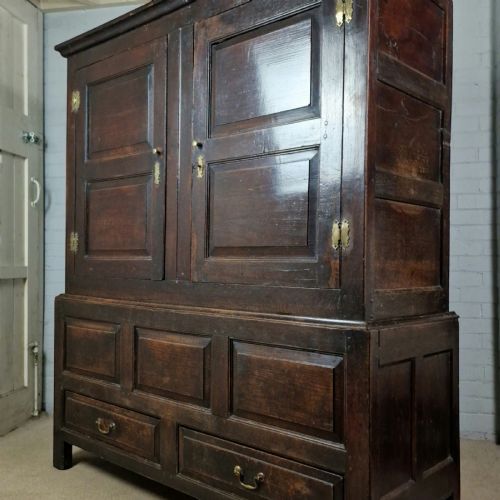
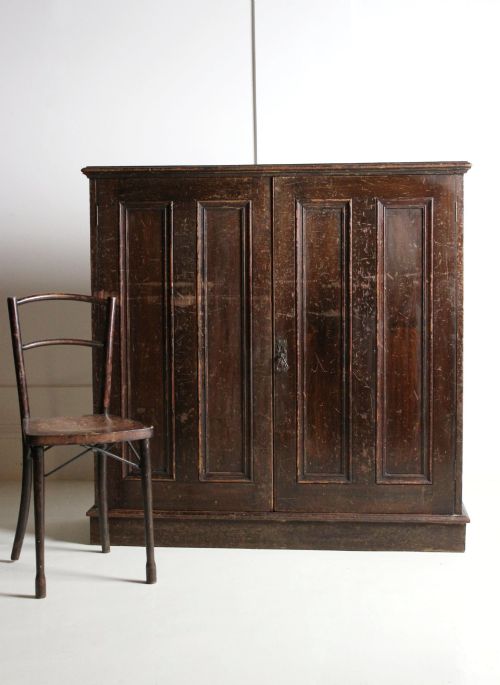
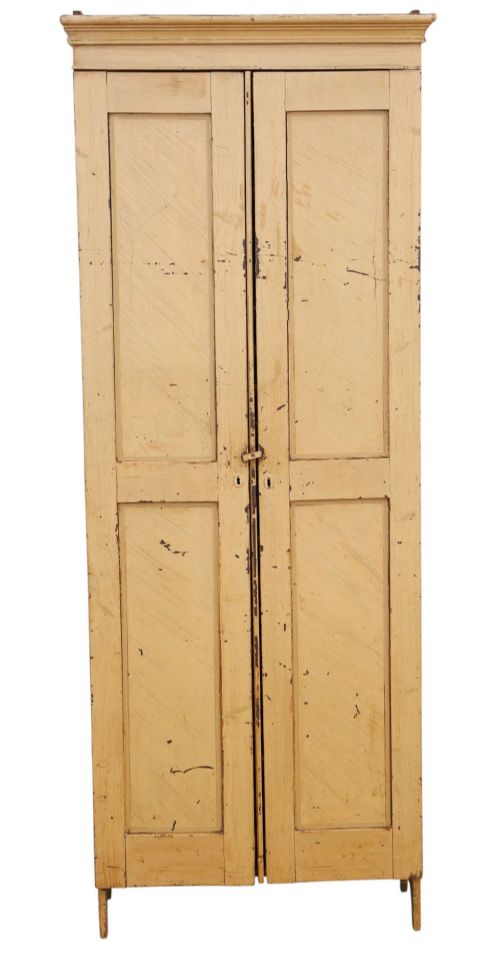
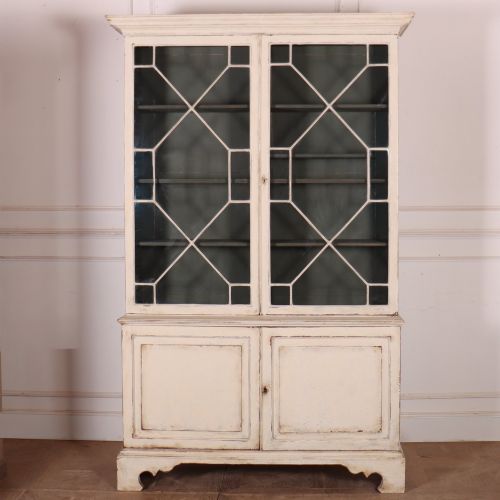
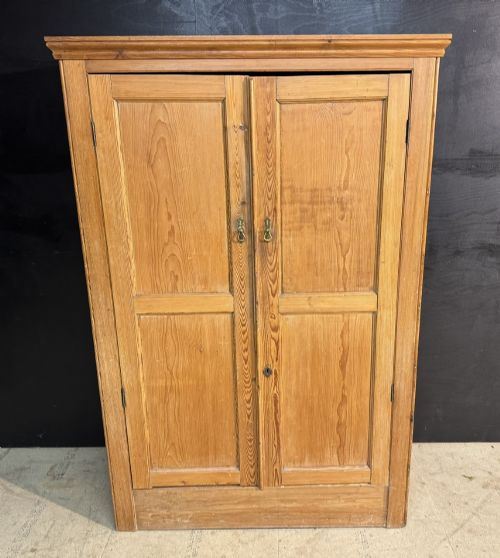
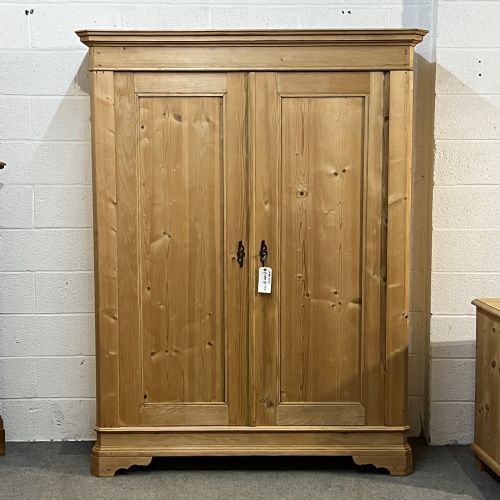
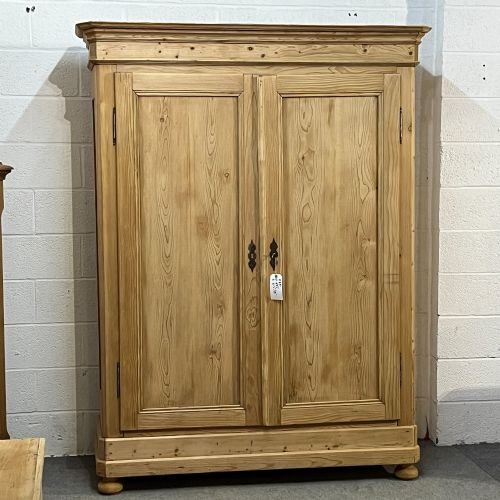
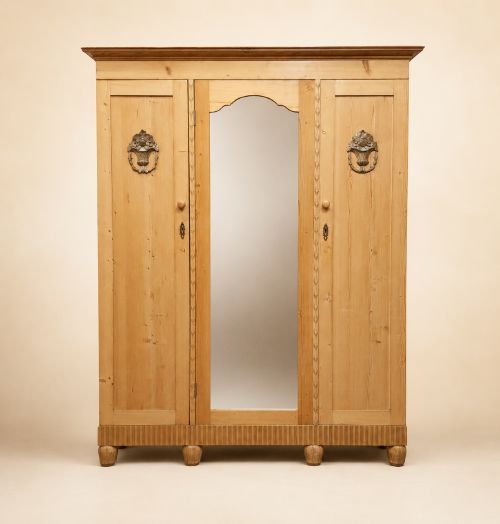
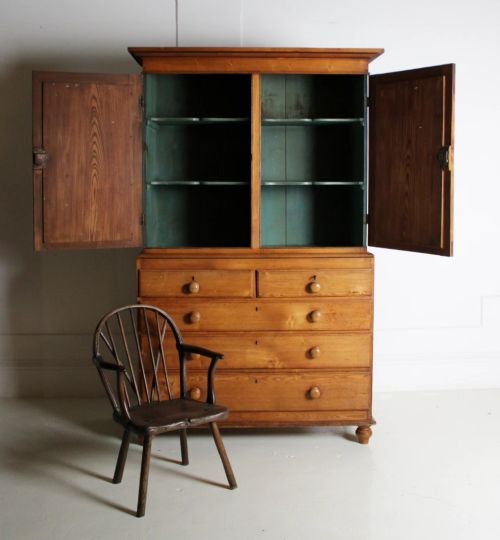
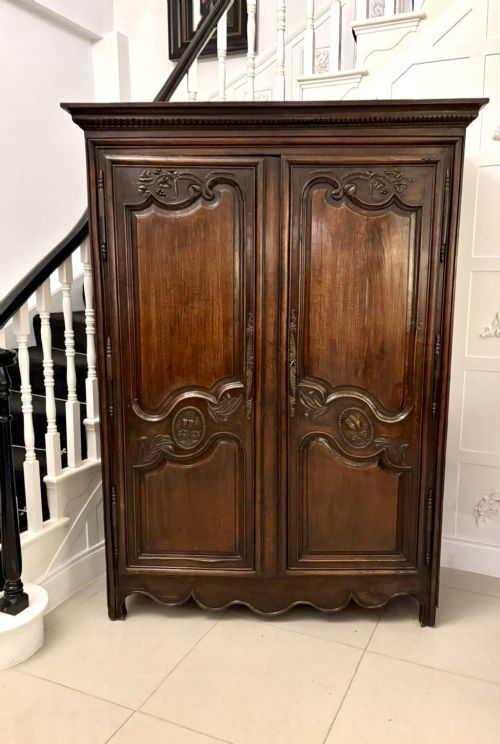
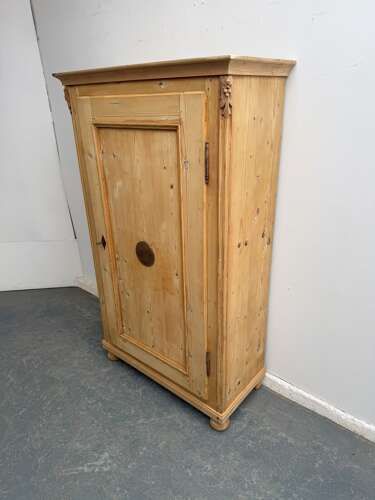
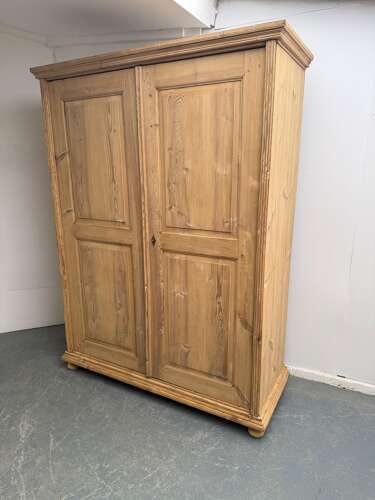
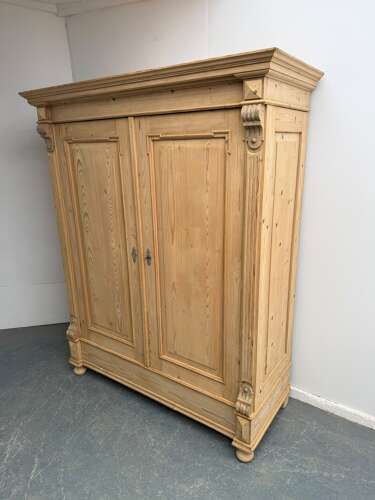
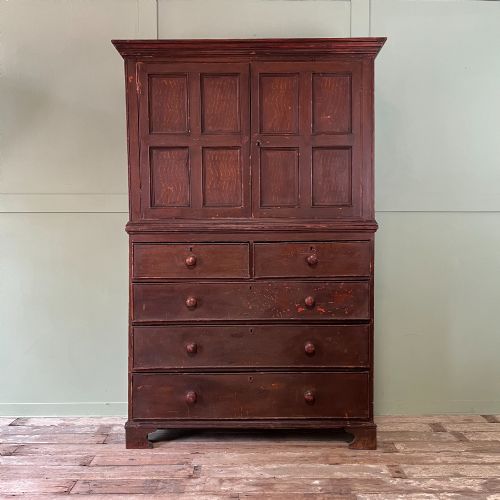
The pieces appearing on this page take various practical forms, including housekeepers cupboards, large double wardrobes, and tall storage cabinets. Most examples originate from British, Irish, Welsh, and French provincial workshops rather than urban cabinet-makers.
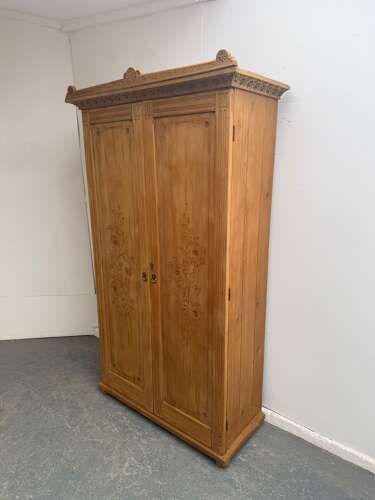
Construction formats range from single-piece tall cupboards to knockdown wardrobes designed to dismantle for transport in older homes. Interior configurations typically combine adjustable shelving for linen stacks with hanging space or lower drawers.
Materials and construction methods
Solid pine dominates the construction of these pieces, alongside regional timbers such as oak, ash, and painted wood. Workshops utilised traditional joinery techniques, employing pegged frames, fielded panels, and pegged doors alongside hand-cut dovetails for drawers.
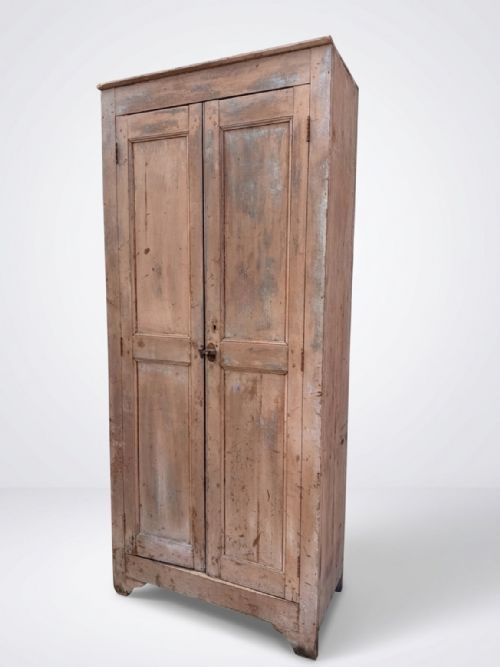
Surface finishes vary significantly across the pieces, featuring original paint, scumble glaze, cream paintwork, or waxed natural timber surfaces. Iron and brass hardware, including hinges, latches, and escutcheons, complete the construction of doors and storage compartments.
Listings feature pieces from the eighteenth, nineteenth, and early twentieth centuries, constructed primarily from pine, oak, and ash.
Assessing quality and proportion
Quality in these storage pieces rests upon timber selection, proportion, and the preservation of original structural integrity. Better examples display careful grain selection in the pine or oak, balanced architectural mouldings, and well-fitted doors that hang true on their original iron hinges.
The distinction between standard utility cupboards and finer vernacular pieces lies in detailing such as carved panels, arched door frames, and untouched original painted surfaces. Altered interiors or replaced cornices affect the integrity of the piece, whereas examples retaining original backs, shelves, and hardware represent superior craftsmanship.
The Rustic Linen Press Glossary
- Linen press
- A tall cupboard traditionally used for storing household linen and folded garments, often combining shelving with lower drawers.
- Housekeeper's cupboard
- A large storage cabinet typically featuring upper shelving enclosed by doors and lower drawers or cupboards, used in domestic quarters for provisions and linens.
- Knockdown wardrobe
- A large wardrobe engineered to dismantle into modular sections using wooden pegs or wedges, allowing movement through narrow cottage doorways.
- Scumble paint
- A decorative surface finish created by dragging, combing, or sponging a translucent glaze over a lighter base coat to imitate finer grained timber.
- Fielded panel
- A wooden panel with bevelled or recessed edges set within a heavier frame, reducing warping and adding architectural depth to doors.
Rustic Linen Press: Frequently Asked Questions
What is a rustic linen press?
A rustic linen press is a tall, functional storage piece built to hold household textiles and garments.
These pieces typically feature internal shelving or hanging compartments enclosed by one or more solid or glazed doors.
How do I date a pine cupboard?
Dating a pine cupboard involves examining construction methods, nail types, and timber characteristics.
Hand-cut dovetails, original painted surfaces, and specific hardware styles help place pieces within the Georgian or Victorian eras.
Can knockdown wardrobes be easily moved?
Knockdown wardrobes dismantle into separate sections such as the cornice, sides, base, and doors.
This modular construction was designed specifically to facilitate transport and installation in rooms with restricted access.
Where were these cupboards originally used?
These storage pieces served utilitarian roles in farmhouses, country houses, and provincial homes.
They stood in bedrooms, hallways, and sculleries to keep textiles clean and household goods organised.