


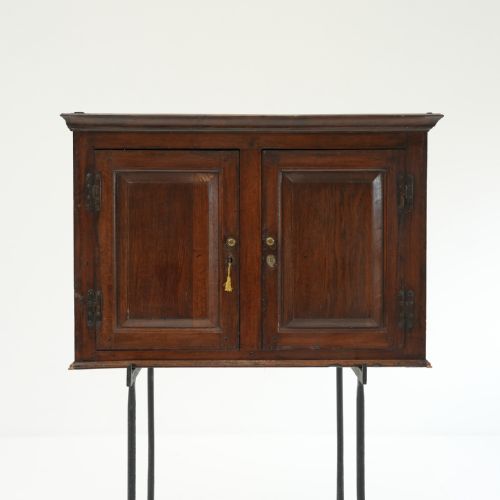


Rustic Hanging Oak Box
A rustic hanging oak box is a sturdy domestic wall vessel designed to hold domestic necessities close at hand, prized for its honest timber and simple utility.
Rustic Hanging Oak Box
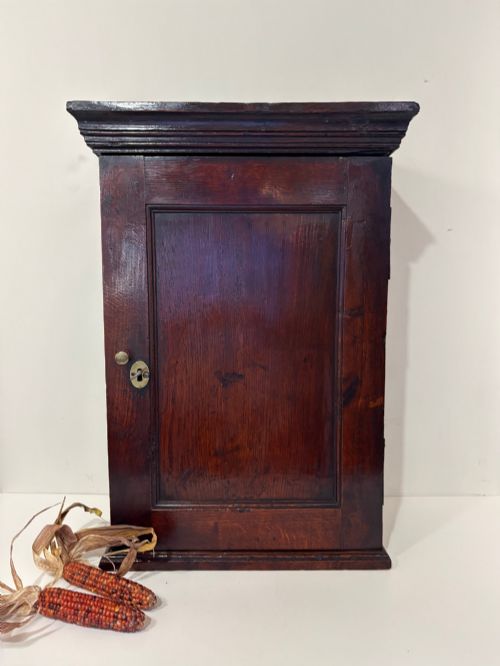
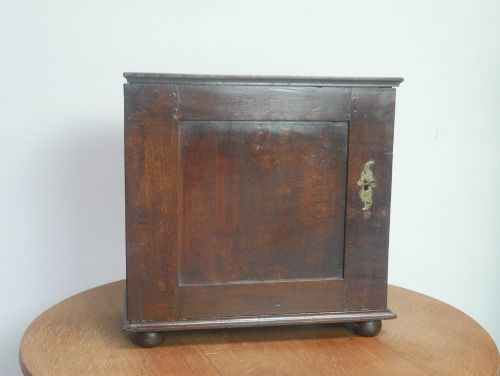
A rustic hanging oak box comprises small wall cabinets, spice cupboards, candle boxes, and salt boxes intended for everyday storage in period interiors. Most examples date from the eighteenth and nineteenth centuries, spanning Georgian and Victorian country styles.
The form is defined by practical wall suspension, utilising solid oak construction supplemented occasionally by pine backs or secondary woods. Buyers frequently encounter candle boxes and spice cupboards designed to protect domestic goods from dampness and pests.
Origins trace directly to British country workshops where local cabinet makers constructed utilitarian pieces for kitchen and hall use. The aesthetic relies entirely on plain timber surfaces and functional hardware rather than high ornament.
Materials and construction methods
Construction relies primarily on solid oak boards joined with traditional methods, often incorporating secondary pine for internal partitions or backboards. Surfaces display the natural grain and texture of the timber without heavy modern finishes.
Metalwork plays a crucial role in construction, utilising original iron hardware, brass hinges, and wrought iron latches to secure doors and lids. Traces of early red paint or natural wax surfaces frequently survive on eighteenth-century examples.
Listings feature oak combined with pine, brass, and wrought iron across wall cabinets, spice cupboards, and candle boxes.
Assessing quality and character
Quality rests in the integrity of the timber and the survival of original components such as hinges, latches, and backboards. Superior examples retain their early surface patination and unreplaced iron or brass hardware.
Proportion and construction depth distinguish better workshop pieces from simpler utilitarian boxes, particularly in spice cupboards and wall cabinets with fielded panel doors.
The Rustic Hanging Oak Box Glossary
- Spice cupboard
- A small wall-mounted cabinet fitted with internal drawers or shelves for storing valuable spices and dry goods. These miniature cupboards often feature panelled doors and brass latches.
- Salt box
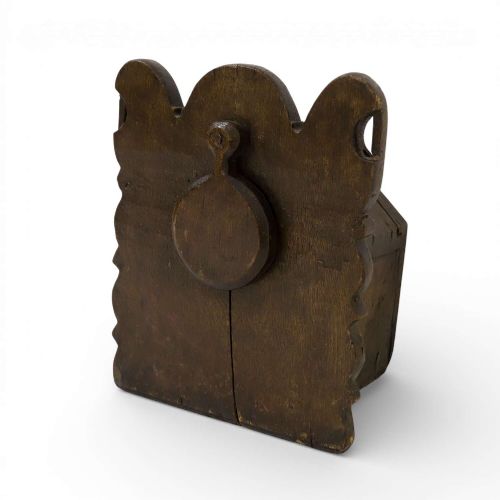
- A slanted-lidded wall container designed to keep coarse household salt dry near the hearth. The hinged lid allows quick access while protecting the contents from moisture.
- Candle box
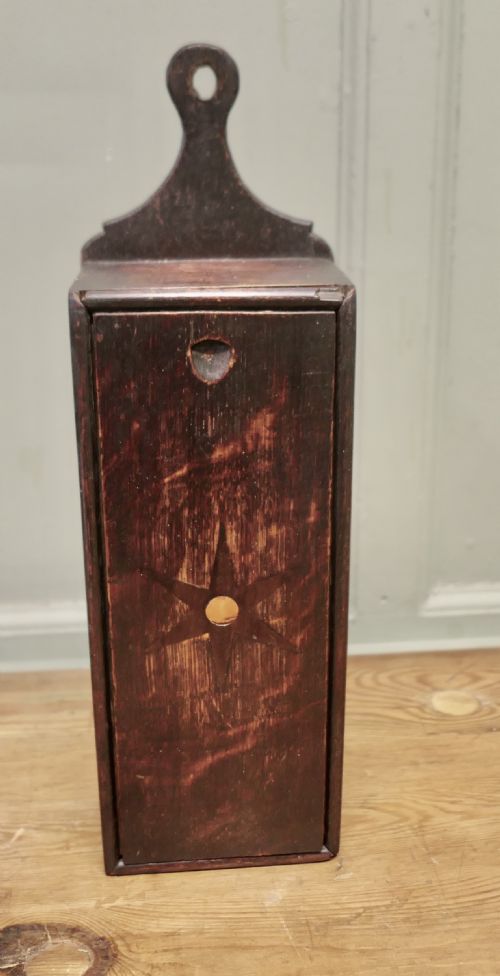
- A hanging receptacle shaped to hold tallow or wax candles safely away from household pests. They typically feature a sliding lid or a hinged door with a small suspension hole at the top.
- Primitive
- A descriptive term for vernacular furniture made without sophisticated stylistic conventions. These pieces rely on straightforward joinery and robust utility.
- Wrought iron
- Iron shaped by heating and hammering by hand rather than casting in a mould. This material provides durable hinges and latches on early country boxes.
Rustic Hanging Oak Box: Frequently Asked Questions
What were hanging boxes used for?
These wall vessels stored everyday domestic essentials such as candles, salt, spices, and keys securely off damp floors.
Their placement kept vital goods accessible near hearths and kitchens while protecting perishables from household pests.
How do I hang a heavy oak box safely?
Most pieces feature original hanging holes, brackets, or sturdy backboards intended for secure wall mounting on substantial fixings.
Due to the weight of solid oak, anchoring directly into wall studs or using appropriate masonry plugs ensures safety.
How do I tell an 18th-century box from a Victorian one?
Eighteenth-century examples often exhibit hand-split boards, pegged joinery, and primitive iron hardware characteristic of earlier country workshops.
Victorian pieces, including Arts and Crafts variations, frequently display machine-sawn elements, carved ornamentation, and brass fittings.
How should I clean and maintain antique oak?
Maintenance requires only a light application of traditional beeswax to nourish the dry timber and protect the historic surface.
Avoid modern liquid polishes or moisture, which can damage old patination and original paint traces.