

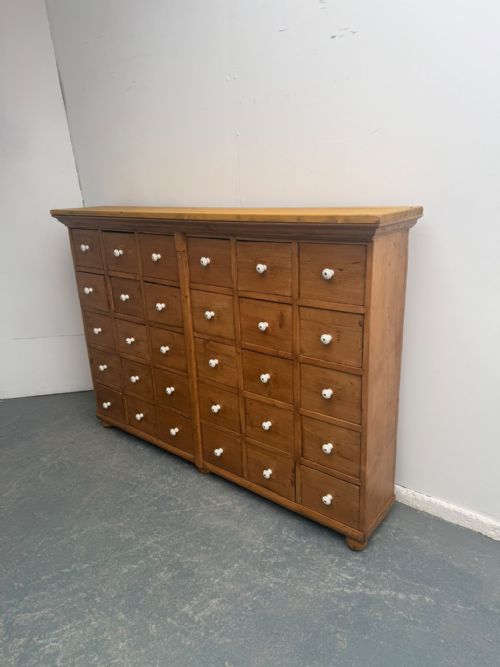


Rustic Haberdashery Cabinet
A rustic haberdashery cabinet provides practical storage with industrial character, bringing period charm and generous drawer space to any interior.
Rustic Haberdashery Cabinet
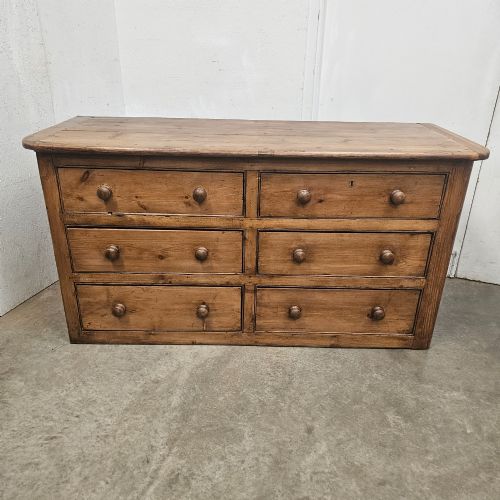
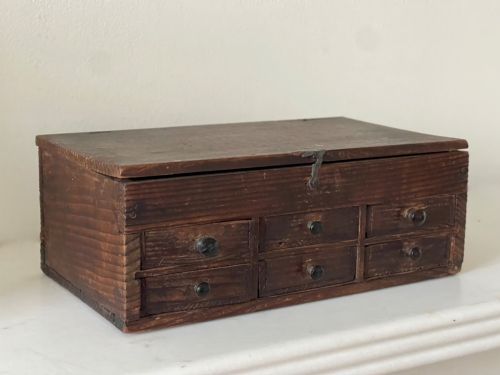
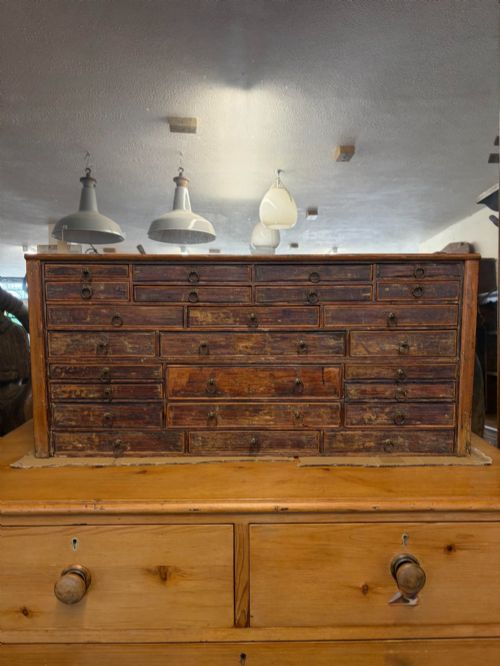
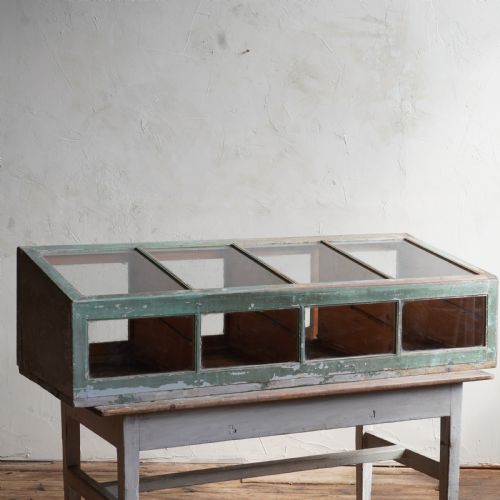
A rustic haberdashery cabinet appears in forms such as banks of drawers, shop counters, countertop display cabinets, storage cabinets, and pigeon hole units.
The pieces on this page span the Victorian era, the nineteenth century, and the early decades of the twentieth century, originating from British and French sources including shop fittings and collectors chests.
Buyers most frequently encounter pine constructions featuring multiple small drawers or compartments, often retaining traces of old paint finishes or weathered wooden surfaces.
How they were made
Construction relies heavily on pine and mixed wood timbers, assembled into multi-drawer configurations using traditional joinery suited to heavy commercial use in shops.
Fittings incorporate iron, brass, and metal hardware alongside glass panels in display variants, while ceramic elements occasionally appear on drawer pulls.
Surface treatments range from natural waxed wood to distressed painted finishes, including originally painted white surfaces.
Rustic Haberdashery Cabinet Retail Price Guide 2026
Typical asking prices for rustic haberdashery cabinet among the pieces listed under this phrase on Sellingantiques today, from the lower quarter to the upper quarter. They describe what is for sale here now, not the wider market.
Listings feature pine and metal materials across Victorian, nineteenth-century, and early twentieth-century periods.
What varies in quality
Scale and complexity dictate the standing of a piece, with larger banks possessing twenty-five or thirty drawers representing more substantial commercial origins than smaller domestic variants.
The integrity of original shop provenances and surviving factory paint finishes distinguishes standard utilitarian storage from pieces with documented trade history.
The degree of preservation in original hardware, such as brass and iron pulls or glass panels, alters the character and completeness of each cabinet.
Luxmore's of Ilfracombe
The Rustic Haberdashery Cabinet Glossary
- Bank of drawers
- A multi-drawer storage unit designed for systematic organisation of stock or collections. These configurations often feature dozens of small compartments.
- Shop fitting
- Fixtures and furniture built specifically for commercial retail environments during the nineteenth and early twentieth centuries. They were constructed for heavy daily utility.
- Display cabinet
- A cabinet featuring glass panels intended for showing merchandise or collections while protecting them from dust. Countertop versions sat within reach of customers.
- Pigeon hole cabinet
- A set of open compartments or small cubbies arranged in a grid for sorting documents, mail, or small goods. They form a practical alternative to enclosed drawers.
- Distressed paint
- Surface decoration showing natural wear, flaking, or weathering accumulated through decades of use. This finish highlights the age of the timber beneath.
Rustic Haberdashery Cabinet: Frequently Asked Questions
What is a rustic haberdashery cabinet used for today?
These cabinets serve as practical storage solutions for clothing, collections, or paperwork in modern homes. Their numerous small compartments offer exceptional organisation for everyday items.
Placed in kitchens, bedrooms, or hallways, they provide a strong focal point while keeping clutter concealed within period drawers.
How do I date a Victorian pine bank of drawers?
Dating relies on examining the timber construction, hardware materials, and overall joinery techniques used in the piece. Victorian examples often display heavier pine framing and hand-cut elements.
Associated shop history or specific drawer counts can also help narrow down the period of manufacture between the mid-nineteenth and early twentieth centuries.
Are painted finishes on shop counters original?
Many cabinets retain layers of old or distressed paint applied during their commercial working life. Surviving white or coloured coats often show genuine age and wear from decades in a shop.
Inspect the surface closely to distinguish between original trade paint and later decorative layers added by subsequent owners.
What is the difference between a shop fitting and a collectors chest?
Shop fittings were built for commercial retail environments to display or store merchandise for customers. They prioritised capacity and robust daily utility.
Collectors chests were typically designed for private domestic use to house specific specimens or personal items, often featuring finer detailing suited to a study.