

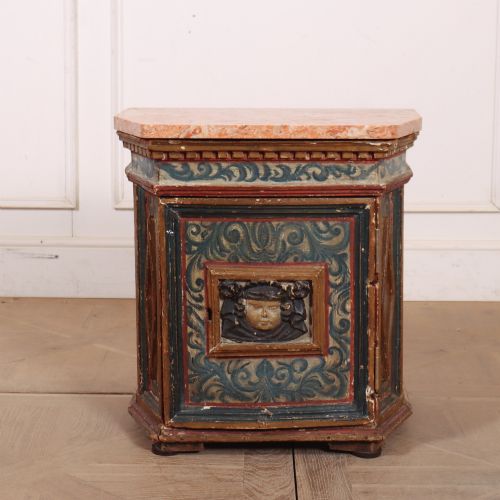
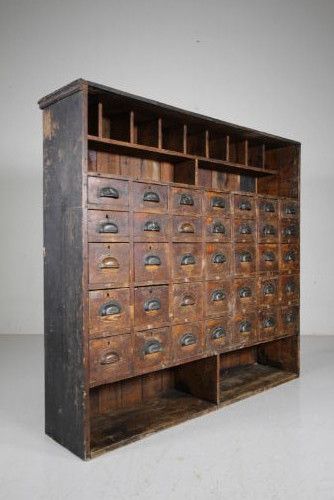


Painted Wooden Apothecary Cabinet
A painted wooden apothecary cabinet offers practical storage with historic character, bringing authentic period charm to any room.
Painted Wooden Apothecary Cabinet
A painted wooden apothecary cabinet is a functional storage piece originating from medical, retail, and domestic settings, designed to house small items securely. These cabinets appear across several distinct eras, spanning from the early eighteenth century through the Victorian period and into the early twentieth century.
Most examples found here take the form of banks of drawers, chests, or small wall-mounted cupboards. Common variations include pharmacy chests, shop fittings, and spice cupboards, reflecting both English and continental origins.
Materials range from simple pine to mahogany, often finished with historic paint, gold leaf, or natural wood surfaces. Buyers encounter diverse regional styles, from Italian Baroque and French Provincial to industrial Victorian shop pieces.
How they were made
Construction relies primarily on sturdy timbers such as pine and mahogany, joined to withstand frequent daily use in a shop or dispensary. Makers utilised traditional cabinetry techniques to build multi-drawer configurations and small storage boxes.
Surfaces frequently feature hand-applied paint finishes, sometimes enriched with gold leaf detailing or left ready for wax and paint treatments. Iron hardware and brass fittings provide operational strength for numerous small drawers and cabinet doors.
Painted Wooden Apothecary Cabinet Retail Price Guide 2026
Typical asking prices for painted wooden apothecary cabinet among the pieces listed under this phrase on Sellingantiques today, from the lower quarter to the upper quarter. They describe what is for sale here now, not the wider market.
Some chests arrive smelling faintly of dried roots and historic remedies from decades spent in old chemist shops.
What varies in quality
Quality rests in the integrity of the original construction, the handling of multi-drawer arrangements, and the preservation of early painted finishes. Pieces retaining untouched historic surfaces command greater interest from collectors than those with later decorative interventions.
The sophistication of regional joinery and the survival of original brass or cast iron hardware distinguish standard utilitarian boxes from finer architectural shop fittings and Italian Baroque examples.
The Painted Wooden Apothecary Cabinet Glossary
- Bank of drawers
- A multi-drawer storage unit designed for sorting small goods, commonly found in shops and dispensaries. These units form the backbone of apothecary and haberdashery storage.
- Pharmacy chest
- A specialised cabinet housing multiple small compartments or drawers for medicines and dry goods. These chests were essential fixtures in nineteenth-century chemist shops.
- Spice cupboard
- A small wall-mounted or table-standing cabinet intended for culinary provisions, often dating to the eighteenth century. They frequently feature decorative exterior paint or carving.
- Gold leaf
- Hammered gold beaten into extremely thin sheets, used for gilding lettering or decorative elements on furniture. It appears on select eighteenth and nineteenth-century pieces.
- Shop fitting
- Fixtures built specifically for commercial retail spaces, constructed to withstand heavy daily commercial use. Victorian examples often display robust industrial characteristics.
Painted Wooden Apothecary Cabinet: Frequently Asked Questions
What is an apothecary cabinet?
An apothecary cabinet is a historic storage unit originally used by pharmacists and physicians to organise medicines, herbs, and dried ingredients. These pieces typically feature numerous small drawers or compartments to keep distinct substances separated and secure.
Today, they are repurposed in homes as statement storage units for collections, kitchen spices, or bathroom supplies, prized for their compartmentalised utility.
How do I date these cabinets?
Dating relies on examining the construction techniques, timber choices, and stylistic markers present in the woodwork. Eighteenth-century examples often show distinct joinery and simpler regional forms compared to ornate Victorian shop fittings.
Paint layers, hardware styles, and general wear patterns further assist in placing a piece within eras such as the Edwardian period or the nineteenth century.
Were these used in shops?
Many of these pieces served commercial functions as chemist shop fittings, drapers' cabinets, or haberdashery counters. Their heavy-duty construction reflects an environment of daily retail trade and constant customer access.
Commercial origins mean many units feature robust banks of drawers designed to hold large volumes of small merchandise efficiently.
How should I clean painted wood?
Historic painted surfaces require gentle maintenance using dry or barely damp cloths to preserve the underlying pigment and finish. Avoid harsh modern chemical cleaners that can strip original layers or damage aged timber.
Applying microcrystalline wax can help protect fragile painted finishes on pine and mahogany without altering the historic patina.