


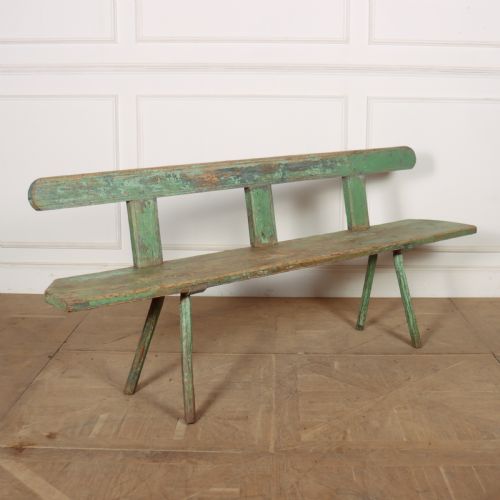


Rustic Green Bench
A rustic green bench brings instant character to a hallway or garden, offering honest utility wrapped in centuries of weathered charm.
Rustic Green Bench
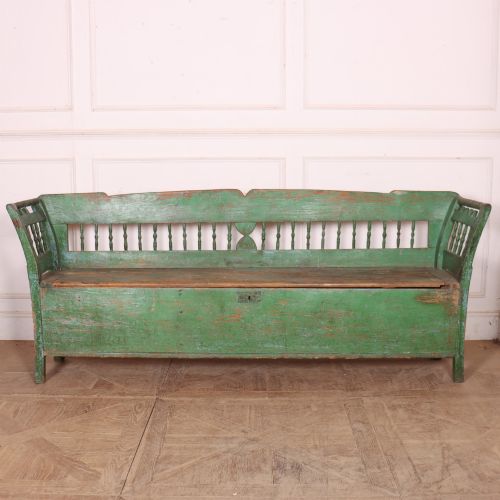
A rustic green bench is a sturdy seat or settle rooted in European country traditions, spanning the eighteenth, nineteenth, and early twentieth centuries. These pieces emerge from diverse regional workshops including Austrian, French, Dutch, and English farmhouse makers.
Buyers encounter country house settles, garden seating, and farmhouse forms that show decades of honest wear. Each piece reflects the utilitarian needs of past rural households, valuing practical construction above ornate decoration.
Materials and construction
Construction relies heavily on sturdy pine and regional timbers, joined with traditional carpentry methods designed to endure daily farm or garden use. Iron is frequently integrated through wrought iron scrollwork or cast iron framing, particularly on garden variants.
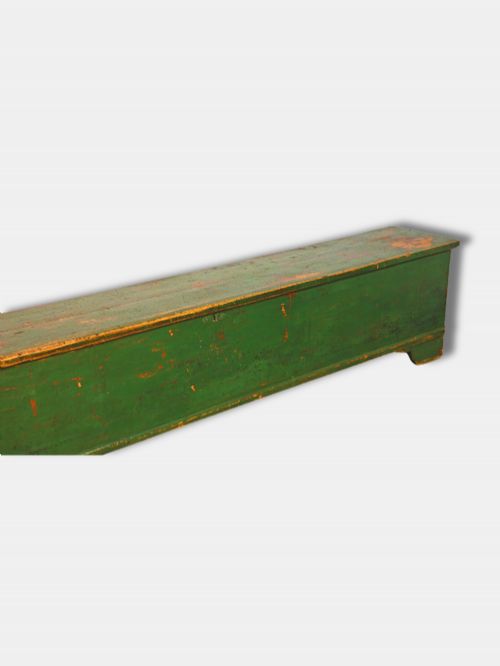
Surfaces are defined by layers of original or early paintwork applied over decades, often weathered down to reveal the bare wood beneath. This build-up of historic pigment creates the tactile, patinated finish that defines the category.
Listings feature items built from pine, oak, and mixed timber, often reinforced with cast iron and wrought iron elements.
Judging quality and surface
Quality rests entirely in the integrity of the original painted surface and the honesty of the timber's wear. A superior piece retains its authentic historic paint layers without heavy modern intervention or unsympathetic repainting.
Structural soundness also dictates value, where joints remain tight and timber retains its original thickness despite centuries of use. Proportion and regional character elevate certain forms above standard utilitarian seating.
The Rustic Green Bench Glossary
- Settle
- A wooden bench with a high back, solid arms, and often a box base for storage. This form kept draughts away from people sitting near open fires.
- Patina
- The deep sheen and surface alteration developed by wood and paint over long periods of use. It serves as a visual indicator of age and handling.
- Original paint
- Pigment applied during the period of manufacture or early use, left largely undisturbed by later decorators. Collectors prize this layer for its historical authenticity.
- Joint stool
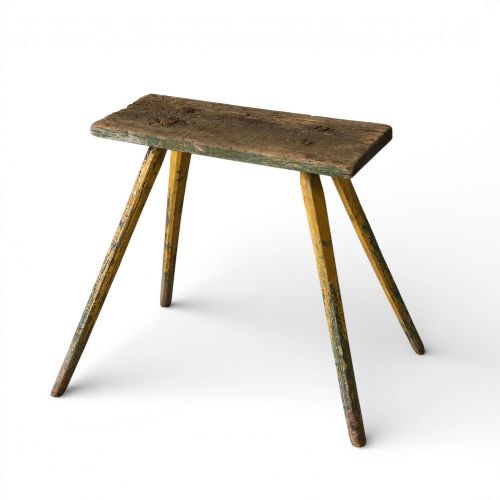
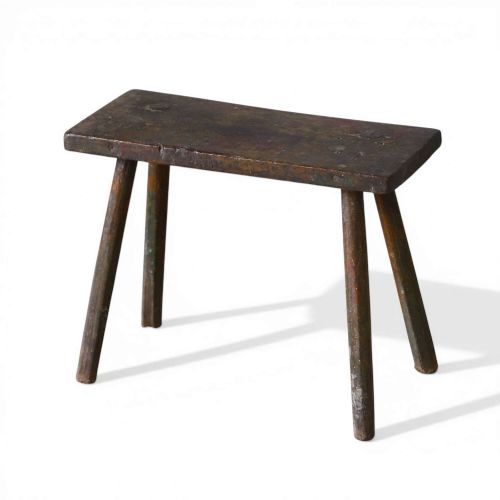
- A low wooden seat built with pegged mortise and tenon joints rather than turned legs. These sturdy items preceded lighter chair forms in many rural homes.
- Verdigris
- A green patina that forms naturally on copper and brass surfaces through atmospheric oxidation. On garden pieces, this chemical change creates varied tonal shifts.
Rustic Green Bench: Frequently Asked Questions
Are these benches suitable for outdoor use?
Many of these pieces originated indoors as farmhouse seating, while others were built specifically for gardens using iron and timber. Placing an indoor painted pine bench outside requires careful shelter from damp weather to protect the historic surface.
Garden variants featuring cast or wrought iron and robust timber handle outdoor environments better. However, severe frost and rain will continue to alter the existing paint layers over time.
How do I clean an original painted surface?
Dust the timber gently with a dry, soft cloth to remove everyday particles without disturbing the underlying pigment. Avoid harsh chemical cleaners, modern detergents, or excessive water that can soften historic paint.
If cleaning requires more attention, use a slightly damp cloth with mild soap, testing a small hidden area first. Preserving the dry, chalky texture of old paint is essential for maintaining the character of the piece.
How can I tell an older bench from a reproduction?
Genuine older pieces show consistent, natural wear patterns around footrests, edges, and handholds where generations touched the wood. Tool marks left by early saws and hand planes often remain visible on the underside and interior surfaces.
Reproductions frequently feature artificial distressing that mimics random impacts rather than genuine usage. Examining the construction joints and the composition of the paint layers usually reveals the true age of the timber.
What is the difference between a settle and a bench?
A settle incorporates a high wooden back and solid side panels designed to block cold draughts in unheated rooms. Many traditional settles also feature a hinged seat lifting to reveal a deep storage box beneath.
A standard bench offers open seating without high protective sides or enclosed storage compartments. Benches are generally lighter to move around a room, porch, or garden setting.