



Rustic Garden Pots
These rustic garden pots bring weight and age to planting schemes, drawing the eye with weathered terracotta, heavy cast iron and riveted copper.
Rustic Garden Pots
When you search for rustic garden pots, you encounter heavy utilitarian vessels designed for planting, storage and estate work rather than delicate display. The selection spans earthenware, stone, metal and clay forms that carry the marks of hard utility across the nineteenth century and earlier.
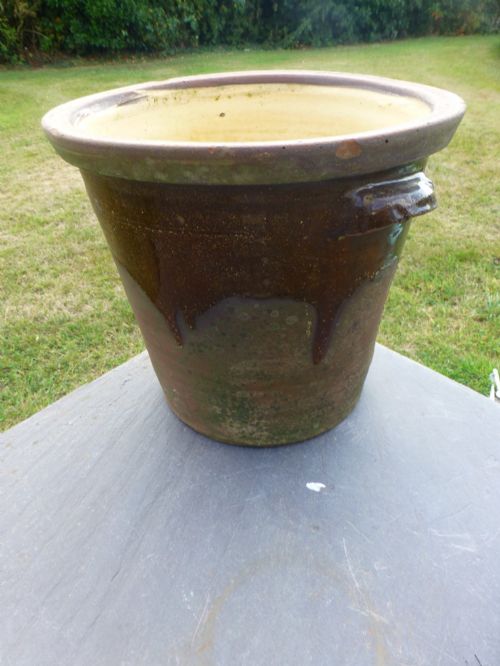
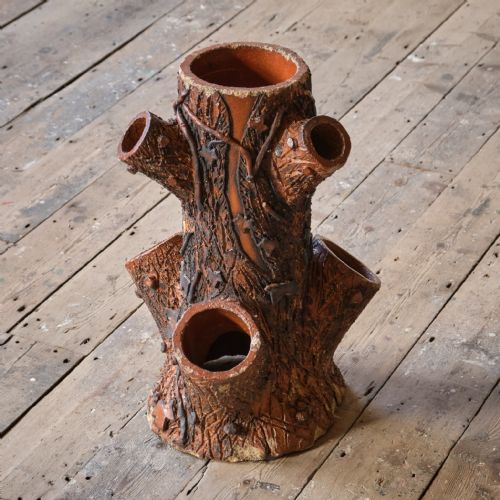
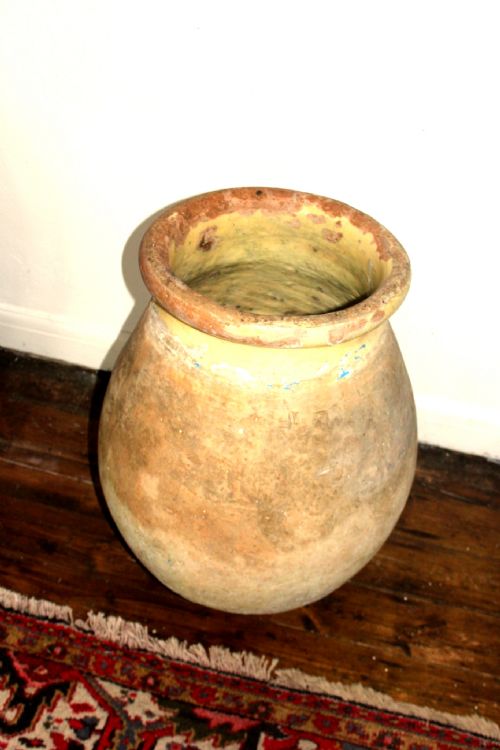
Terracotta and clay examples dominate the selection, including French Biot jars, Turkish olive vases and salt-glazed strawberry planters. These pieces originate from domestic and agricultural settings where durability mattered more than refinement.
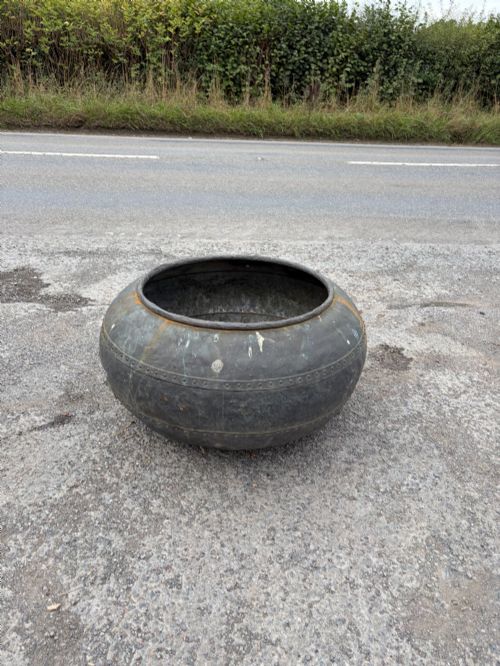
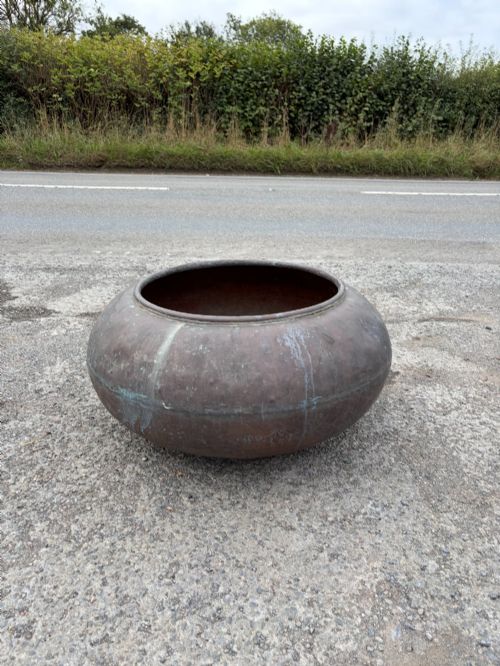
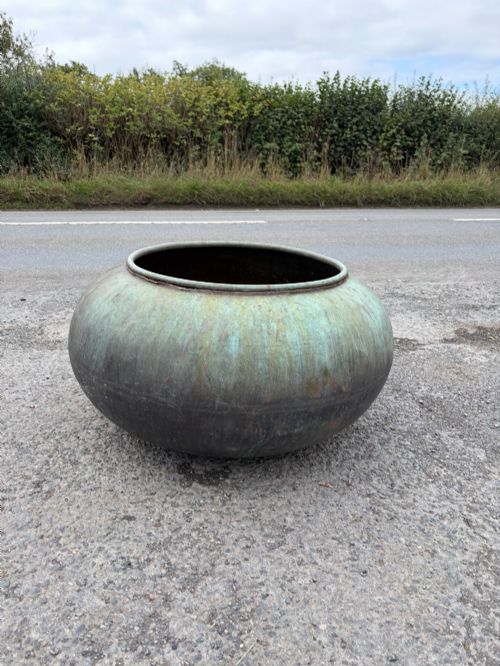
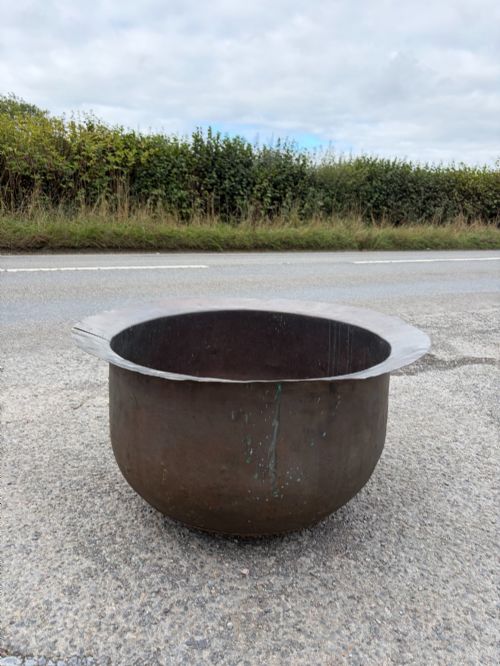
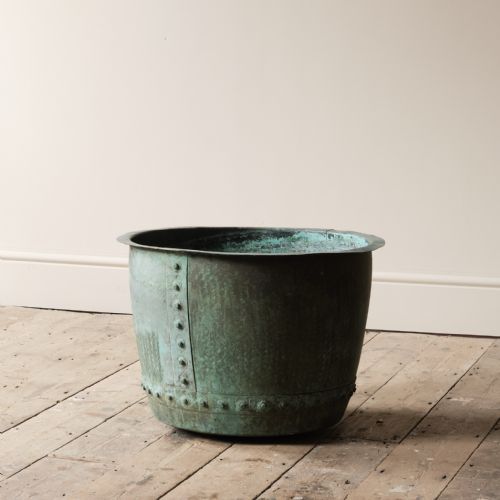
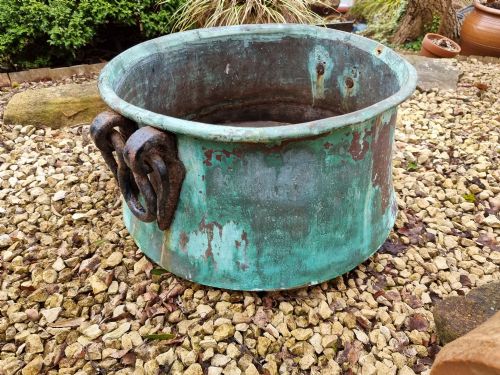
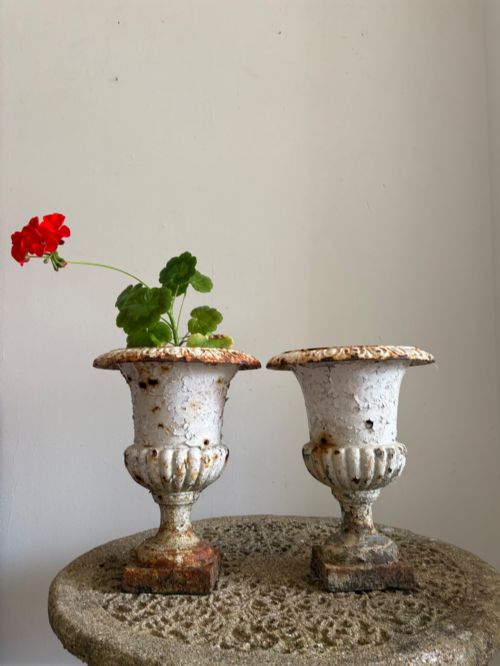
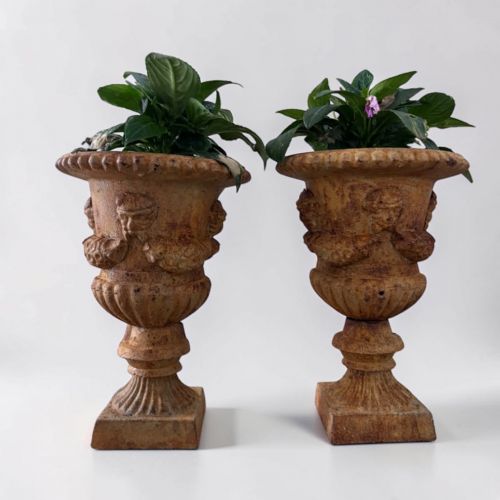
Metal vessels feature strongly alongside ceramics, taking the form of large riveted copper cauldrons, zinc planters and cast iron classical urns. Many of these metal pots served alternative duties such as log bins or dairy vessels before finding a home in the garden.
Materials and construction
Potters shaped clay and terracotta by hand or on wheel, firing them in kilns to produce porous bodies suited to holding earth and moisture. Metal pots relied on heavy-duty construction, with coppersmiths joining sheets using hand-hammered rivets and ironworkers casting molten metal into detailed classical urn moulds.
Surfaces developed their character through exposure and use, leaving behind layers of original distressed paint, verdigris oxidation on copper and zinc, and salt glazes. These finishes accumulated naturally over decades in potting sheds, dairies and open courtyards.
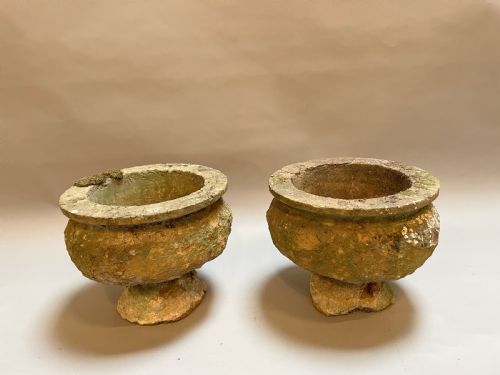
A reclaimed stone planter in the collection carries stone salvaged directly from the Houses of Parliament after damage sustained during the Blitz.
Assessing quality and authenticity
Quality rests in the integrity of the material and the honesty of the wear. Genuine age reveals itself in deep patination, stable weathering and structural heft rather than applied surface effects.
The distinction between a utilitarian vessel and a decorative piece lies in its provenance and heft. Heavy riveted joints on copper, thick-walled salt-glazed clay and crisp casting on iron urns separate robust functional items from lighter decorative copies.
The Rustic Garden Pots Glossary
- Verdigris
- A green patina that forms naturally on copper, brass or bronze through atmospheric oxidation. This chemical reaction protects the underlying metal while adding visual depth.
- Faux bois
- A technique where artists shape concrete, ceramic or plaster to imitate wood grain. It appears frequently on nineteenth-century strawberry planters.
- Amphora
- A tall ancient container with two handles and a narrow neck, traditionally used for storing oil or wine. Later iterations served agricultural storage purposes.
- Salt glaze
- A glassy, brownish coating formed by throwing common salt into the kiln during high-temperature firing. This process creates a textured, orange-peel finish on stoneware.
Rustic Garden Pots: Frequently Asked Questions
How do I protect antique pots in winter?
Porous materials like terracotta and soft stone absorb moisture that can expand and crack during freezing temperatures. Move unglazed or fragile pots under shelter or empty and wrap them during severe frosts.
Heavier cast iron and treated metal vessels withstand low temperatures better, though ensuring proper drainage prevents water accumulation in the base.
Can I plant directly into these pots?
Most historic vessels function well for direct planting provided they feature adequate drainage holes at the base. Line larger copper or iron containers with protective membranes if the metal composition requires separation from acidic compost.
Earthenware and terracotta pots breathe naturally, making them suitable for root health as long as the soil mixture drains freely.
How do I clean verdigris off copper?
The green verdigris layer acts as a protective shield and many collectors prefer to leave the patination undisturbed. Scrubbing away the oxidation exposes raw metal that requires years to weather again.
Wash away surface dirt using plain water and a soft brush while preserving the underlying patinated finish.
What is a faux bois planter?
Faux bois refers to decorative items moulded to resemble natural wood, often mimicking tree bark or knotted branches. Gardeners during the nineteenth century favoured these earthy designs for rustic settings.
Potters applied this finish to specialised strawberry planters and troughs to blend horticulture with naturalistic forms.