

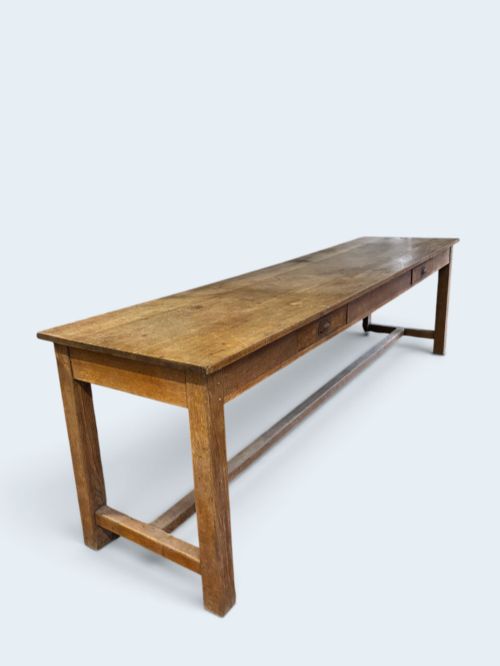
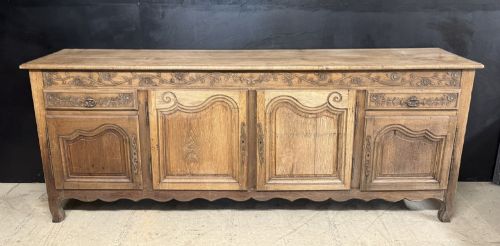
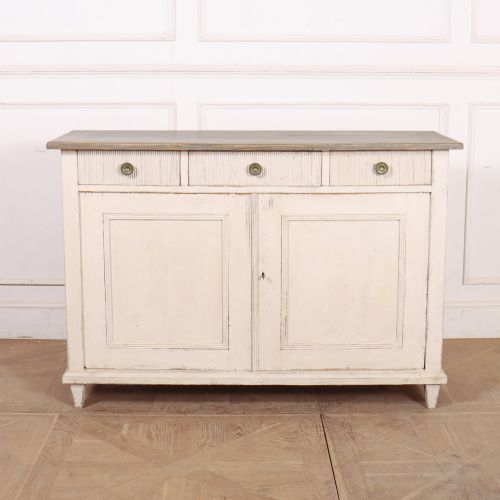
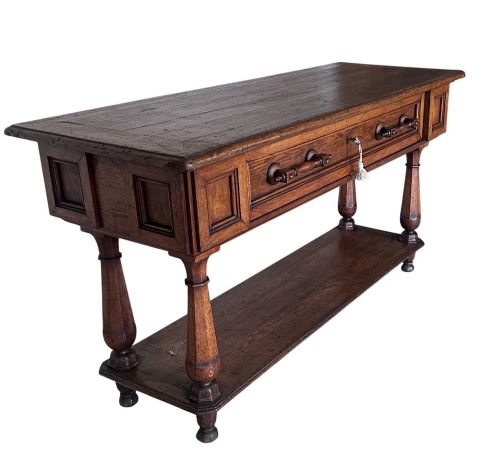
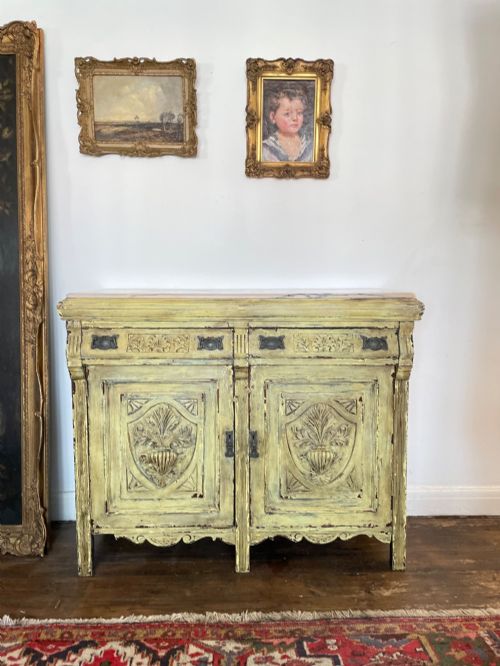
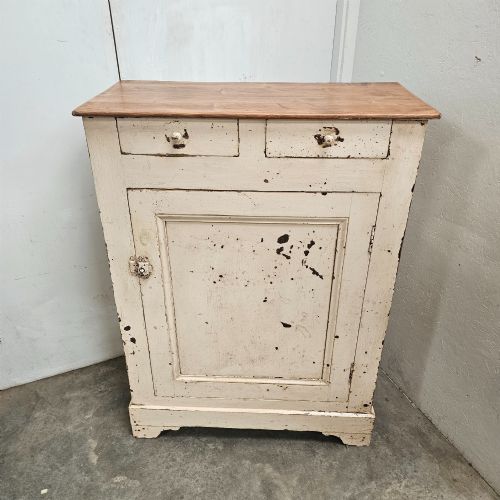

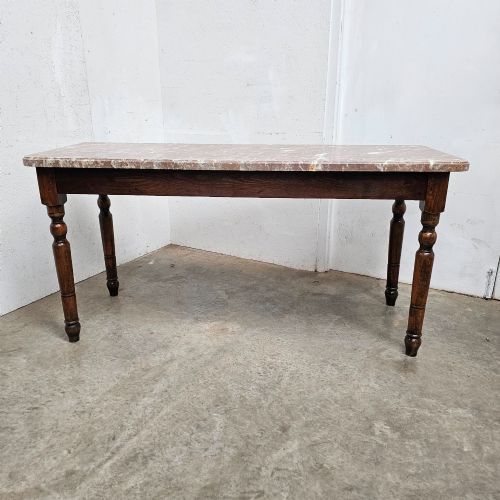
Rustic French Sideboard
A rustic french sideboard brings robust provincial utility and warm timeworn grain directly into a modern kitchen or dining room.
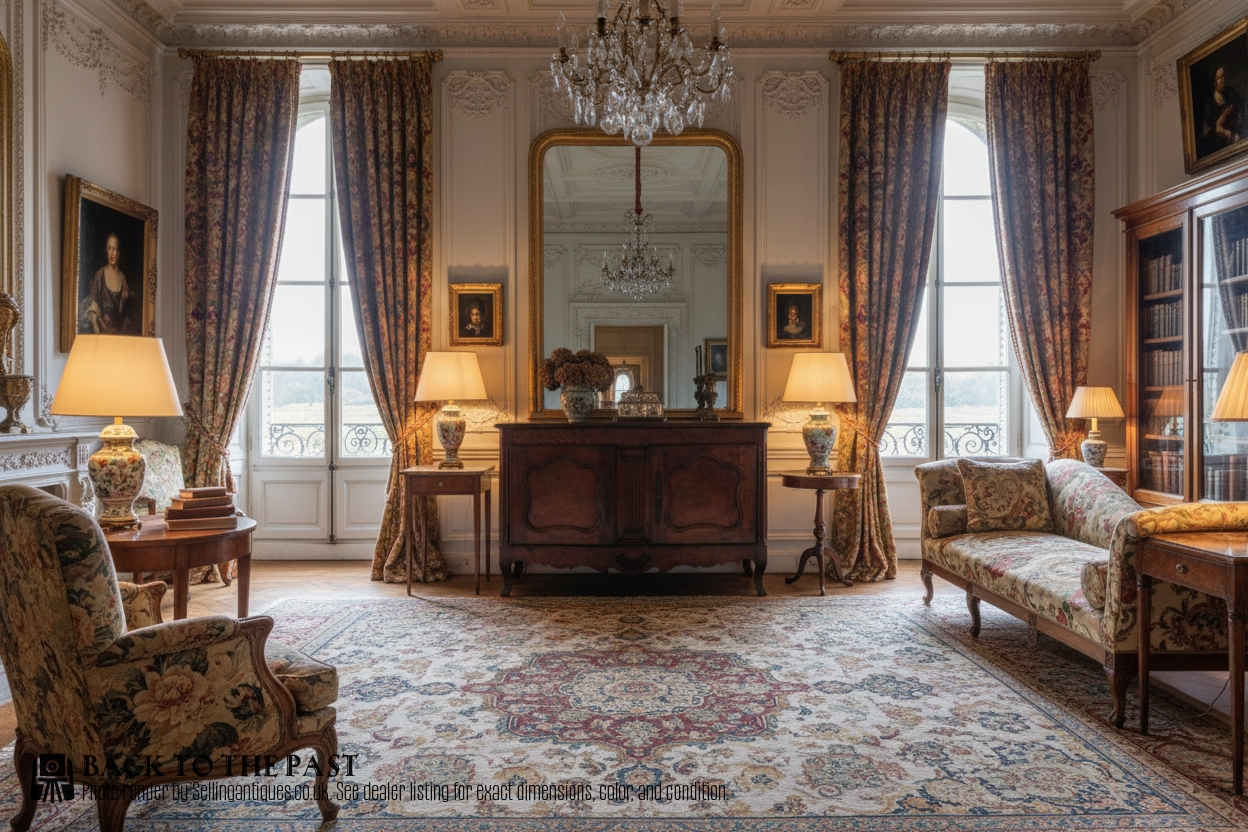
Rustic French Sideboard
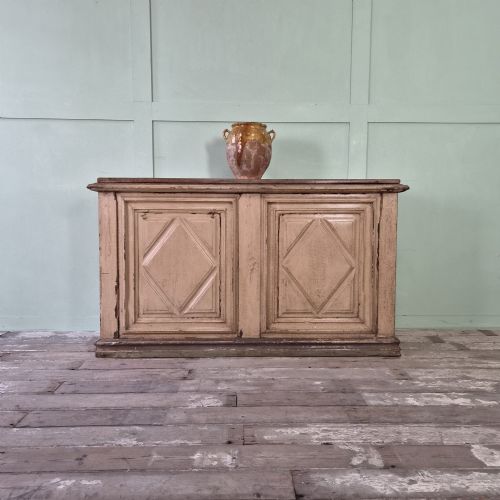
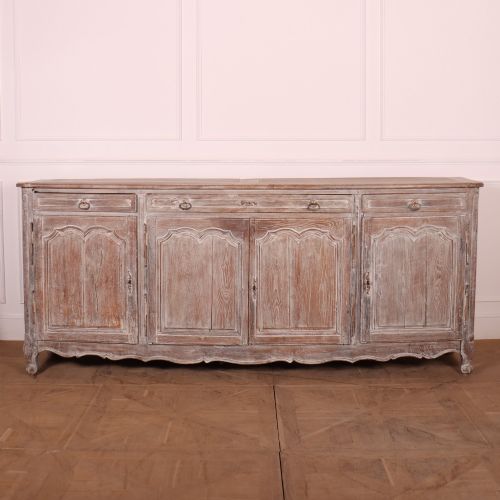
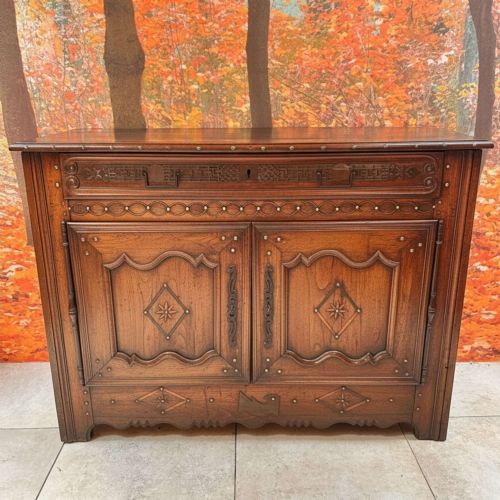
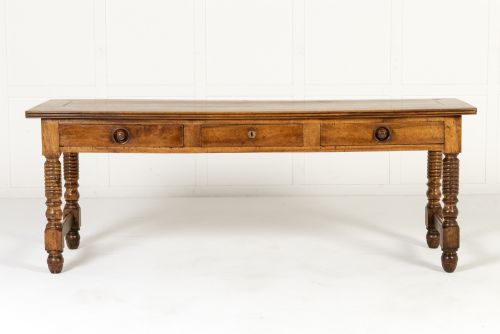
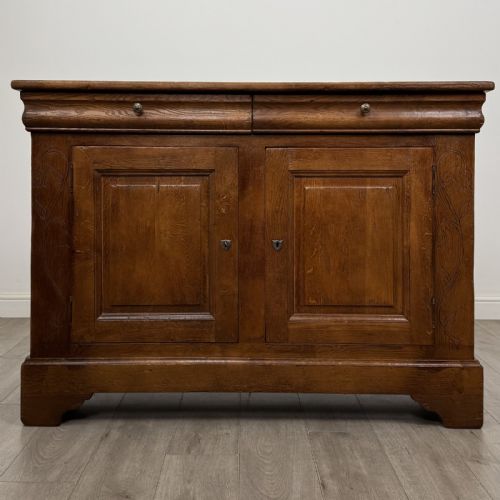
A rustic french sideboard encompasses heavy storage furniture built for provincial French homes, country houses, and farmhouses. When searching for a rustic french sideboard, buyers encounter a range of heavy storage furniture including oak enfilades, fruitwood dresser bases, walnut buffets, and cherrywood housekeepers cupboards spanning the eighteenth and nineteenth centuries.
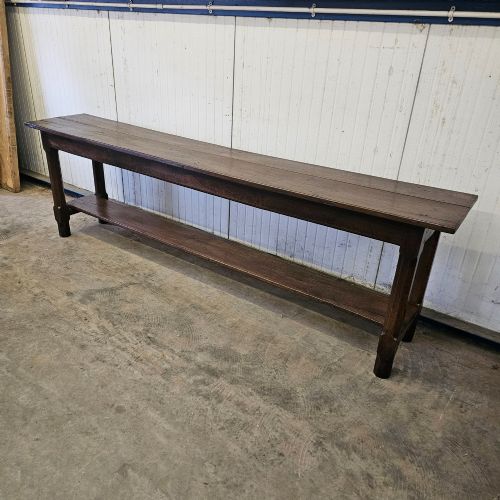
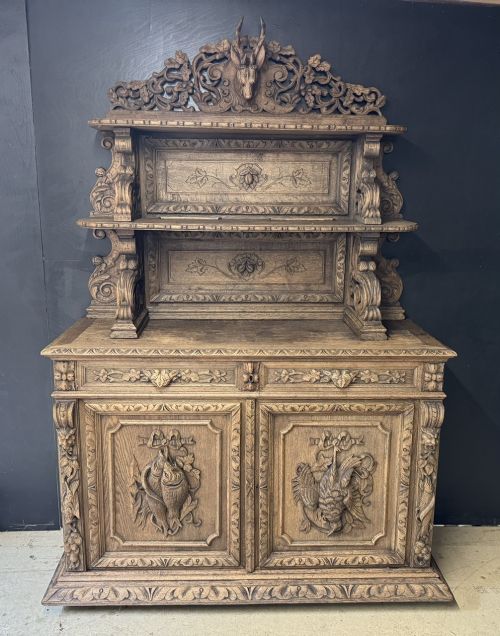
The pieces on this page lean heavily into nineteenth-century production, alongside select eighteenth-century examples and turn-of-the-century workshop items. Forms vary widely from long serving tables and low sacristy cabinets to multi-drawer shop counters and monumental buffet de corps game cupboards.
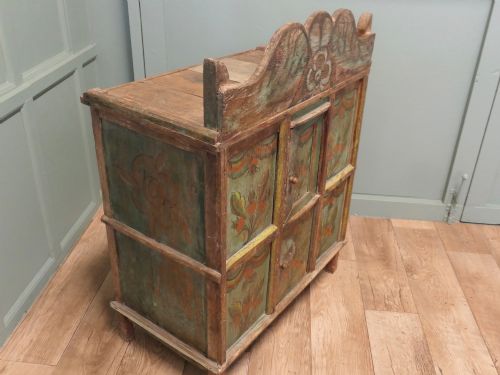
Regional diversity shapes the selection, featuring provincial oak, painted pine confituriers, and specialised items like Breton cabinets fashioned from closed bed fronts. Buyers primarily select these robust timbers and deep drawers to anchor dining spaces and farmhouse kitchens with authentic utility.

How they were made
Construction relies heavily on dense regional hardwoods such as solid oak, walnut, fruitwood, cherrywood, chestnut, and burr elm, frequently paired with secondary pine. Carpenters utilised robust joinery techniques to build functional case furniture intended for daily domestic or agrarian labour.
Surface treatments range from bare waxed grain that highlights natural patination to original paint and applied iron or brass hardware. Certain iterations incorporate contrasting marble tops, such as pink marble surfaces, or integrated vices on workbench adaptations.
Rustic French Sideboard Retail Price Guide 2026
Typical asking prices for rustic french sideboard among the pieces listed under this phrase on Sellingantiques today, from the lower quarter to the upper quarter. They describe what is for sale here now, not the wider market.
Listings feature regional French hardwoods including oak, cherrywood, chestnut, fruitwood, walnut, and burr elm alongside painted pine.
What varies in quality
Quality rests in the integrity of the timber selection and the honesty of the accumulated patina across centuries of domestic service. Superior examples display dense, well-figured grains in timbers like burr elm or walnut, combined with substantial structural depth and well-balanced proportions.
The retention of original surface finishes, whether historic paint or deep-waxed oak, distinguishes finer vernacular survivals from heavily restored pieces. Construction refinement is evident in tight panel fitment, substantial drawer linings, and the survival of original brass or iron hardware.
The Rustic French Sideboard Glossary
- Enfilade
- A long sideboard featuring a linear series of doors and drawers, typically spanning three or more sections. This form provided extensive storage for dining linen and provisions in large French country houses.
- Confiturier
- A narrow cupboard designed specifically to store confit jars and preserved fruits in provincial French larders. These compact pieces usually feature a single door above or below a small drawer.
- Buffet de Corps
- A monumental two-part storage cabinet combining a lower sideboard base with an upper display or enclosed shelving section. They often feature deep carved detailing related to game or regional rural motifs.
- Lit-clos
- A traditional enclosed bed from Brittany whose structural components, such as panelled fronts, were occasionally repurposed into functional cabinetry. This vernacular adaptation preserves distinct regional folk joinery.
Rustic French Sideboard: Frequently Asked Questions
What is an enfilade?
An enfilade is a long, low sideboard featuring multiple doors and drawers arranged in a continuous horizontal line. These pieces offer substantial storage capacity for dining rooms and kitchens.
Originally designed for grand provincial dining spaces, their extended surface area also serves well for food preparation or display.
How do I clean antique oak?
Maintenance requires gentle dusting with a soft cloth followed by occasional applications of natural beeswax to nourish the dry timber. Avoid modern silicone polishes that build up and dull the historic patina.
Keeping the wood away from direct heat sources prevents the dense grain from splitting or warping over time.
Where were these sideboards made?
These pieces originate from various provinces across France, including Brittany, the Loire Valley, and rural farming regions. Local cabinetmakers built them using the timber readily available in their specific geographic area.
Regional preferences dictated whether a maker chose local oak, walnut, cherrywood, or fruitwood for the construction.
Can I use one in a kitchen?
These sideboards function exceptionally well as kitchen islands, prep stations, or storage credenzas. Their deep drawers and sturdy timber surfaces easily accommodate modern kitchenware and daily domestic use.
Marble-topped variants offer practical, cool surfaces well-suited for food preparation tasks.