




Rustic French Provincial Chairs
Rustic French provincial chairs bring practical countryside seating into modern dining spaces with honest timber construction and traditional woven seats.
Rustic French Provincial Chairs
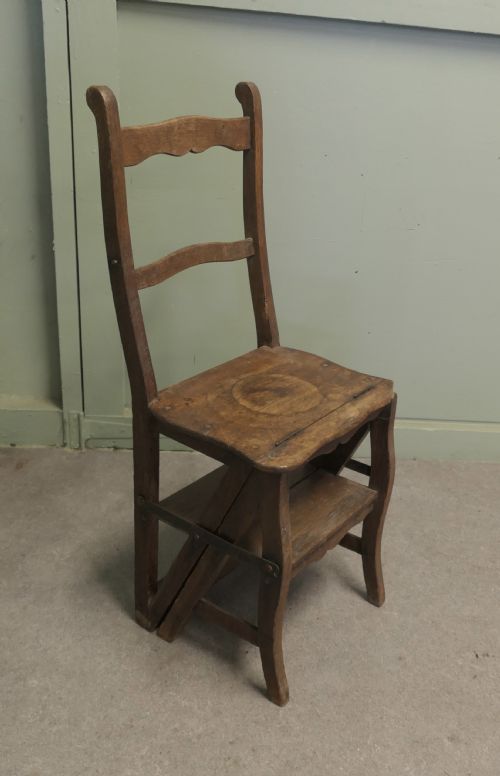
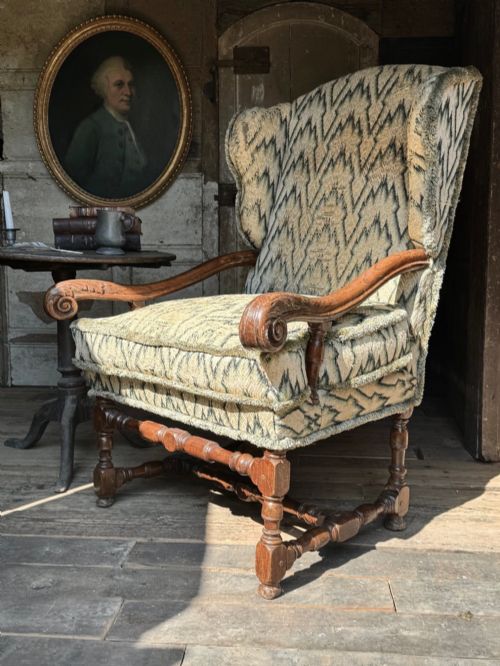
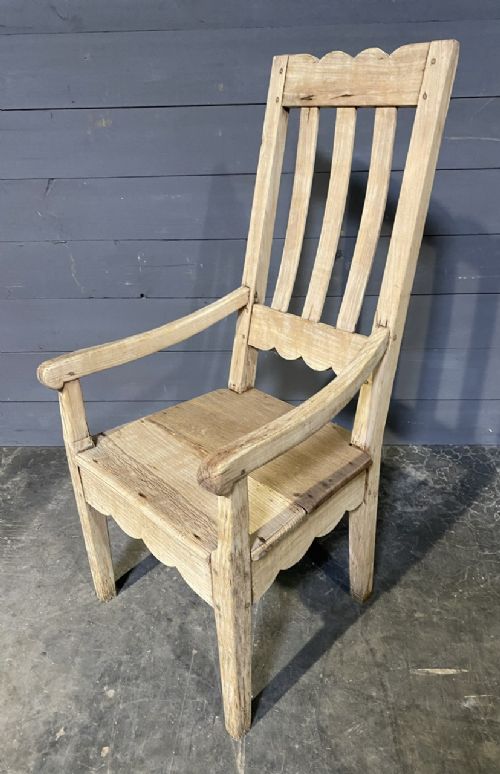
Rustic French provincial chairs encompass robust dining chairs, armchairs, benches, and library steps originating from rural French regions. These pieces range from eighteenth-century oak wingbacks to later sets of kitchen and dining chairs.
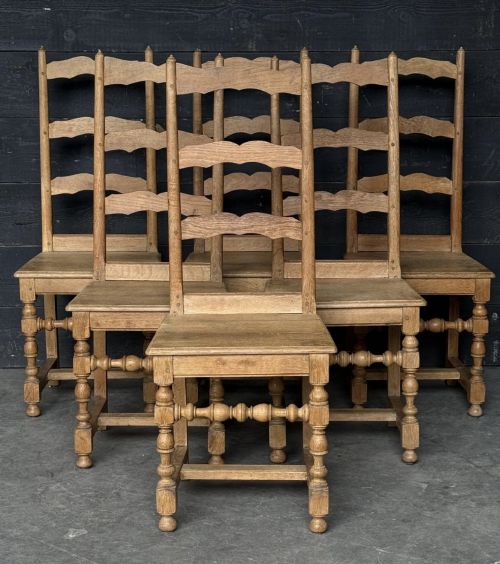
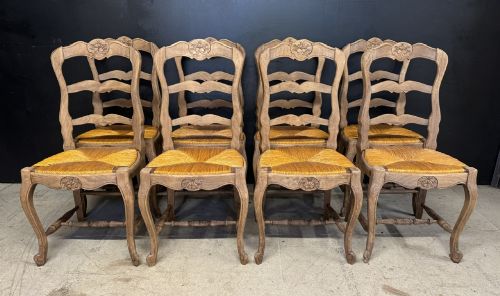
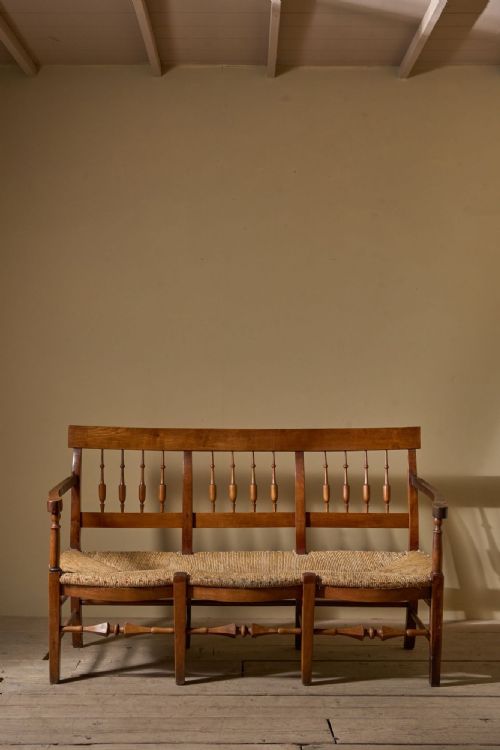
The version most commonly encountered on this page is the nineteenth-century ladder back dining chair fitted with a rush seat. These items reflect traditional rural craftsmanship designed for daily farmhouse use rather than formal salons.
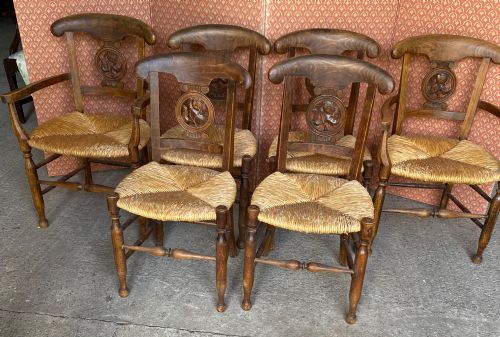
Forms span from large sets of six, eight, or twelve dining chairs to individual armchairs and hall benches. Oak, fruitwood, and cherrywood dominate the construction across various provincial styles including French country and French Breton.
Materials and construction methods
Local hardwoods such as oak, cherrywood, and fruitwood form the structural framework of these rural pieces. Joinery relies on traditional pegged mortise and tenon construction to withstand heavy daily use.
Seats are frequently fitted with woven rush, utilising natural plant fibres threaded tightly around the wooden frame. Iron fixings and textile elements appear selectively where additional support or upholstery is required.
Current listings feature pieces spanning the eighteenth, nineteenth, and early twentieth centuries, constructed primarily from oak, fruitwood, and cherrywood.
Assessing quality in provincial seating
Quality rests in the integrity of the timber framing and the tightness of the woven rush seating. Original surface patination and depth of colour distinguish items that retain their authentic character from those with overworked surfaces.
Proportion and the subtlety of turned ladder backs separate standard utility seating from finer provincial workshop examples. Complete matching sets demonstrate higher consistency in initial design and subsequent preservation.
The Rustic French Provincial Chairs Glossary
- Rush seat
- A seating surface woven from dried marsh grasses wound tightly around wooden rungs. This traditional technique provides a resilient and flexible platform for everyday seating.
- Ladder back
- A chair back featuring multiple horizontal wooden slats curved to support the spine. This design is characteristic of straightforward provincial seating from various rural European regions.
- Fruitwood
- Timber milled from fruit-bearing trees such as cherry, pear, or apple. This material yields a warm tone and fine grain suitable for provincial cabinetmaking.
- Wingback armchair
- An upholstered seat featuring protective side panels designed to deflect drafts. Early examples from the eighteenth century display robust oak frames and generous proportions.
- Patination
- The natural surface transformation developed through handling, light exposure, and polishing over centuries. Good patination reveals the underlying depth and character of the timber.
Rustic French Provincial Chairs: Frequently Asked Questions
What defines rustic french provincial chairs?
These pieces are traditional seating forms produced in rural regions of France using local hardwoods and practical construction methods.
They emphasise utilitarian strength and simple regional styles rather than courtly ornament.
How were rush seats maintained?
Rush seats are woven from natural marsh vegetation that responds well to gentle cleaning and dry conditions.
Avoiding excess moisture preserves the integrity of the twisted fibres over decades of use.
Can I mix different chair sets?
Provincial dining chairs often pair well together due to their shared use of natural timbers and honest vernacular forms.
Matching heights and seat depths ensures visual and physical comfort around a dining table.
How do I identify earlier pieces?
Earlier eighteenth-century examples display heavier scantlings of oak and deeper patination resulting from prolonged use.
Construction details like hand-cut pegs and organic wear patterns help distinguish these from later nineteenth-century production.