
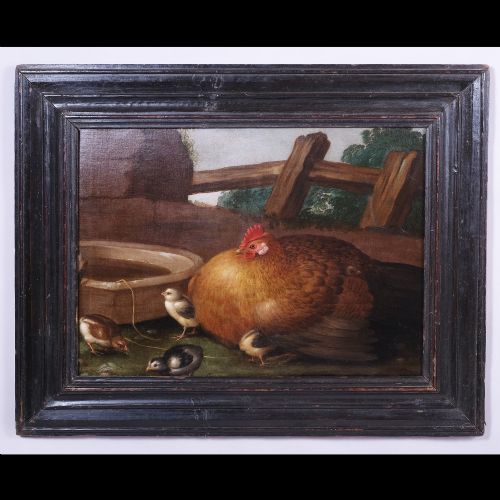

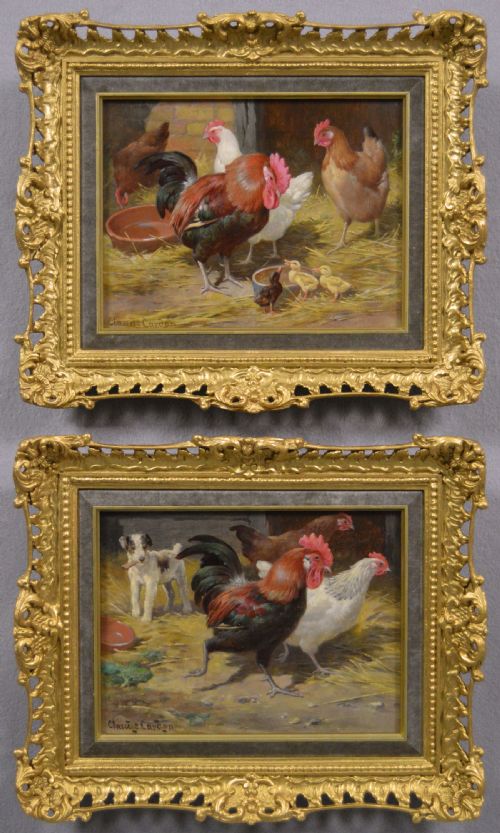


Rustic Farmyard Scene
A rustic farmyard scene captures the traditional rural way of life through oil paintings and watercolours depicting farm animals, barns, and daily agricultural routines.
Rustic Farmyard Scene
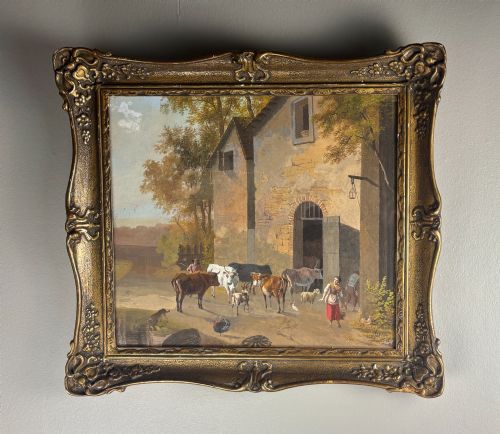
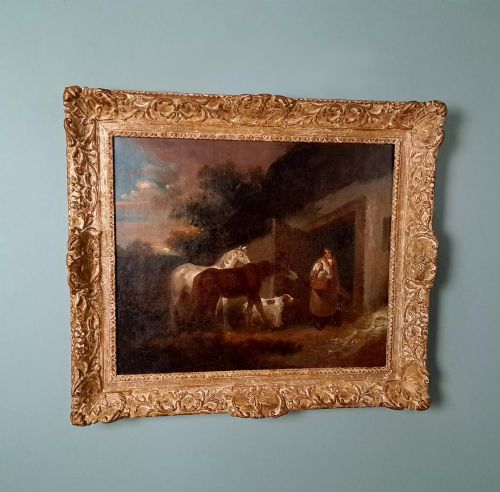
A rustic farmyard scene brings rural life into the home through oil paintings and watercolours depicting daily agricultural subjects. These works focus on horses, pigs, hens, cockerels, chicks, and milking cows housed within traditional farm yards and rustic settings.
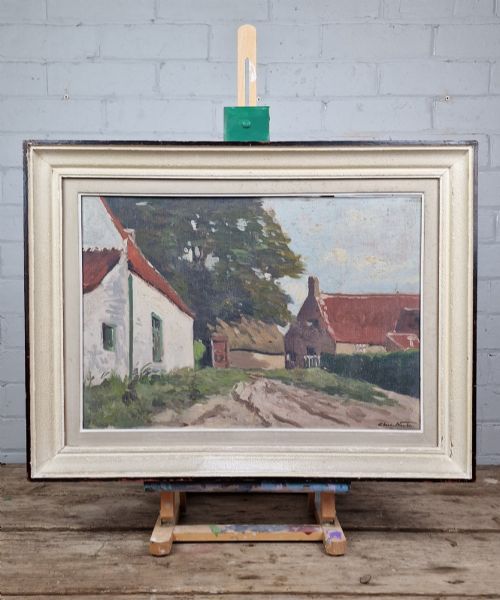
The pieces appearing on this page span several centuries, with works originating from the eighteenth century, the nineteenth century, and the early twentieth century. Examples range from Victorian realism and British pastoral compositions to Barbizon School landscapes and primitive folk art.
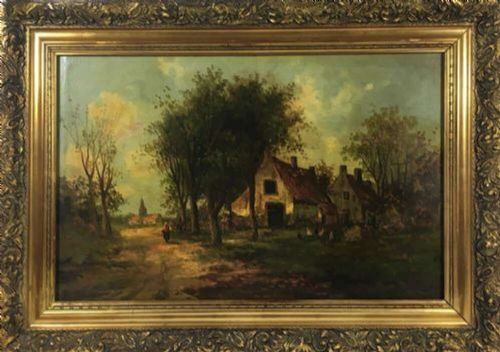
Buyers will encounter framed oil paintings on canvas and board alongside watercolours and framed prints. Some items present detailed depictions of animal life, while others portray broader country scenes featuring old cart sheds and rural cottages.
How they were made
Artists painted these works primarily using oil paint applied to canvas or board, alongside watercolours on paper. Canvases provide the texture and durability seen in many nineteenth-century works, while wooden boards support more compact compositions.
Many of these paintings are housed within wooden and giltwood frames that complement the pastoral subject matter. The physical construction relies on traditional stretched canvas techniques and framed presentations typical of British and European fine art production.
Materials recorded across the inventory include oil on canvas, oil on board, watercolour, canvas, wood, and giltwood.
What varies in quality
The skill of the brushwork and the precision in rendering animal anatomy define the upper tiers of these paintings. Works by established painters demonstrate a careful handling of light and texture across feathers, fur, and rustic architecture.
Compositional depth and atmospheric engagement separate standard decorative pieces from accomplished fine art. Softer tonal transitions and balanced perspectives elevate individual works above simpler primitive or derivative studies.
William Joseph Shayer Senior·Charles Houben·Edgar Hunt·Claude Cardon·Percival Glenfern·Ralph Dorrance·Robert Russell MacNee·Owen Bowen·John Frederick Herring·John R K Duff·Edward Killingworth Johnson·Ernest Higgins Rigg·Georgina Lara·George Morland·Kershaw Schofield
The Rustic Farmyard Scene Glossary
- Oil on Canvas
- A traditional painting medium where oil paints are applied to a stretched woven fabric support. This combination allows for rich colour blending and textured brushwork.
- Barbizon School
- A French movement of painters associated with landscape and rural realism during the nineteenth century. These artists worked closely from nature to capture authentic pastoral atmospheres.
- Post-Impressionism
- An art movement following Impressionism that extends its boundaries while retaining a focus on distinct brushstrokes and expressive forms. Works in this style show individual interpretations of rural light and colour.
- Mezzotint
- A printmaking process of the intaglio family where the plate is roughened to produce tones and rich dark areas. It allows for subtle gradations of light and shade in reproduction prints.
- Primitive Folk Art
- Paintings created outside academic traditions, often displaying flattened perspective and straightforward charm. These pieces emphasise direct storytelling over formal artistic rules.
Rustic Farmyard Scene: Frequently Asked Questions
What animals appear in these scenes?
Paintings of this subject frequently feature farm animals including horses, pigs, sows with piglets, milking cows, hens, cockerels, and chicks. These animals populate the daily working environments of traditional farms and rustic yards.
Artists often placed these creatures near barns, old cart sheds, and country cottages to ground the composition in authentic rural life.
Are these paintings original works?
The selection includes original oil paintings on canvas and board, original watercolours, and coloured mezzotint prints. Many are signed by period artists working within British and European traditions.
Some pieces are identified as period copies or works created in the style of well-known painters from the nineteenth and early twentieth centuries.
How do I date a farmyard painting?
Dating relies on stylistic evidence, artist signatures, materials such as canvas or board, and framing techniques. Victorian and eighteenth-century pieces often display specific approaches to pastoral realism and colour palettes.
Inscriptions on the reverse or documented artist lifespans help narrow the period of creation to specific decades like the eighteen-sixties or nineteen-twenties.
How do I hang and display them?
These framed artworks suit traditional living spaces, studies, and dining rooms where pastoral and rural subjects complement classic interior schemes. Adequate wall space allows the giltwood and wooden frames to sit comfortably.
Direct sunlight should be avoided to protect oil paints, watercolours, and paper supports from fading over time.