
Rustic English Country Table
A rustic english country table brings enduring utility and honesty of construction into a home, rooted in centuries of domestic use.
Rustic English Country Table
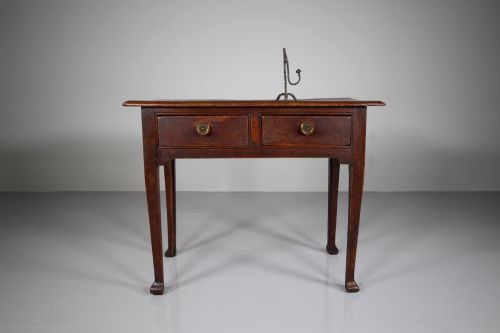
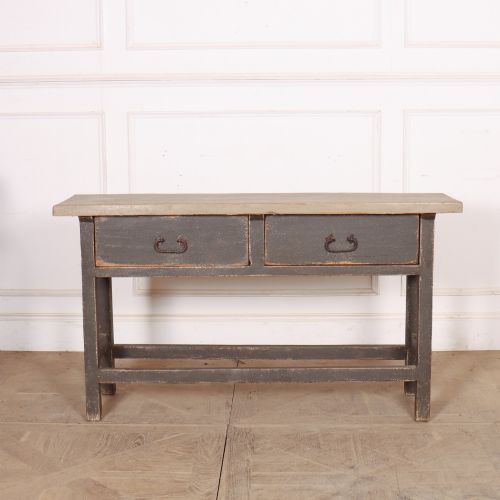
A rustic english country table comprises forms designed for daily utility in farmhouses, dairies, and country houses, spanning periods from the eighteenth century through to the early twentieth century. When searching for a rustic english country table, buyers encounter dining boards, cricket tables, side tables, and prep tables shaped by practical demands rather than formal fashion.
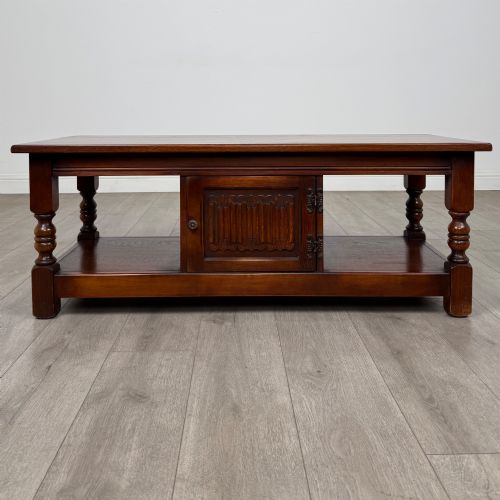
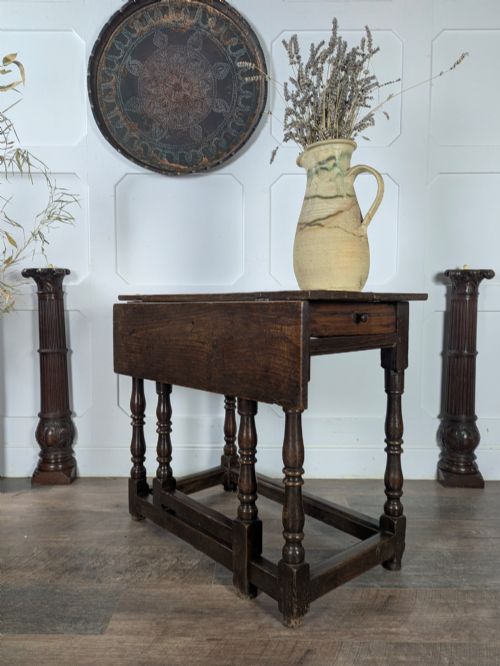
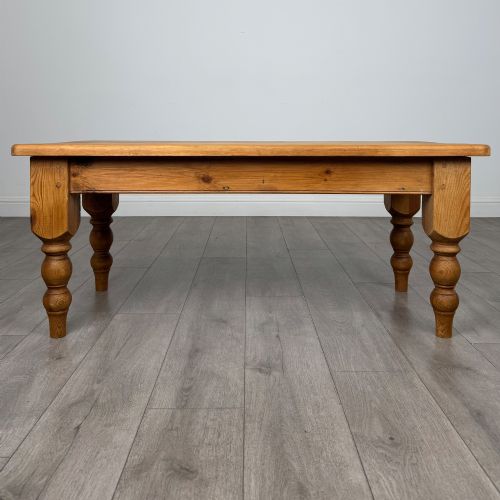
The materials that dominate this selection are oak, pine, elm, and beech, often displaying the marks of heavy domestic labour and generations of use. Common configurations include long dining boards, drop-leaf tables, gateleg designs, and low coffee tables adapted from earlier benches and boards.
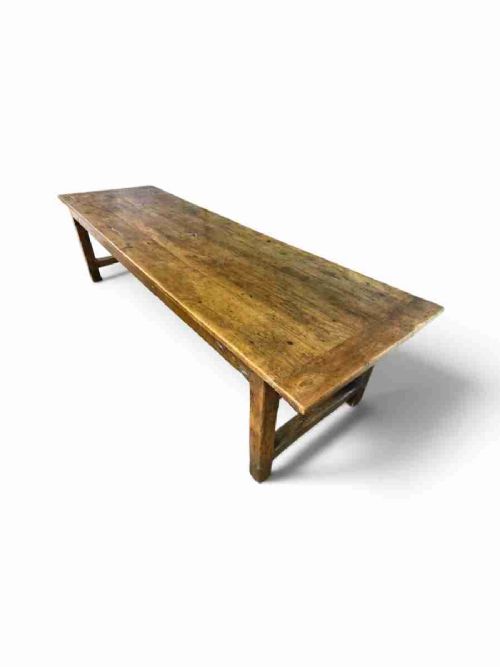
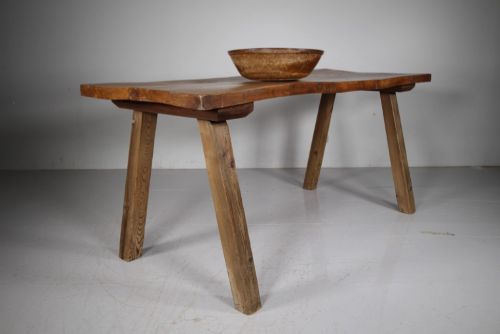
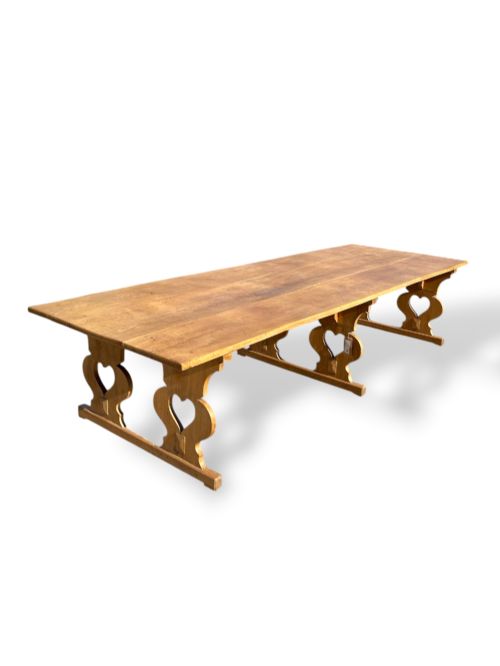
Origins trace directly to English rural workshops and provincial households, where makers prioritised sturdy construction using locally available hardwoods and softwoods. Examples range from compact tripod cricket tables to substantial eight-foot harvest and refectory tables intended for large communal spaces.
Materials and construction
Makers relied primarily on solid oak, pine, elm, fruit wood, and beech, selecting timbers for strength and availability rather than uniform appearance. Joinery was straightforward and robust, utilising pegged tenons, thick plank tops, and sturdy underframes designed to withstand rigorous daily employment.
Surface treatments evolved over time, shifting from bare scrubbed timber to later layers of paint, wax, and patinated finishes accumulated through decades of cleaning and use. Iron and brass fittings occasionally appeared on drop-leaf actions and drawer mounts, while turned legs and simple pedestals provided structural support.
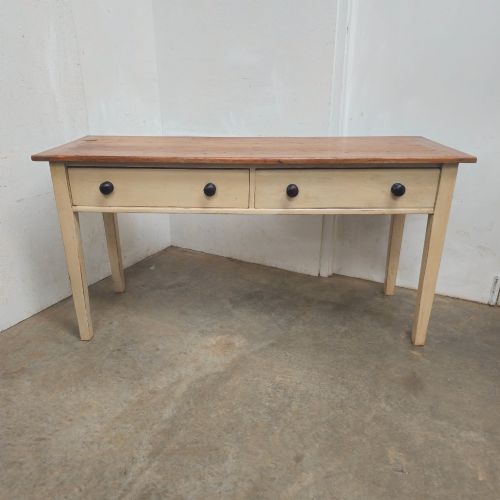
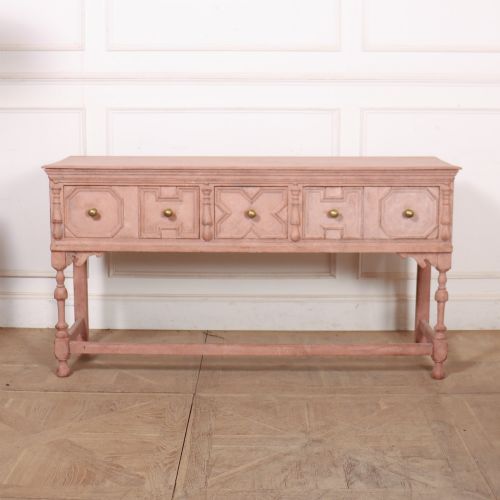
Listings feature oak, pine, and elm pieces spanning the eighteenth century through to the Edwardian era, including dining boards, potboard dresser bases, and tripod cricket tables.
Distinctions in quality
The integrity of the timber and the depth of natural patination separate standard examples from those of superior character. Tables constructed from thick, solid oak or well-figured elm with original pegged joints demonstrate a higher grade of provincial craftsmanship.
Proportion and balance also distinguish the range, particularly in smaller forms like cricket tables and side tables where leg placement and top thickness dictate visual harmony. Alterations to height or surface scraping can diminish the authentic character built up over centuries of domestic life.
The Rustic English Country Table Glossary
- Cricket table
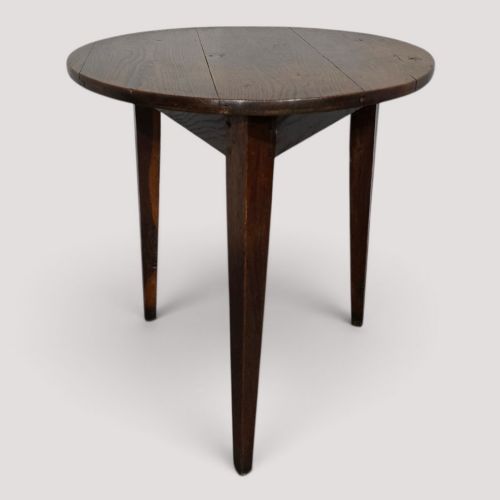
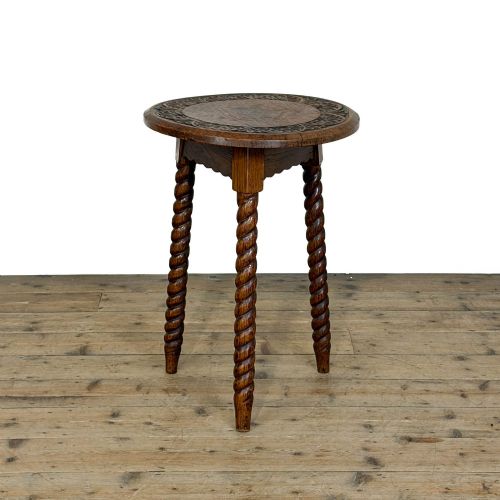
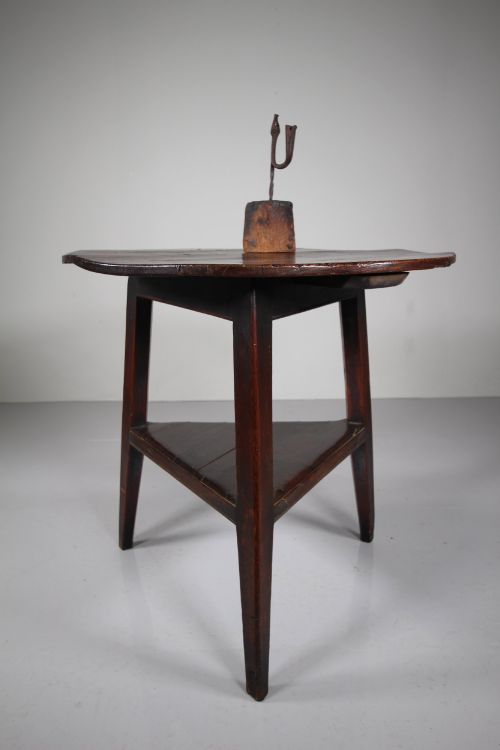
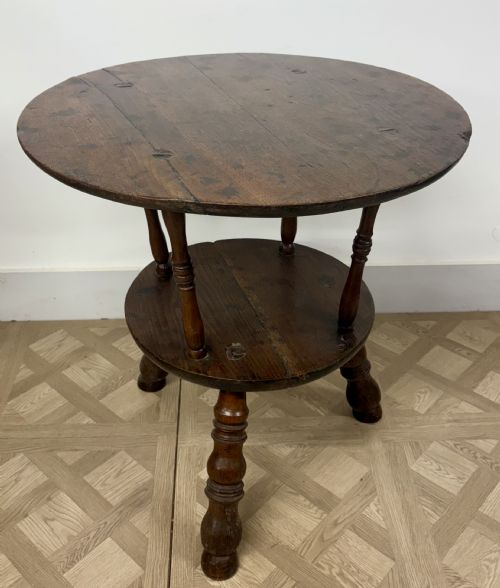
- A small, three-legged occasional table, typically with a round wooden top, originating from the eighteenth century or earlier. Its three legs ensure stability on uneven flagstone floors.
- Potboard
- A lower slatted shelf fitted between the legs of a dresser base or serving table, traditionally used for storing pots and pans. This platform adds significant structural rigidity to the underframe.
- Gateleg table
- A drop-leaf table featuring hinged flaps supported by swinging legs that pivot out like a gate. This mechanism allows the surface area to expand or contract depending on space requirements.
- Harvest table
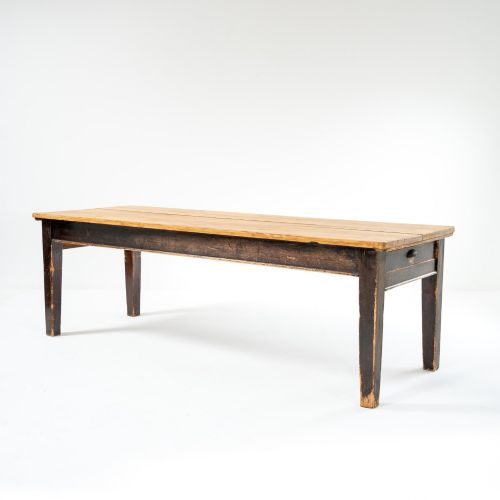
- A long, narrow dining table designed to accommodate large farm working families during seasonal gatherings. They typically feature robust pine or oak tops set upon sturdy trestle or four-leg frames.
- Refectory table
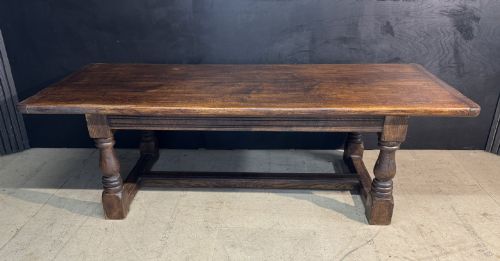
- An elongated dining table traditionally used in communal dining halls and later adopted in large country houses. They are characterised by thick timber tops and stretcher rails near the floor for added stability.
Rustic English Country Table: Frequently Asked Questions
How do I clean a wooden farmhouse table?
Wipe surfaces regularly with a slightly damp cloth and dry them immediately to protect the historic grain. Avoid harsh chemical cleaners that strip the accumulated patina from antique timber.
Apply a traditional beeswax polish occasionally to nourish the wood and maintain a soft, protective sheen without sealing the surface unnaturally.
Can I use an antique pine table for daily dining?
Historic pine tables were built for heavy domestic labour and handle everyday family meals with ease. Their resilient surfaces readily absorb the marks of daily living.
Use coasters and placemats to prevent extreme heat or moisture rings from penetrating deep into the historic grain or later painted finishes.
How can I tell an eighteenth-century table from a later reproduction?
Examine the underside and joints for hand-cut pegged tenons, tool marks, and timber shrinkage that reflect genuine age. Eighteenth-century pieces exhibit natural wear patterns and authentic patination accumulated over generations.
Later revivals, such as those from the Edwardian period or Jacobean style revivals, often display more uniform machine finishing and different nailing techniques.