
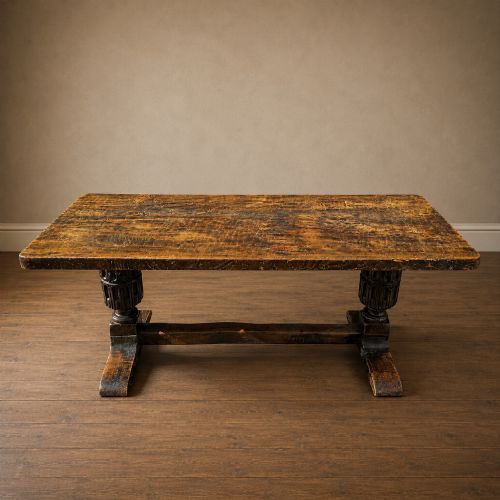
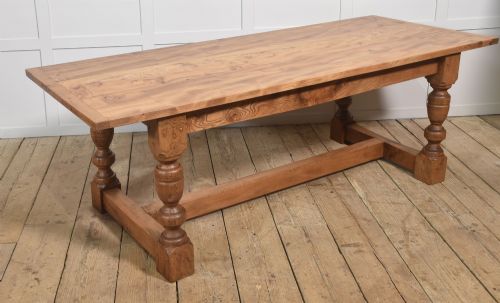


Rustic Elm Refectory Table
A rustic elm refectory table brings immediate warmth and honest utility to a dining room, combining stout timber with generous proportions.
Rustic Elm Refectory Table
A rustic elm refectory table is a long dining or tavern surface built for communal gatherings, drawing on centuries of domestic and rural tradition. When searching for a rustic elm refectory table, buyers encounter pieces primarily from the nineteenth, eighteenth, and seventeenth centuries, alongside Victorian and Georgian examples.
The evidence shows forms ranging from simple farmhouse dining tables to French provincial designs, oval tavern tables, and substantial examples featuring single-plank or two-board tops. English country styles and George I interpretations appear alongside Spanish and French provincial origins, often constructed with a combination of elm and oak.
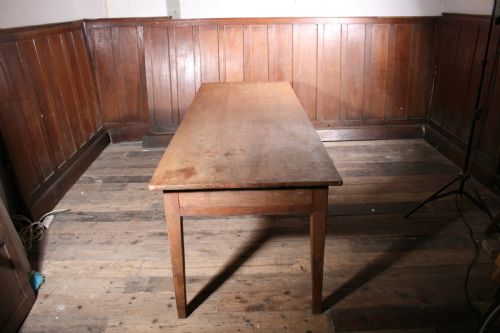
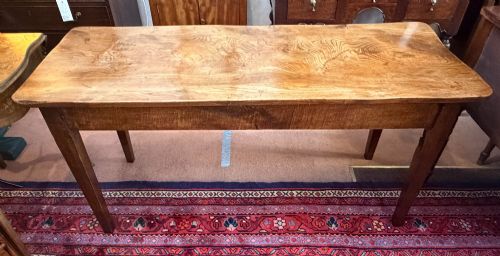
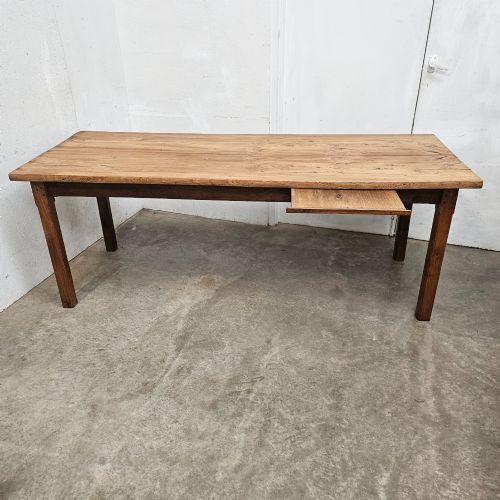
Buyers are most likely to meet nineteenth-century elm farmhouse tables on this page, frequently displaying practical additions such as a single side drawer or turned legs. These domestic pieces balance robust construction with the softer, undulating grain unique to mature elm timber.
Materials and construction
Makers utilised elm for its tough, interlocking grain that resists splitting, often pairing it with sturdier oak for structural frames and undercarriages. This combination allowed craftsmen to build expansive dining surfaces capable of withstanding heavy daily use in farmhouses, taverns, and country kitchens.
Surfaces were constructed using single planks or two-board configurations, joined simply to accommodate the natural movement of timber as it dried over centuries. Metal fixings appear sparingly, relying instead on traditional joinery methods that kept long refectory formats stable under pressure.
Listings feature periods spanning from the seventeenth century through to the Victorian era, utilising elm, oak, and pear wood.
Judgments of quality
Quality rests in the integrity of the timber top, where single-plank elm boards command greater appreciation than multi-board constructions due to their uninterrupted grain and scale. The choice of secondary woods matters greatly, with eighteenth and seventeenth-century examples utilising dense oak for frames that maintain structural rigidity.
Patina and surface depth separate exceptional pieces from ordinary ones, driven by generations of scrubbing, polishing, and natural use. Subtle details such as turned legs, well-integrated side drawers, and proportioned overhangs distinguish refined George I or provincial tavern tables from utilitarian farmhouse boards.
The Rustic Elm Refectory Table Glossary
- Refectory table
- A long dining table traditionally used in monasteries and large halls for communal meals. These forms later adapted into domestic farmhouse and tavern settings.
- Plank top
- A table surface constructed from wide boards of timber running the full length of the piece. Single plank variations are particularly prized for their unbroken grain.
- Patina
- The deep, lustrous surface sheen developed on wood over centuries through handling, waxing, and exposure to light. It serves as a visual indicator of age and honest use.
- Provincial
- Describing furniture made in the regions outside a capital city, often reflecting local materials and practical vernacular traditions rather than courtly fashions.
- Tavern table
- A compact, sturdy table designed for commercial hospitality spaces rather than formal dining rooms. They frequently feature turned legs and robust frames.
Rustic Elm Refectory Table: Frequently Asked Questions
How do I care for an elm table?
Elm responds well to simple maintenance using natural beeswax to nourish the dry timber and protect the surface from moisture. Avoid placing hot dishes directly onto the bare wood to preserve the historic finish.
Keep the table away from direct heat sources and sudden humidity changes to prevent the wide planks from warping or splitting over time.
What is the difference between a refectory and a farmhouse table?
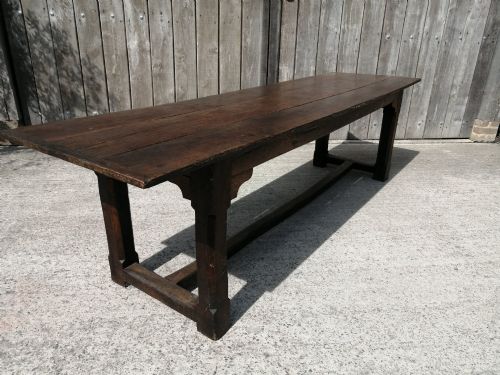
Refectory tables traditionally originated in institutional settings like monasteries and large halls, featuring very long, narrow proportions and stretcher bases designed for communal dining. Farmhouse tables are typically domestic iterations built for everyday country kitchen use.
In practical terms, the two terms often overlap in antique listings when describing long, rustic wooden dining surfaces.
How can I tell an 18th century table from a 19th century one?
Earlier eighteenth and seventeenth-century tables often incorporate oak framing alongside elm, displaying hand-cut joinery and signs of assembly with trunnels or wooden pegs. The timber surfaces tend to show deeper patination and broader tool marks from manual pit-sawing.
Nineteenth-century pieces frequently display softer turning work on the legs and standardised construction methods while retaining the characteristic country charm.
Will an elm top warp with daily use?
Elm is known for having a wild, interlocking grain that makes it durable but also prone to movement as indoor temperatures fluctuate. Historic tables have already settled through centuries of environmental changes, stabilizing their overall structure.
Normal indoor climate control and sensible cleaning habits will keep a stable antique elm top secure for everyday dining.