


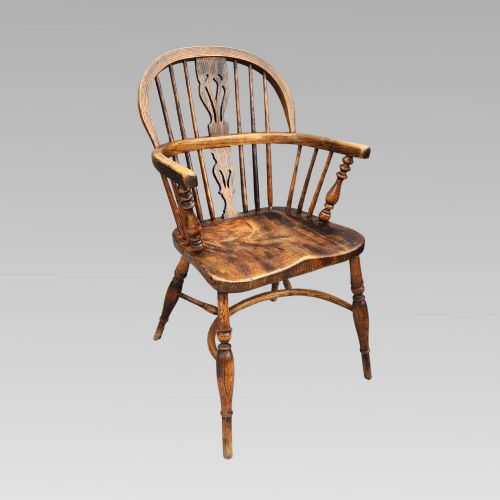
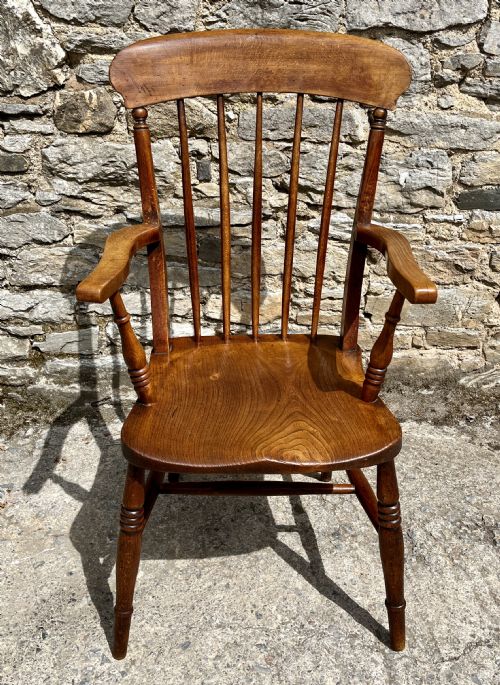
Rustic Elm Carver Chairs
These rustic elm carver chairs bring solid vernacular character to a room, offering sturdy seating shaped by generations of rural use.
Rustic Elm Carver Chairs
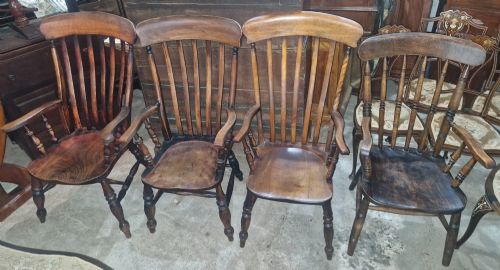
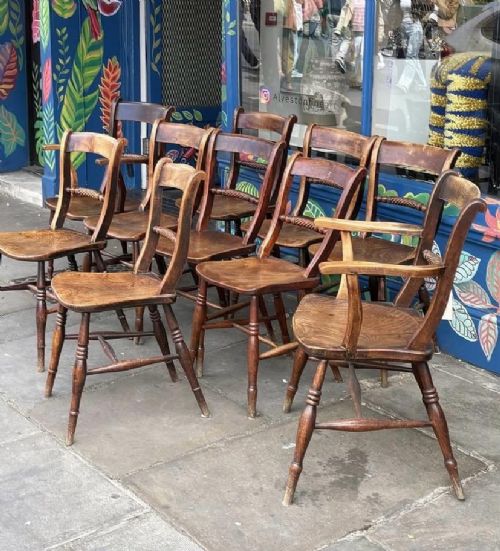
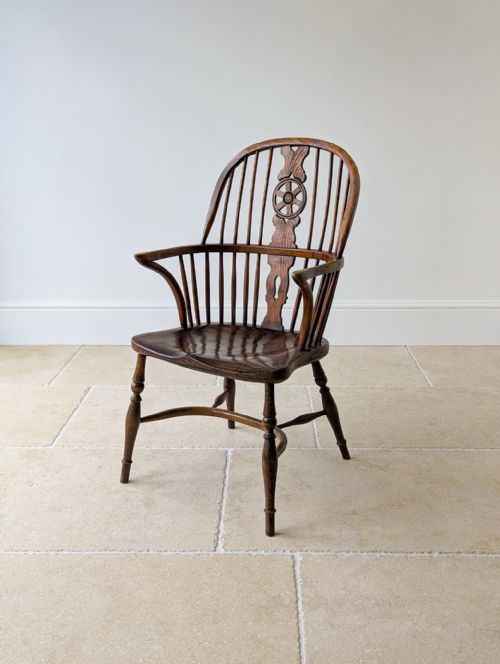
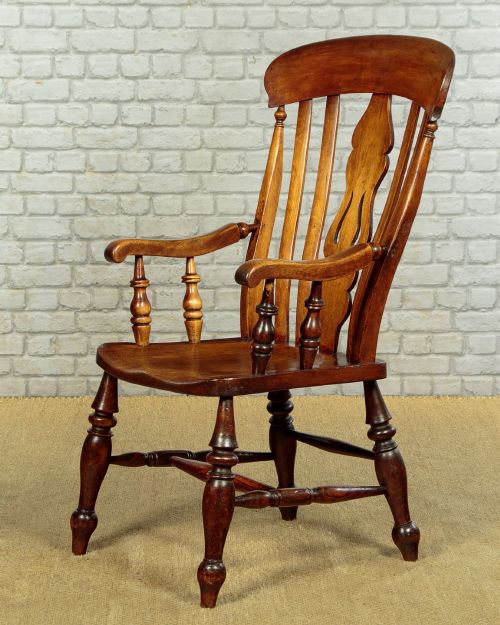
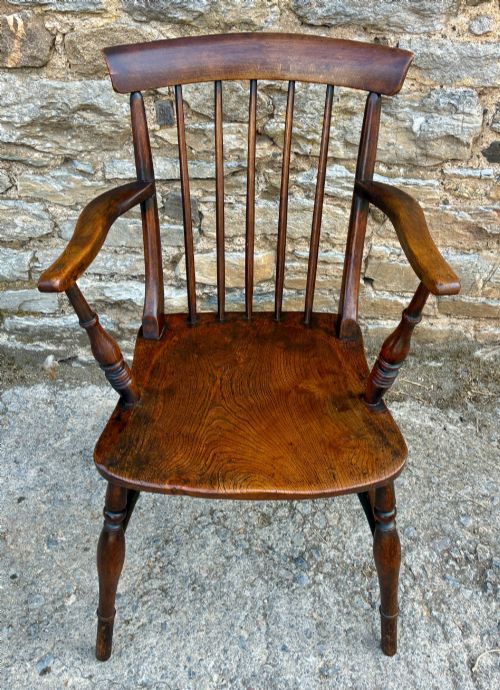
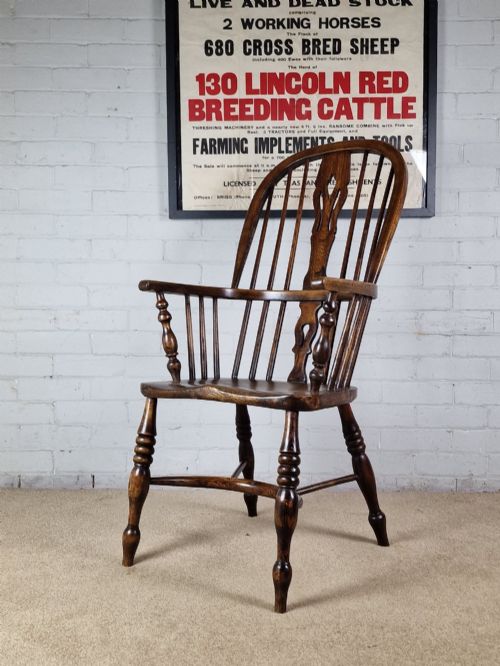
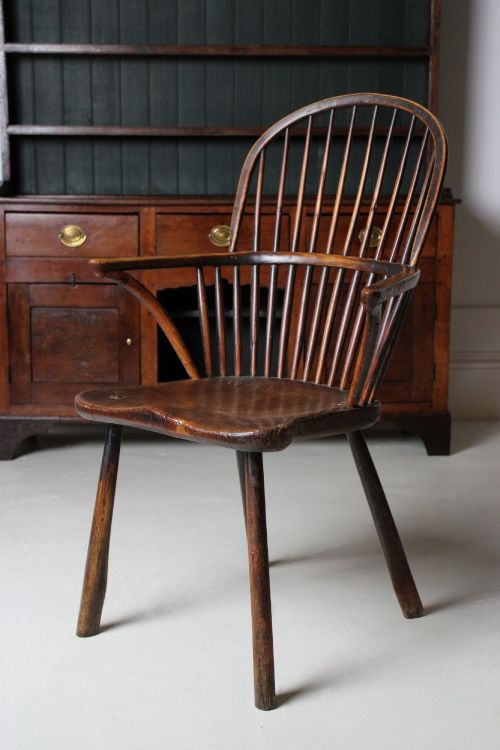
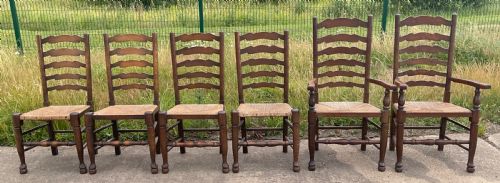
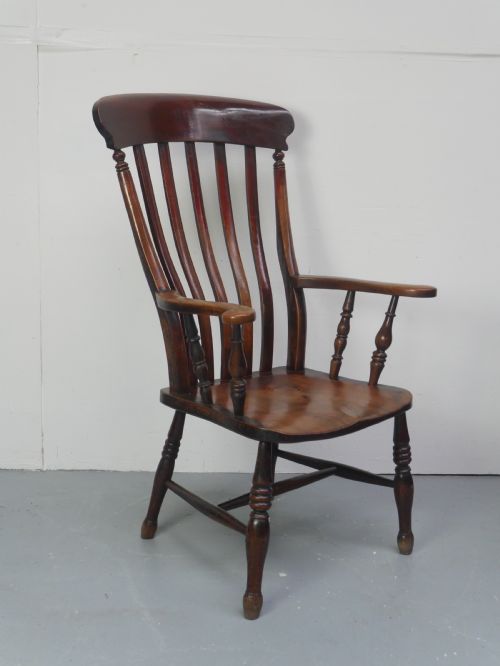
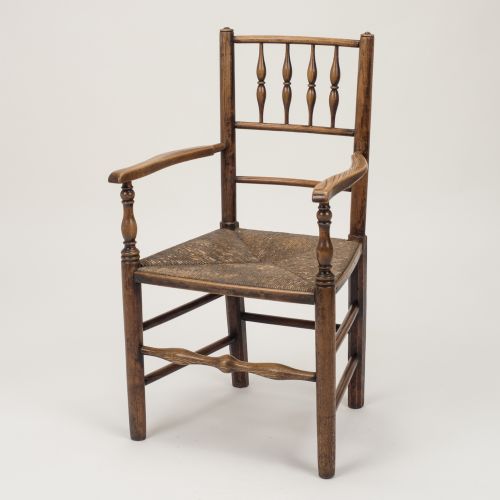
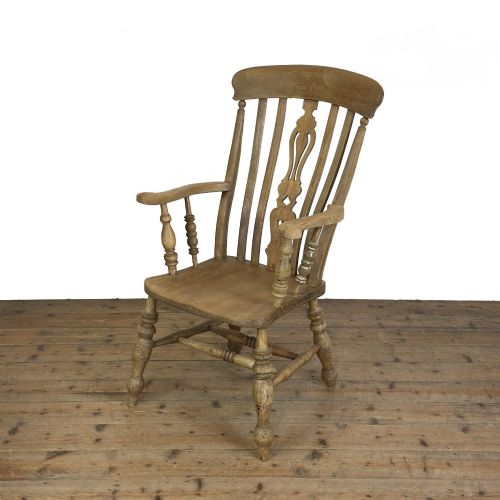
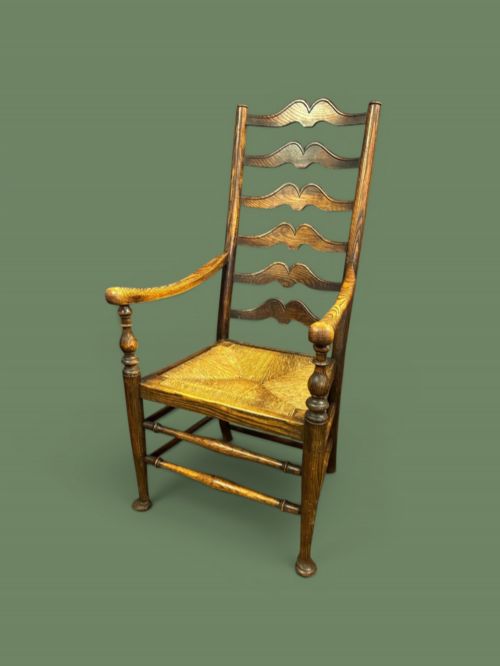
Rustic elm carver chairs include low-back and high-back Windsor armchairs, wheelback designs, and ladderback dining chairs originating from English country settings. Most examples on this page date from the nineteenth century, spanning Victorian and Georgian vernacular traditions.
The form typically incorporates open arms supported by sturdy uprights, combined with a shaped wooden seat and various spindle or lath backs. Regional variations range from Nottinghamshire and Lincolnshire workshops to broader English country house styles.
Materials and construction
Makers paired robust elm for contoured solid seats with ash, beech, fruitwood, or yew for the turned spindles, legs, and steam-bent bow frames. This combination utilised the natural strength and grain patterns of native British woods.
Joinery relied on traditional techniques such as wedged through-tenons and pegging, securing the uprights directly into the thick wooden plank seats. Rush seating also appears, providing a woven pad within the sturdy wooden framework.
A Nottinghamshire maker once built a high-back Windsor chair sturdy enough to outlast three generations of farmhouse kitchen disputes.
Quality differences
Quality rests in the balance of the proportions, the thickness and figuring of the elm seat, and the integrity of the original joints. Superior pieces retain deep patination and honest wear without excessive replacement of turned components.
Regional execution dictates the refinement of the spindle turning and the elegance of the steam-bent back rail. Simpler provincial pieces differ from workshop-marked examples through subtle variations in comb-piece shaping and leg splay.
The Rustic Elm Carver Chairs Glossary
- Carver
- An armchair designed to match a set of dining chairs, usually featuring open wooden arms. These seated the head of the table.
- Windsor
- A chair built with a solid wooden seat into which the legs and back sticks are wedged directly. The design evolved through distinct regional spindle patterns.
- Wheelback
- A Windsor chair style incorporating a central pierced splat shaped like a carriage wheel. This motif gained popularity during the nineteenth century.
- Vernacular
- Everyday objects made by local tradesmen for practical use rather than following strict high-style academic rules. These items reflect regional traditions and materials.
- Rush
- Dried marsh grass twisted into cord and woven into a supportive seat base. It appears frequently in country seating.
Rustic Elm Carver Chairs: Frequently Asked Questions
What is a carver chair?
A carver chair is an armchair built with open sides, traditionally placed at the head of a dining table to match the smaller side chairs.
In country houses, these sturdy armchairs also served as fireside or desk seating due to their supportive arms and solid wooden construction.
How do I identify a Windsor chair?
A Windsor chair is defined by its solid plank seat into which the legs and back spindles are fitted independently, rather than having a continuous frame.
Most examples feature steam-bent back bows and contoured seats designed for comfortable everyday sitting.
Are these chairs comfortable for daily use?
These chairs are shaped with deep wooden saddle seats and raked back spindles designed to support the body during long periods of sitting.
Adding a loose pad or cushion can increase comfort for modern dining or desk use while preserving the original surface.
How do I tell the periods apart?
Eighteenth-century and early Georgian examples often display simpler, heavier turnings and deeper vernacular proportions. Later Victorian pieces introduce steam-bent wheelback motifs and more slender ash or beech components.