

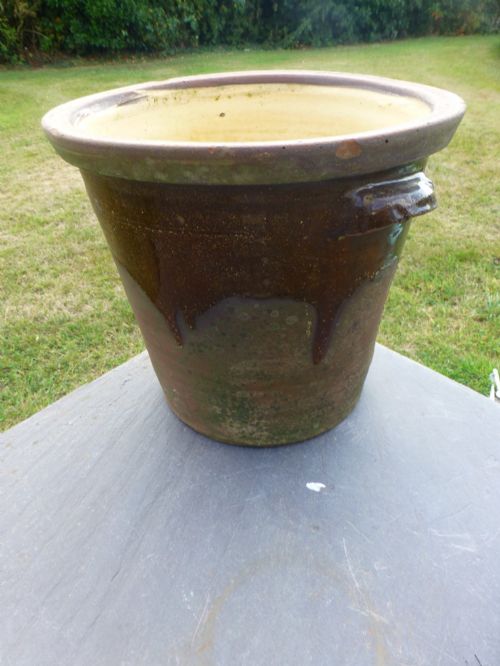


Rustic Earthenware Planter
These rustic earthenware planters bring weathered character and honest utility to gardens and rooms, offering tactile presence through aged clay.
Rustic Earthenware Planter
A rustic earthenware planter is a vessel designed to hold earth and plants, shaped from clay and finished with glazes or left bare. These vessels include oil jars, confit jars, dairy salting crocks, amphorae, and jardiniere forms from the nineteenth and early twentieth centuries.
Buyers meet sturdy utilitarian pieces born from agricultural and domestic storage, repurposed for horticulture. French confit jars, Turkish olive vases, and naturalistic pottery pieces dominate the selection, showing the heavy utility of past centuries.
The styles span rustic vernacular, Mediterranean traditional, and French country aesthetics. Every piece carries the weight of practical use, whether found as a single garden pot or a pair of oil jars on stands.
How they were made
Potters shaped these vessels from clay using traditional hand-building and throwing techniques suited to large forms. Wrought iron additions occasionally appear as stands or mounts, supporting heavy earthenware bodies designed to hold oil, water, or preserves.
Glazes applied to the surfaces range from mottled greens to natural earthenware tones, sometimes enhanced with paint. Firing in traditional kilns left distinctive surface variations across the terracotta and glazed ceramic structures.
Rustic Earthenware Planter Retail Price Guide 2026
Typical asking prices for rustic earthenware planter among the pieces listed under this phrase on Sellingantiques today, from the lower quarter to the upper quarter. They describe what is for sale here now, not the wider market.
Several olive jars come with iron stands, proving that even heavy agricultural vessels appreciated a good pair of shoes.
What varies in quality
Quality rests in the harmony of proportion and the tactile honesty of the aged surface. An impressive nineteenth-century dairy salting crock shows superior thrown form compared to standard utilitarian vessels.
The depth of the glaze and the integration of any painted finish or iron stand elevate certain pieces. Patina accumulated through decades of exposure or handling marks the difference between ordinary pottery and a striking decorative focal point.
The Rustic Earthenware Planter Glossary
- Terracotta
- Fired unglazed clay of a brownish-red colour. It remains porous and develops a rich patina over time.
- Confit jar
- A traditional French earthenware pot with handles, originally used for preserving meat. These pots feature distinctive glazes often concentrated near the rim.
- Amphora
- A two-handled jar with a narrow neck used in antiquity and emulated in later periods for storage or ornament. Their classic profiles suit formal garden placements.
- Jardiniere
- An ornamental pot or stand for plants, often taking a more decorative form than a standard garden pot. They sit comfortably in interior spaces.
- Salting crock
- A heavy ceramic vessel once utilised for curing foods in brine. Their thick walls provide durable housing for modern planting.
Rustic Earthenware Planter: Frequently Asked Questions
Can I leave these planters outside in winter?
Earthenware and terracotta can crack if water freezes inside the porous clay during hard frosts. It is safest to move them under cover or empty them during freezing weather.
Protective feet raise the base off damp ground, preventing moisture retention and subsequent frost damage.
How do I clean an old jar?
Warm water and a soft brush remove surface dirt without harming the historic glaze or aged terracotta. Avoid harsh detergents that strip the dry surface character.
Allow the piece to dry naturally to preserve the authentic patina built up over decades of use.
Are drainage holes standard on these pieces?
Many older utilitarian jars and amphorae were made for storage rather than planting, meaning they may lack drainage holes. Gardeners often add a thick layer of gravel at the base for internal drainage.
Careful watering prevents root rot when using vessels that do not feature drilled bases.
How do I date an old jar?
Form, tool marks, and glaze characteristics help place a vessel within the nineteenth or early twentieth century. Variations in the clay body and hand-thrown irregularities point away from modern factory production.
Comparing profiles with documented confit jars and olive jars confirms the stylistic period.