




Rustic Country Landscape Painting
A rustic country landscape painting brings fields, farmyards and cottages directly into a room through nineteenth-century oils and watercolours.
Rustic Country Landscape Painting
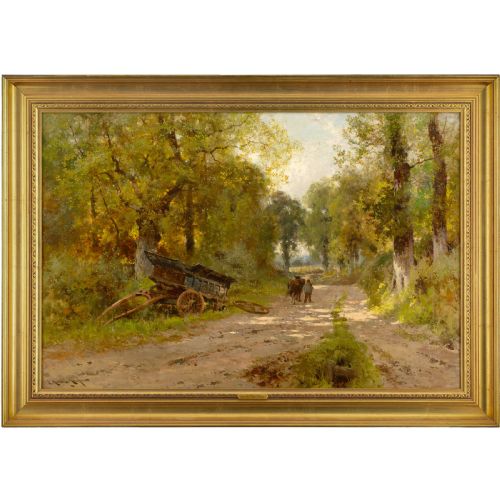
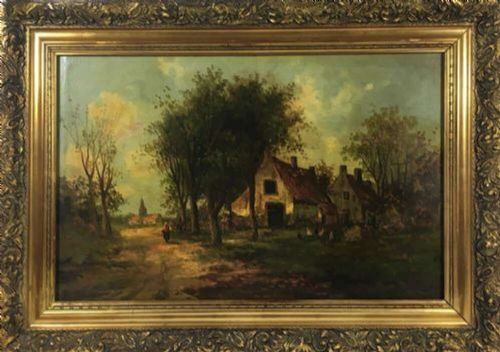
A rustic country landscape painting captures rural life, agricultural scenes and pastoral views across canvas, board and paper. Buyers searching this phrase meet works originating from the Georgian period through to the twentieth century, with nineteenth-century examples appearing frequently.
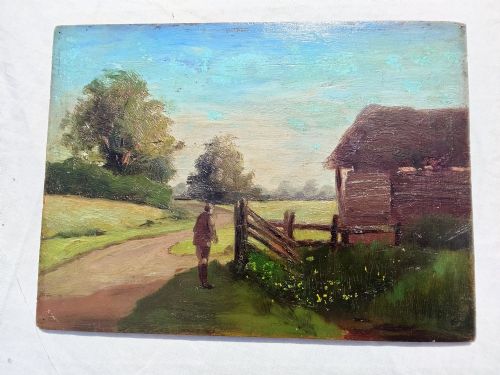
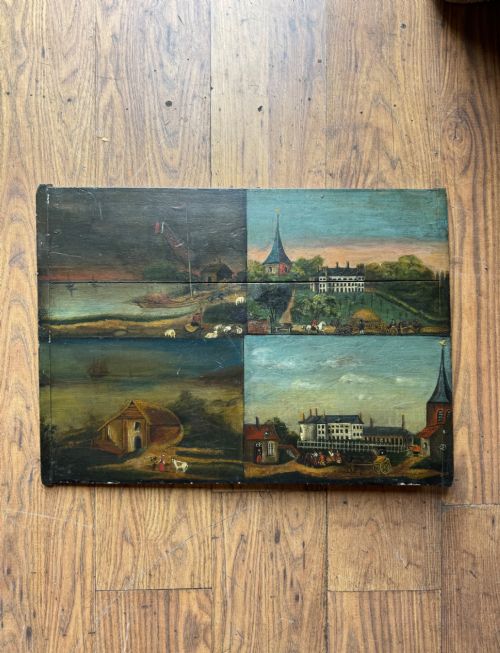
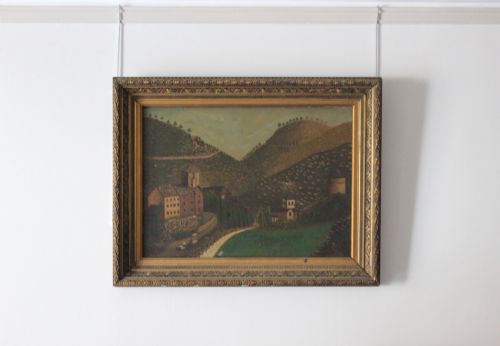
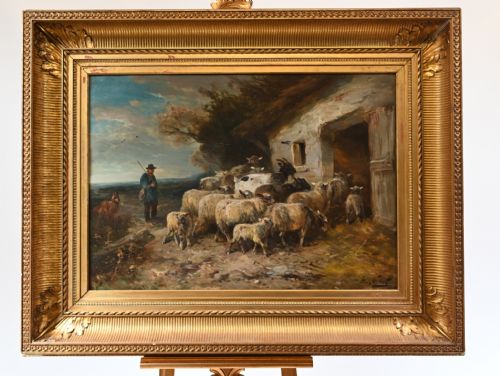
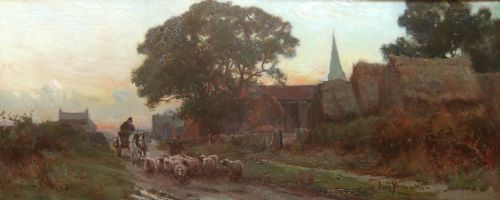
The subjects range from thatched cottages and farmyards with horses, sheep and cattle to figures beside streams and rural pathways. British and European schools are well represented, often rendered in styles including Victorian realism, pastoralism and impressionism.
Smaller cabinet pieces sit alongside larger canvases, framed in giltwood or burr frames that suit the rural character of the imagery. Provincial folk art and naive works also emerge among the academic canvases and watercolours.
How They Were Made
Artists painted primarily with oil on canvas, wooden board or paper, utilising oil paint or watercolour pigments to build depth and texture. Canvases were occasionally laid onto board later in their history for structural support.
Framing utilised materials such as giltwood and burr wood, providing a decorative border that complemented the pastoral tones of the artwork. Gouache and ink were also employed on paper or board for specific picturesque landscape views.
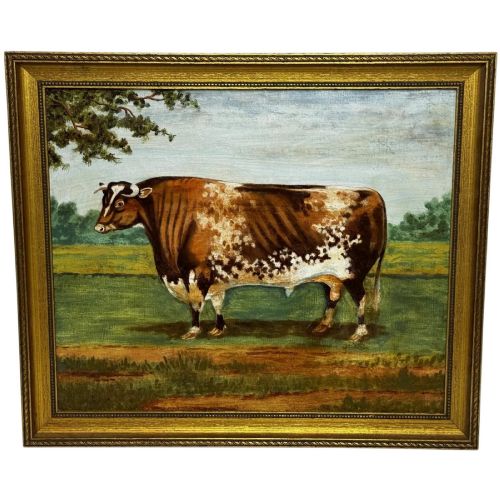
Several canvases star prized shorthorn bulls and working farm dogs taking a well-earned rest.
What Varies in Quality
The finesse of brushwork and the handling of light distinguish ambitious academy compositions from provincial or naive folk art examples. Draughtsmanship in figures, animals and architecture reveals the technical skill of the painter.
Original framing adds substantive character, particularly when period giltwood or burr frames match the age of the canvas. The stability of the paint surface and the condition of the support canvas or wooden board govern the preservation state.
John Horace Hooper·Henry Schouten·George Morland·Owen Bowen·John Constable·Henry E Hobson·Henry John Yeend King·Fred Stead·John Henry Dell·Thomas James Lloyd·Abraham Hulk Junior·David Woodlock·William Miller Frazer·GW Horlor·John Syer Junior·John Frederick Herring
The Rustic Country Landscape Painting Glossary
- Canvas
- A heavy woven fabric stretched across a wooden frame to form the primary support for oil paintings. It provides a textured surface that accepts multiple layers of oil paint.
- Giltwood
- Timber carved and coated with a thin layer of gold leaf or metallic paint to create decorative frames. It reflects light and enhances the tones within pastoral artworks.
- Pastoral
- A genre of art focused on rural life, shepherds, farmyards and idealized countryside scenery. These subjects evoke a calm and agrarian atmosphere.
- Watercolour
- A painting method where pigment is suspended in a water-based solution and applied to paper. It yields translucent washes and delicate atmospheric effects.
- Tondo
- A Renaissance-derived term for a circular painting or relief. It creates a distinct compositional boundary for landscape scenes.
Rustic Country Landscape Painting: Frequently Asked Questions
What periods do these paintings come from?
The works span from the Georgian era through the Victorian and Edwardian periods into the mid-twentieth century.
Nineteenth-century pieces dominate the selection, reflecting a strong period interest in rural and agricultural subjects.
Are these paintings executed on canvas or board?
Artists used stretched canvas, wooden panels and heavy paper supports depending on the scale and medium.
Some nineteenth-century canvases feature later board linings added to secure aged fabric.
How should I hang a rural landscape?
Pair the painting with traditional period surroundings where natural light enhances the earth tones of the palette.
Ensure the wall space protects the giltwood or wooden frame from direct moisture and strong sunlight.
What subjects appear most frequently?
Common motifs include thatched cottages, farmyards with horses and sheep, pastoral rivers and figures working the land.
Animals such as cattle, sheep dogs and cart horses also feature prominently in the pastoral compositions.