


Rustic Bar Stool
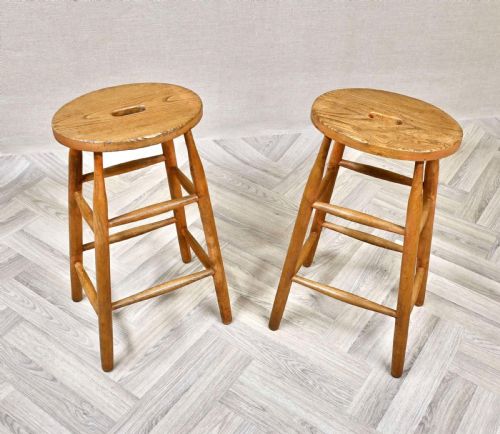
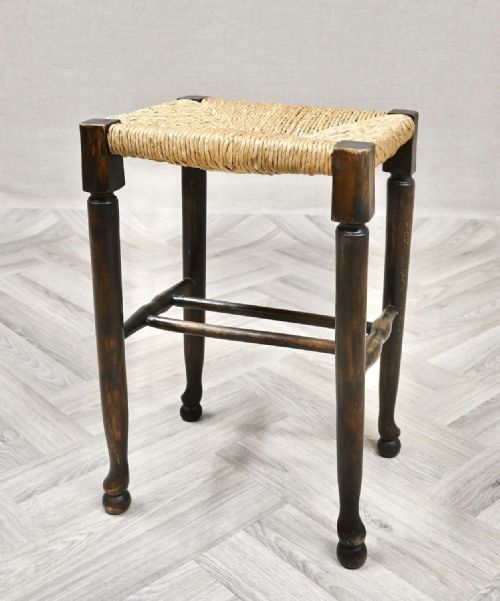
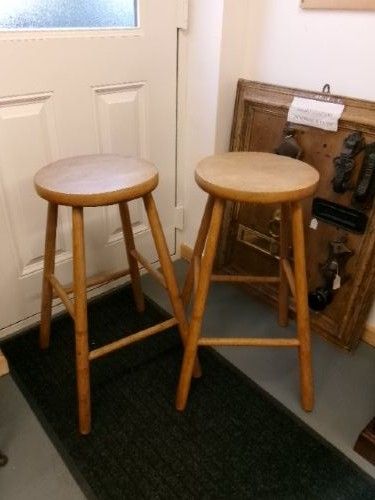
These rustic bar stool examples bring genuine utilitarian history to a kitchen counter or home bar.
Rustic Bar Stool
A rustic bar stool serves as elevated seating rooted in the practical requirements of nineteenth-century pubs, taverns, and workshops. These tall forms include clerk's stools, pub stools, and laboratory seating designed for standing height or raised work surfaces.
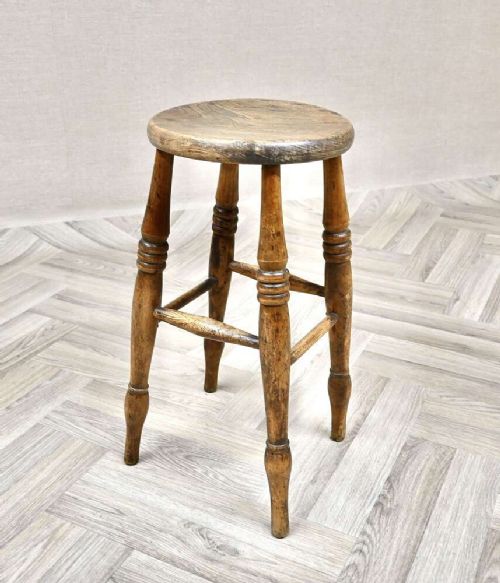
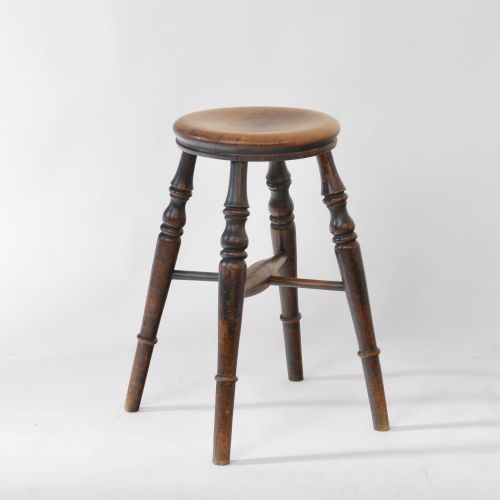
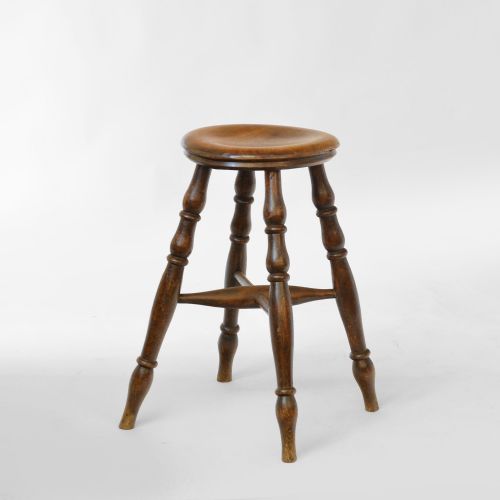
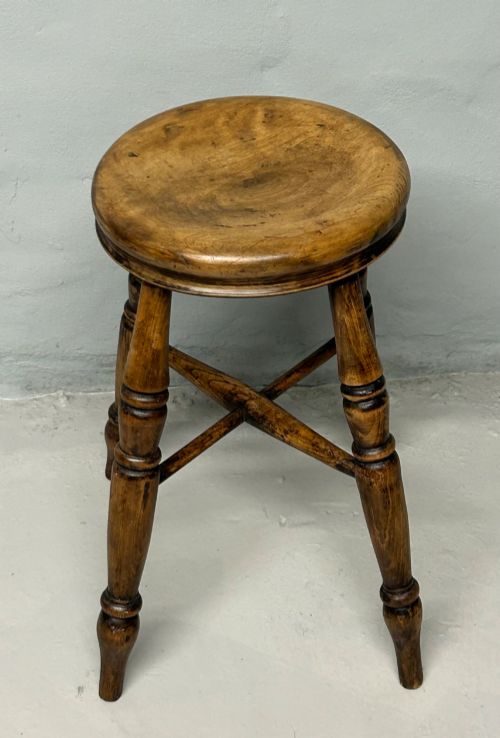
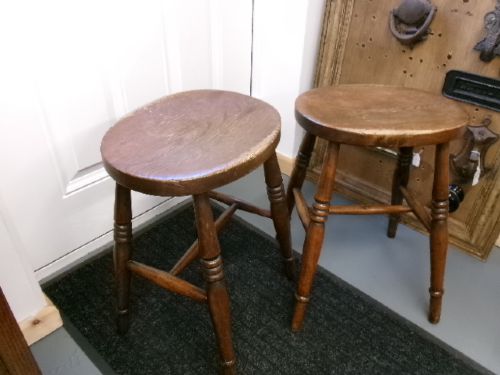
The material selection leans heavily toward sturdy woods like beech, elm, and sycamore, often featuring turned legs or simple industrial metal frames. Many examples present oval dished tops shaped for sitting comfort during long hours of use.
Most pieces emerge from Victorian vernacular and rustic farmhouse traditions rather than formal cabinet maker workshops. Collectors find pairs, sets, and single high stools spanning the nineteenth century through the early decades of the twentieth century.
How they were made
Makers constructed these tall stools using solid hardwoods such as beech, elm, oak, and sycamore for the seats and frames. Turning lathes shaped the spindle legs and stretchers, while seats often received deep dishing by hand to create an ergonomic curve from solid timber.
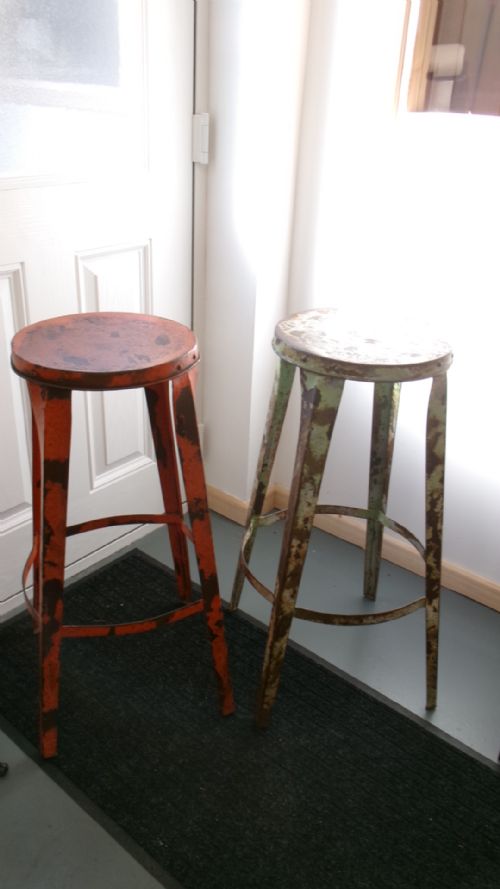
Industrial examples incorporate riveted metal alongside wood components to achieve the necessary rigidity for heavy daily use in commercial settings. Joinery relies on traditional wedged tenons and stretcher bracing to withstand the wobbling stresses inherent in high seating.
Several tall stools retain the specific knee-scuffs and tavern floor grime of nineteenth-century pub patrons who sat too long over their ale.
What varies in quality
The integrity of the timber and the depth of the seat dishing distinguish standard utilitarian seating from finer vernacular examples. Grain configuration in solid elm or sycamore seats displays the natural character shaped by early woodturners.
Original surface patination, derived from decades of pub or tavern use, separates untouched historic seating from heavily restored or later reenacted pieces. The tightness of the leg joints and the matching nature of sets also influence overall desirability.
The Rustic Bar Stool Glossary
- Dished top
- A seat carved with a concave depression designed to fit the sitter. This ergonomic shaping appears frequently on nineteenth-century tavern and pub stools.
- Vernacular furniture
- Practical objects made by local craftsmen for everyday use rather than following high-style academic designs. These pieces prioritize function over ornament.
- Stretcher
- A horizontal support connecting the legs of a stool to provide structural rigidity. On tall bar stools, stretchers often double as footrests.
- Clerk's stool
- A tall seating form designed for working at high writing desks or ledger stands. They feature sturdy turned wooden frames and plain round or square tops.
- Industrial metal
- Iron or steel components incorporated into seating from the early twentieth century onwards. Riveted joints and adjustable height mechanisms define this subcategory.
Rustic Bar Stool: Frequently Asked Questions
How tall are these rustic bar stools?
These pieces generally measure at standard bar or counter height, designed to match high tavern tables and raised work surfaces.
Individual heights vary depending on whether the stool originated as a clerk's seat, a pub stool, or an industrial workshop piece.
Are they comfortable for everyday kitchen use?
Many examples feature hand-dished wooden seats carved to provide ergonomic support during extended sitting.
Adding a footrest via the integrated stretchers helps maintain a comfortable posture at modern kitchen islands.
How do I date a wooden tavern stool?
Dating relies on identifying wood species, turning styles, and signs of genuine wear from nineteenth or early twentieth-century environments.
Constructive details like hand-cut joinery and aged patination separate older vernacular pieces from later reproductions.
Can I mix different styles around a counter?
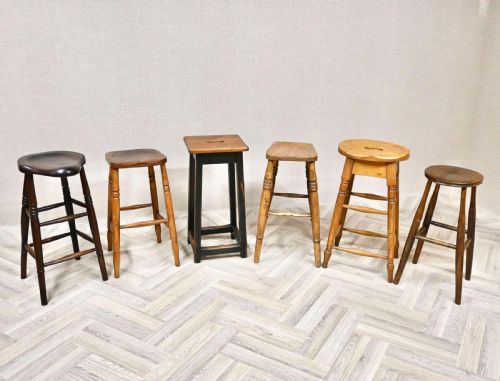
Pairing mismatched tall stools introduces visual variety that reflects the history of working country houses and pubs.
Similar wood tones or shared construction traits help unify a collection gathered from different decades.