



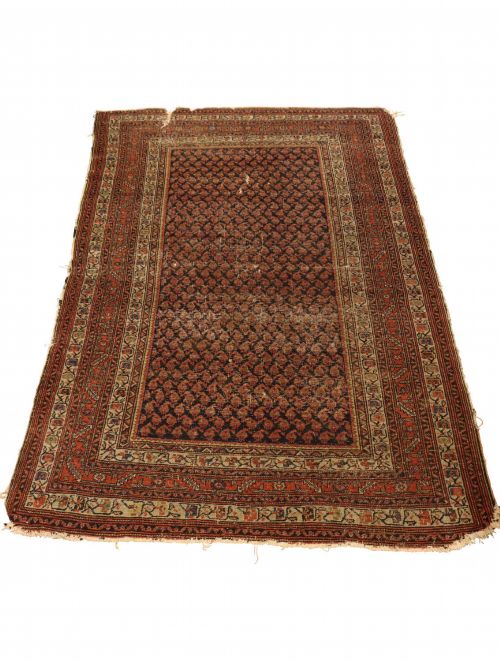


Rust Red Rug
When you search for a rust red rug, you are looking for hand-knotted floor coverings spanning Persian and Turkmen traditions from the nineteenth and early twentieth centuries.
Rust Red Rug
A rust red rug brings together centuries of hand-knotting traditions originating from Persian and Turkmen weaving centres. When searching for this specific aesthetic, buyers encounter regional works ranging from village carpets to tribal dowry pieces.
The pieces listed on this page predominantly date from the Victorian and Edwardian eras, specifically spanning the decades between eighteen-fifty and nineteen-thirty. Forms vary from small scatter rugs and long runners to large country house carpets and square formats.
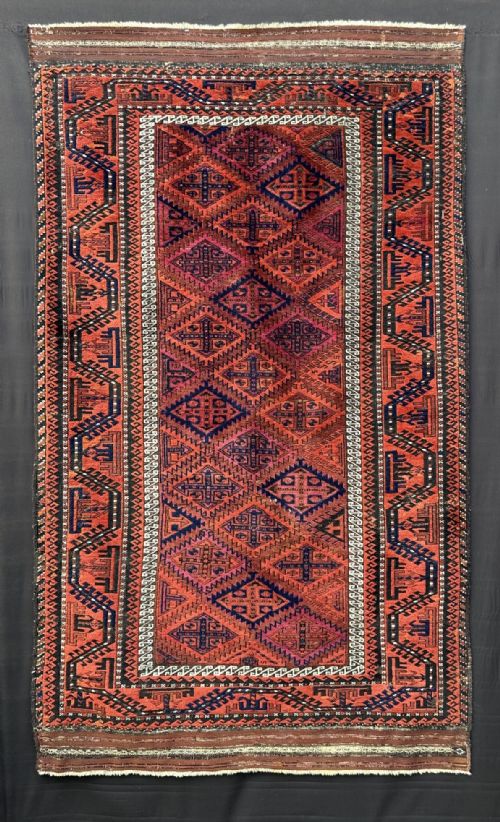
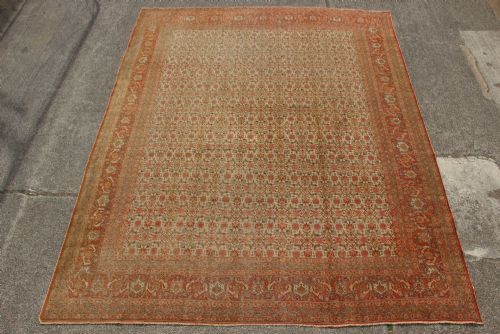
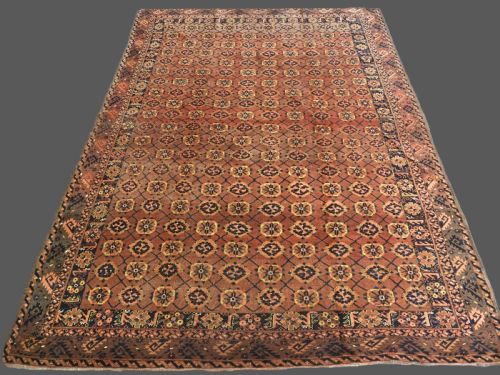
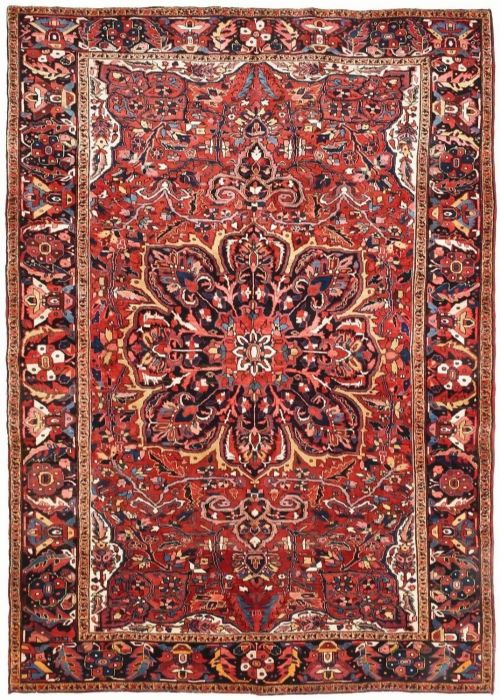
Geographic attribution covers specific origins such as Heriz, Tabriz, Baluch, Ersari, and Khorasan. Each weaving region imparts distinct structural characteristics and motif repertoires onto the finished textile.
How they were made
Weavers constructed these textiles predominantly using wool pile hand-knotted onto sturdy cotton or wool foundations, occasionally incorporating goat hair for added durability in specific tribal formats. The density of the knotting directly influences the weight and drape of the textile.
Dyers utilised natural materials to achieve deep madder-based reds, earthy browns, and contrasting accents of indigo and ivory. This traditional dyeing process creates subtle variations in tone across the surface of the wool pile over time.
Rust Red Rug Retail Price Guide 2026
Typical asking prices for rust red rug among the pieces listed under this phrase on Sellingantiques today, from the lower quarter to the upper quarter. They describe what is for sale here now, not the wider market.
Some nomadic weavers incorporated stray animal hairs directly into the wool pile of their daily work.
What varies in quality
Quality in these floor coverings rests upon the precision of the knotting and the complexity of the design execution. Denser knots allow for sharper geometric or curvilinear motif definition across the field and borders.
The depth and vibrancy of the natural dye palette contribute significantly to the visual success of the piece. Superior examples display harmonious colour saturation and well-balanced proportions between the central medallion and surrounding guards.
The Rust Red Rug Glossary
- Boteh
- A stylised almond or paisley motif found throughout Persian and tribal weaving traditions. It often appears repeating across the main field of the textile.
- Gul
- An octagonal medallion motif characteristic of Turkmen and Central Asian carpet design. Different tribal groups developed distinct variations to signal lineage and origin.
- Torba
- A small utilitarian bag face produced by Turkmen weavers for domestic storage. These pieces frequently feature intricate subsidiary borders and dense pile work.
- Heriz
- A style of Persian carpet originating from the north-west region known for bold geometric medallions and robust structural durability. They traditionally employ a heavier rectilinear drawing style.
- Chuval
- A large tent bag used by nomadic tribes for household storage. They typically display multiple rows of guls across the face of the weaving.
Rust Red Rug: Frequently Asked Questions
Where were these rugs made?
The pieces originate primarily from weaving traditions across Persia and Central Asia, including specific districts like Heriz, Tabriz, and Khorasan.
Nomadic and village groups such as the Baluch, Ersari, and Tekke also produced distinct textiles within these broader geographic regions.
How do I care for an antique wool rug?
Protect the textile by placing it in a low-traffic area or using a breathable underlay to prevent sliding and excessive friction on the foundation.
Vacuum gently using a suction-only attachment without the beater bar, and consult a specialist for professional washing when needed.
What is a runner format used for?
Runners were traditionally woven in long, narrow dimensions to fit hallways, corridors, and narrow passageways within traditional homes.
Their elongated proportions allow the repeating border motifs and central medallions to lead the eye along narrow architectural spaces.
How do I tell different tribal designs apart?
Tribal designs are distinguished by their specific structural motifs, such as the repeated octagonal guls of Turkmen pieces or the geometric lattice patterns of Baluch work.
Palettes also offer clues, with certain regions favouring deep madder reds combined with dark indigo and camel hair accents.