

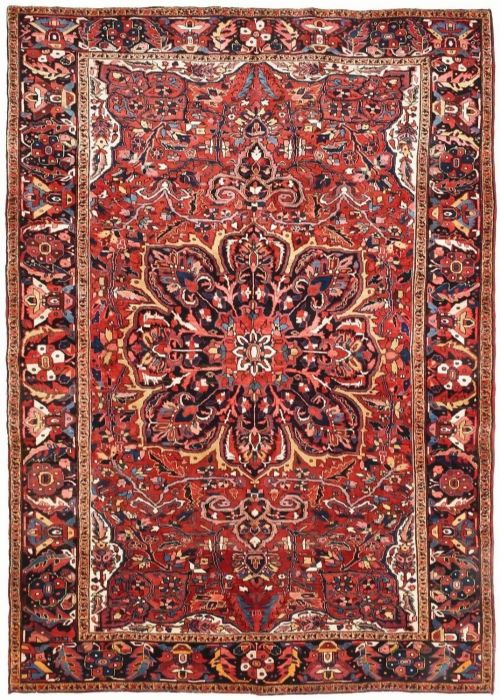


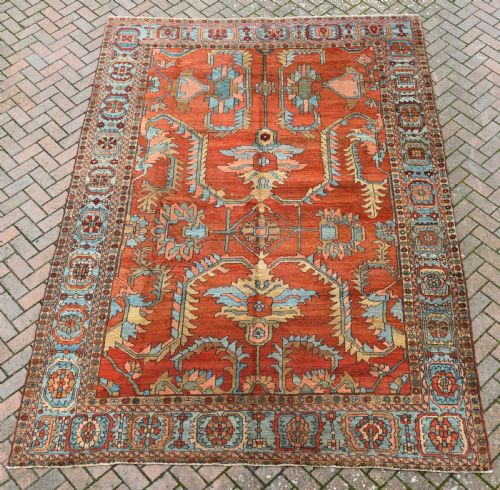
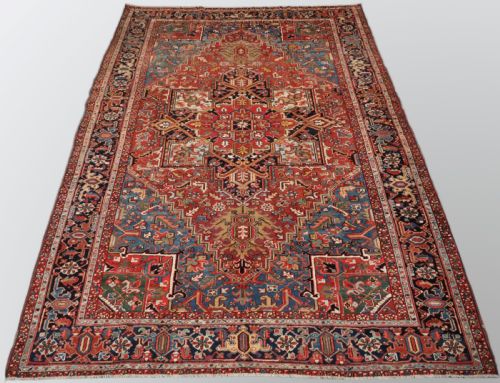


Rust Red Heriz Carpet
These rust red heriz carpet pieces bring the bold geometry and rich hues of Northwest Persia directly into a room.
Rust Red Heriz Carpet
A rust red heriz carpet is a large-format floor covering originating from the Northwest Persian region. These pieces span production from nineteen hundred to nineteen thirty, showing enduring traditional designs.
Buyers encounter substantial room-sized formats extending past four metres alongside compact examples. These woven floor coverings establish a grounded, historical focal point in residential spaces.
How They Were Made
These carpets and rugs are constructed using durable wool pile woven onto supportive cotton foundations. This combination provides the structural integrity necessary for large floor textiles to withstand everyday use.
Weavers in Northwest Persia employed traditional knotting techniques alongside robust geometric designs characteristic of the region. Natural dye methods produced the deep rust red tones and contrasting accents seen across the pieces.
Rust Red Heriz Carpet Retail Price Guide 2026
Typical asking prices for rust red heriz carpet among the pieces listed under this phrase on Sellingantiques today, from the lower quarter to the upper quarter. They describe what is for sale here now, not the wider market.
Listings span four decades from nineteen hundred to nineteen thirty, exclusively utilising wool and cotton materials across Persian origins.
What Varies in Quality
The refinement of the geometric drawing and the precision of the medallion work dictate visual sophistication. Stronger visual balance and more intricate border details elevate certain examples above simpler village productions.
Scale and proportion create distinct categories, ranging from monumental oversize formats down to narrow runners. The saturation of the wool pile and the clarity of the rust red ground colour influence overall visual impact.
The Rust Red Heriz Carpet Glossary
- Heriz
- A region in Northwest Persia renowned for producing large, durable carpets with bold geometric medallions and robust wool construction. These floor coverings date primarily from the early twentieth century.
- Karaja
- A village weaving centre associated with Northwest Persian production, known for producing carpets and runners with distinct tribal patterns and rich colour palettes. Pieces from this origin share technical traits with Heriz work.
- Gorravan
- A specific style or village origin within the Heriz region, often identified in narrower runner formats featuring characteristic Northwest Persian motifs. These runners utilise wool on cotton foundations.
- Medallion
- The central ornamental motif dominating the field of the carpet, typically rendered in geometric forms within these Northwest Persian pieces. It anchors the symmetrical layout of the design.
- Runner
- A long, narrow carpet format designed for hallways, corridors, or gallery spaces. These pieces maintain the traditional wool pile and regional motifs in an elongated proportion.
Rust Red Heriz Carpet: Frequently Asked Questions
Where were these carpets made?
These pieces originate from Northwest Persia, specifically centres such as Heriz, Karaja, Ahar, and Gorravan. The region has a long-established tradition of village carpet weaving.
Weavers utilised local materials like wool and cotton to produce durable floor coverings tailored for both domestic use and export.
How do I style a large carpet?
Large formats work well as foundational anchors in principal reception rooms or dining spaces. Their bold geometric patterns complement both traditional period interiors and modern minimalist settings.
Allowing sufficient floor border around the edges showcases the scale and colour of the rug within the room.
What materials make up these rugs?
The pile consists of durable wool, chosen for its resilience under foot traffic and its capacity to hold rich dye colours. Foundations are constructed from cotton threads.
This material combination provides both structural stability and a dense, comfortable surface.
How can I identify different regional styles?
Regional attribution relies on examining the specific geometry of the central motifs, border arrangements, and overall proportions. Variations distinguish Heriz production from neighbouring village outputs like Karaja or Gorravan.
Narrower formats often indicate specific runner traditions within the broader Northwest Persian grouping.