


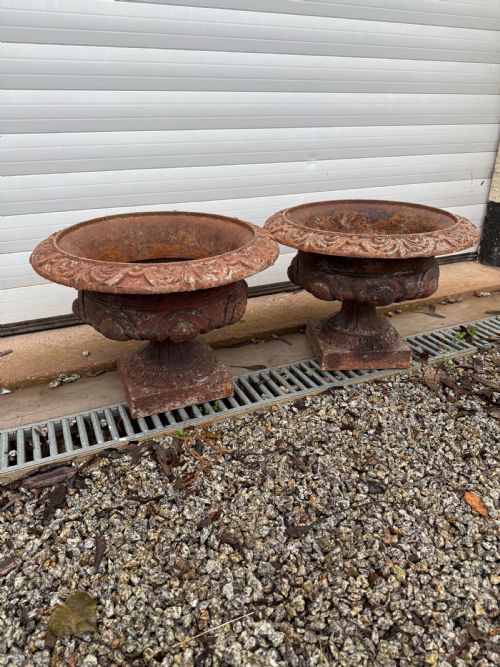


Rust Iron Garden Urn
These rust iron garden urns bring classic sculptural form and heavy cast metal presence to outdoor spaces, built to weather the elements.
Rust Iron Garden Urn
When you search for a rust iron garden urn, you find heavy metal vessels designed to anchor lawns, terraces and garden paths. The pieces listed span the nineteenth century, the Regency and Victorian eras, up to Edwardian examples.
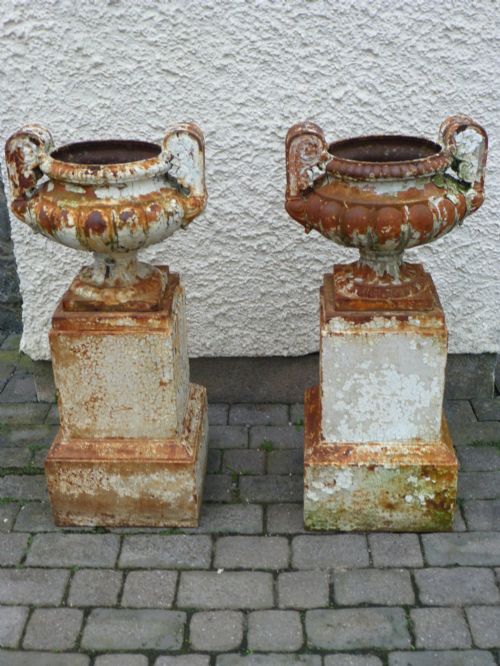
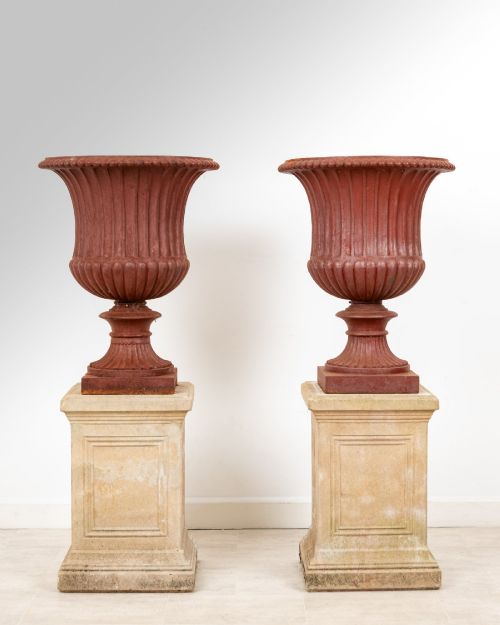
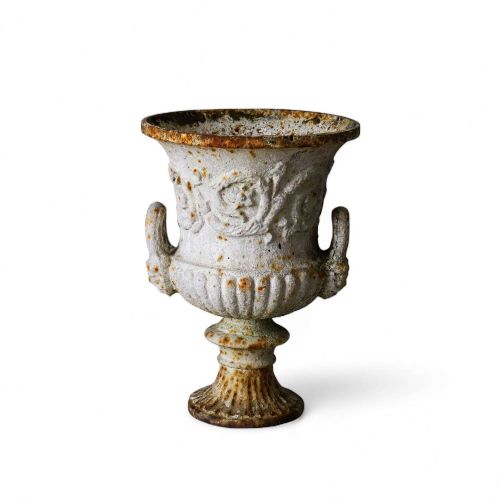
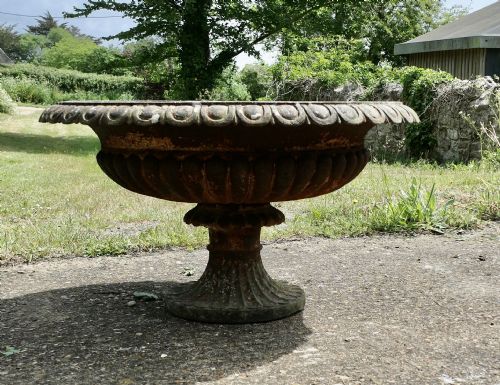
Most items appearing here take the campana form, modelled on classical vessels with flared rims and footed bases. Many examples come as matched pairs complete with stone pedestals or original plinths.
Makers such as Falkirk Carron foundry and Andrew Handyside produced these durable garden ornaments during the nineteenth century. They function practically as planters and jardinières while offering strong architectural lines.
How they were made
Foundries manufactured these garden ornaments using cast iron poured into moulds to create thick, rigid walls capable of supporting soil and planting. This metal technique allowed makers to cast crisp Neoclassical and classical revival details directly into the body of the urn.
Many examples are mounted upon stone pedestals or paired with matching iron plinths to elevate the vessel above ground level. Weathering over decades creates the characteristic rust surface seen on these nineteenth century pieces.
Rust Iron Garden Urn Retail Price Guide 2026
Typical asking prices for rust iron garden urn among the pieces listed under this phrase on Sellingantiques today, from the lower quarter to the upper quarter. They describe what is for sale here now, not the wider market.
Current listings span the nineteenth century, Regency, Victorian, and Edwardian periods, utilising cast iron and stone materials.
What varies in quality
Quality rests on the crispness of the foundry casting and the presence of maker attribution, such as works by the Falkirk Carron foundry or Andrew Handyside. Sharp Neoclassical detailing separates superior models from simpler utility vessels.
The survival of original supporting elements like stone pedestals and matching plinths distinguishes standard planters from complete architectural pairs. Surface patination and the depth of the iron walls also define the better pieces.
Falkirk Carron foundry·Andrew Handyside
The Rust Iron Garden Urn Glossary
- Campana
- A bell-shaped garden urn with a flared rim, a deep bowl, and a pedestal foot. This classical silhouette dominates nineteenth century garden metalwork.
- Plinth
- A heavy rectangular block or base that elevates an urn above ground level. Many period examples sit on stone or cast iron supports.
- Jardiniere
- An ornamental pot or receptacle for holding plants and flowers. These heavy iron vessels serve as deep planters for terrace displays.
- Neoclassical
- A decorative style drawing on classical Greek and Roman antiquity. It appears in the crisp foliage and classical motifs cast onto Victorian urns.
Rust Iron Garden Urn: Frequently Asked Questions
What periods do these iron urns date from?
The pieces available range from the Regency and Victorian eras through to the Edwardian period, covering the nineteenth and early twentieth centuries.
Foundry output from this span utilises durable cast iron designed to withstand outdoor placement year round.
How were these garden urns originally used?
Gardeners employed these heavy cast vessels as planters and jardinières to display trailing foliage and formal plantings on terraces and lawns.
They stood on stone pedestals or matching plinths to create focal points in landscape design.
Are these urns sold as individual pieces?
Many examples on this page are offered as matched pairs, often accompanied by their original stone pedestals or iron plinths.
Single large garden urns and jardinières also appear among the nineteenth century listings.
What defines the campana form?
Campana refers to a bell shape featuring a wide flared rim that tapers down to a narrow foot and stem. This classical profile is typical of nineteenth century garden metalwork.