





Russian Religious Icon
These russian religious icon examples are sacred panels and portable metalwork that offer direct connection to Orthodox tradition through enduring pigments and precious metals.
Russian Religious Icon
When you search for a russian religious icon, you encounter sacred panel paintings and portable devotional objects rooted in the Orthodox tradition. The pieces span from the seventeenth century through the early twentieth century, showing centuries of canonical imagery.
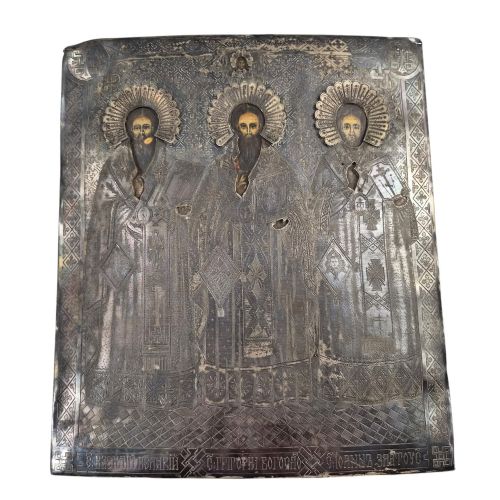
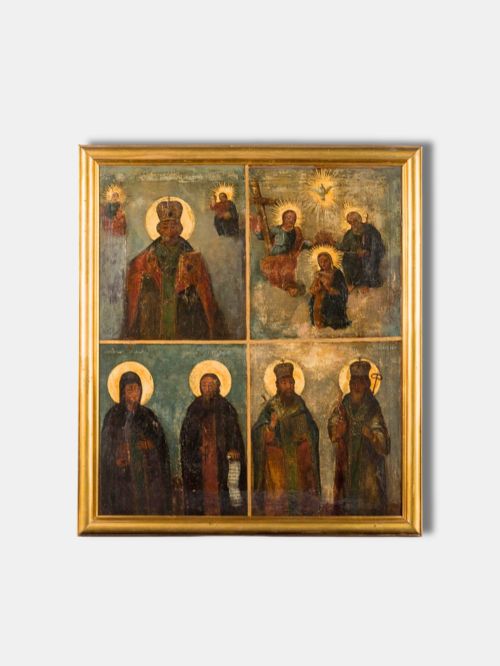
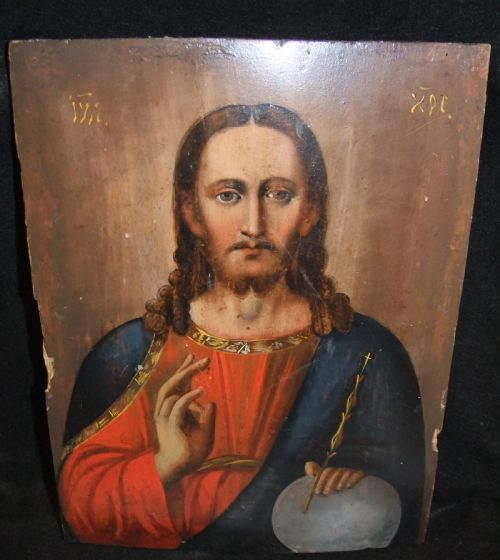
Wooden panels painted in tempera form the core of what you meet here, alongside cast bronze and brass liturgical items. Subjects range from the Three Holy Hierarchs and St George to Christ Pantocrator and narratives of the Passion of Christ.
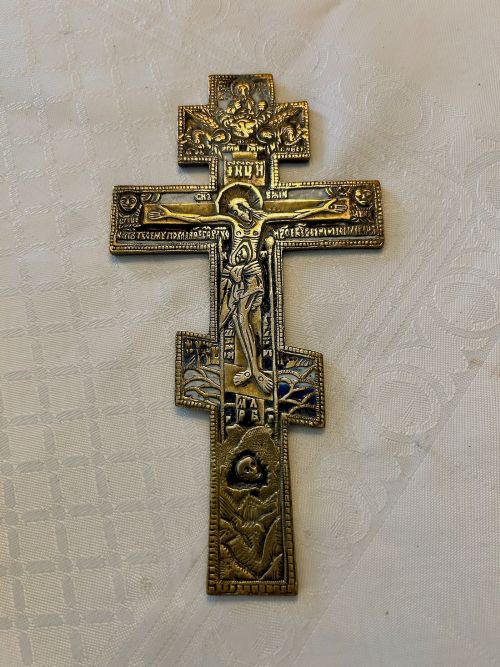
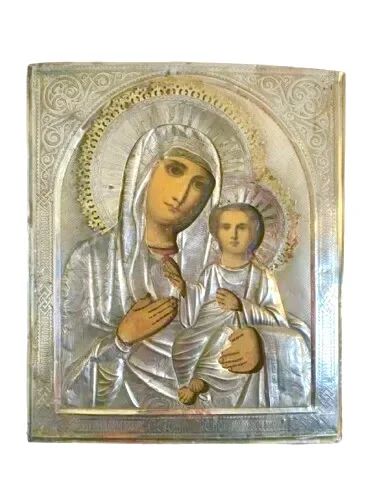
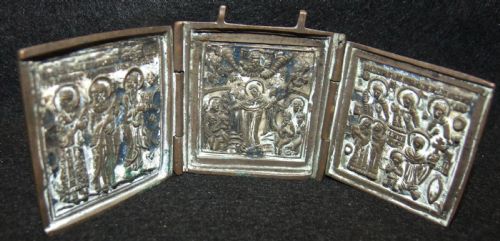
Panel paintings frequently feature protective metal coverings known as oklads or rizas, executed in silver, gilt, or enamel. Folding triptychs and cast crosses also appear, representing portable objects intended for travel and domestic prayer.
How they were made
Painters utilised tempera and gold leaf applied to prepared wood panels or canvas supports, following strict iconographic canons. Master workshops built up these surfaces with natural pigments, often sealing the painted layer beneath elaborate metalwork oklads.
Metalworkers cast bronze and brass objects, frequently incorporating vibrant blue enamel into crosses and folding triptychs. Silversmiths hammered and chased precious metal rizas to encase the wooden panels, leaving only the faces and hands visible.
Russian Religious Icon Retail Price Guide 2026
Typical asking prices for russian religious icon among the pieces listed under this phrase on Sellingantiques today, from the lower quarter to the upper quarter. They describe what is for sale here now, not the wider market.
Travel icons were built with tiny hinges so saints could fold up their bags and catch a coach without missing evening prayers.
What varies in quality
The sophistication of the brushwork and the precision of the iconographic rendering distinguish standard devotional items from masterworks. Regional workshops, such as those associated with Volga circles, demonstrate distinct levels of draughtsmanship and compositional depth.
The material composition of the oklad or riza plays a major role in the character of the object. Heavy silver work, intricate gilt details, and careful enamel placement elevate the status of the piece far beyond simple painted panels.
Heinrich Grünbaum·Volga Masters
The Russian Religious Icon Glossary
- Tempera
- A permanent, fast-drying painting medium consisting of pigmented powder mixed with a water-soluble binder such as egg yolk. This medium creates the durable, matte surfaces seen on early wood panels.
- Riza
- A specific type of metal oklad that covers the background and garments of the sacred figures. They frequently display intricate repoussé and chasing work.
- Triptych
- A picture or relief carving on three panels hinged together side by side. Portable versions in bronze and enamel served as travel icons for Orthodox believers.
- Pantocrator
- An iconic depiction of Christ as ruler of the universe. This subject typically shows Christ holding a book and raising his right hand in blessing.
Russian Religious Icon: Frequently Asked Questions
What is an oklad?
An oklad is a protective metal cover placed over the surface of a painted icon. It shields the tempera while displaying the wealth and devotion of the commissioner.
These coverings are usually fashioned from silver, brass, or gilt, featuring cutouts that reveal only the faces and hands of the sacred figures.
How do I date an icon?
Dating relies on stylistic shifts in the painting, the structure of the wooden panel, and the hallmarks found on any metal oklads. Earlier examples display distinct regional canons and denser pigments.
Later nineteenth-century pieces often incorporate mechanised metalwork techniques alongside traditional tempera application on prepared wood supports.
Where were icons displayed?
Icons were traditionally placed in the corner of a room known as the red corner or beautiful corner within an Orthodox home. This designated domestic space served as the focal point for daily prayer and family devotion.
Smaller metal triptychs and crosses were specifically designed for travel, allowing individuals to maintain their devotional practices away from home.
What is tempera paint?
Tempera is a traditional painting medium made by blending powdered pigments with a water-soluble binder, most commonly egg yolk. This technique produces a resilient surface that retains its rich colour over centuries.
Painters applied these layers onto primed wooden panels or canvas, often finishing the background with genuine gold leaf.