
Rush Seat Country Chairs
Rush seat country chairs bring warmth and vernacular charm to domestic interiors through local timbers and hand-twisted cordage.
Rush Seat Country Chairs
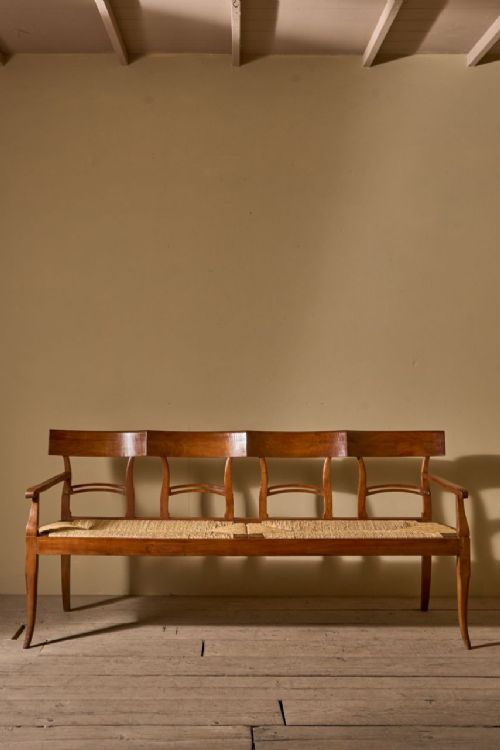
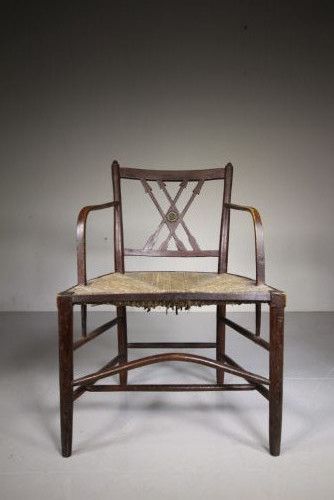
Rush seat country chairs encompass dining sets, armchairs, rocking chairs, benches, and children's seating created for domestic use in rural households.
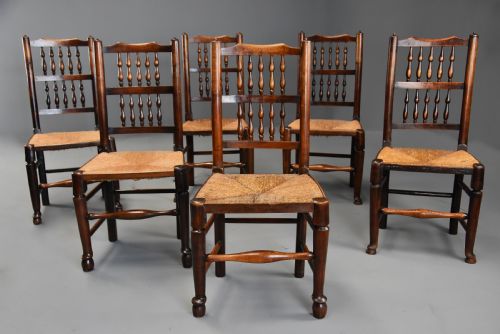
Makers shaped these utilitarian seats across the eighteenth and nineteenth centuries, utilising regional traditions from Lancashire, Cheshire, and Yorkshire, alongside French provincial workshops.
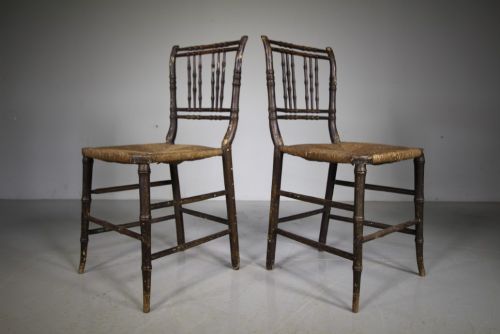
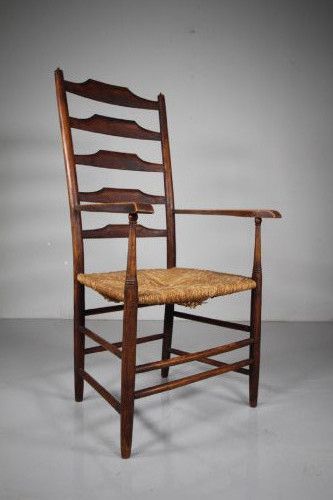
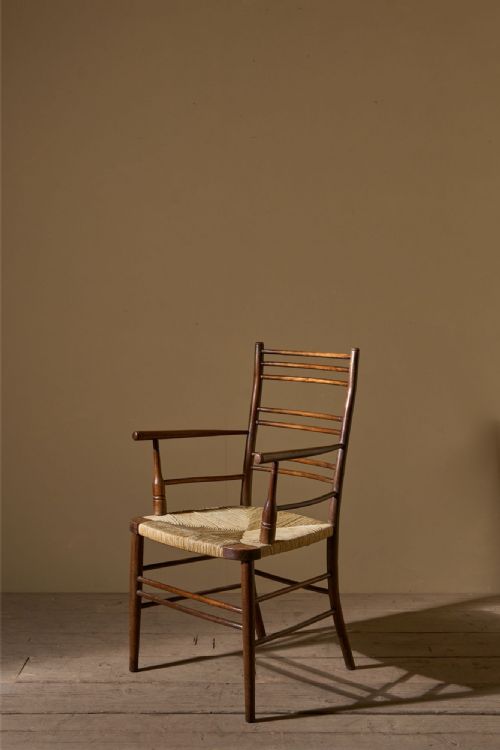
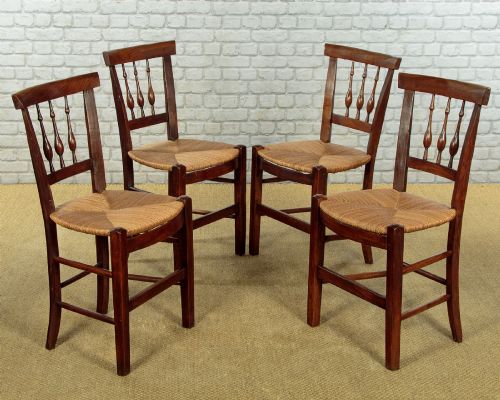
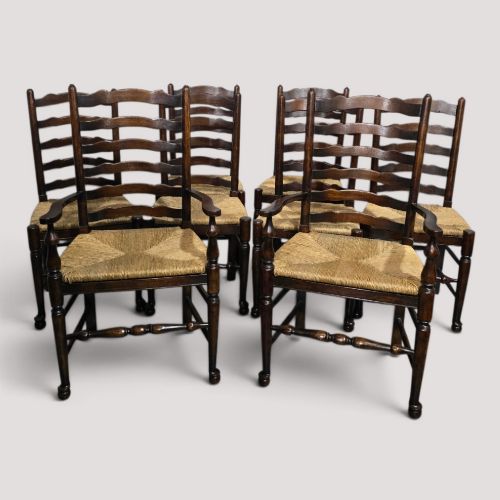
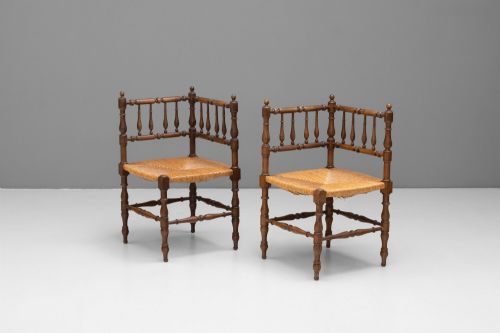
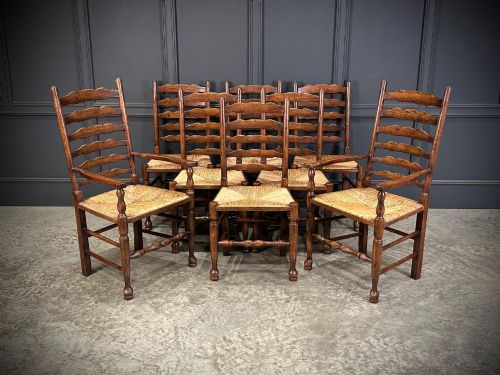
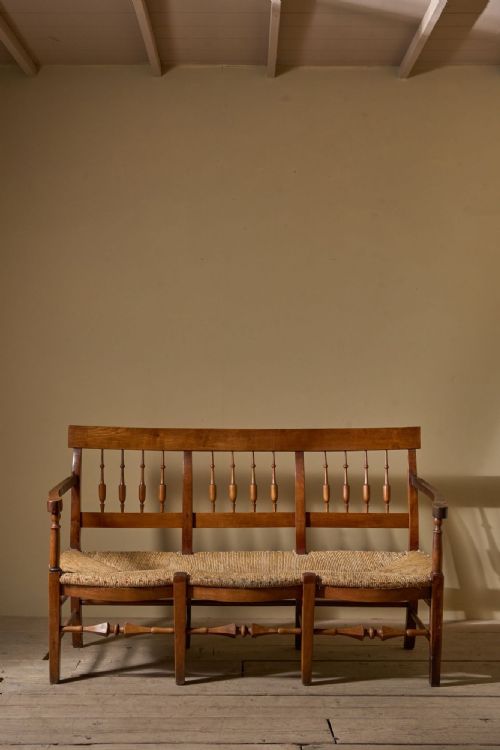
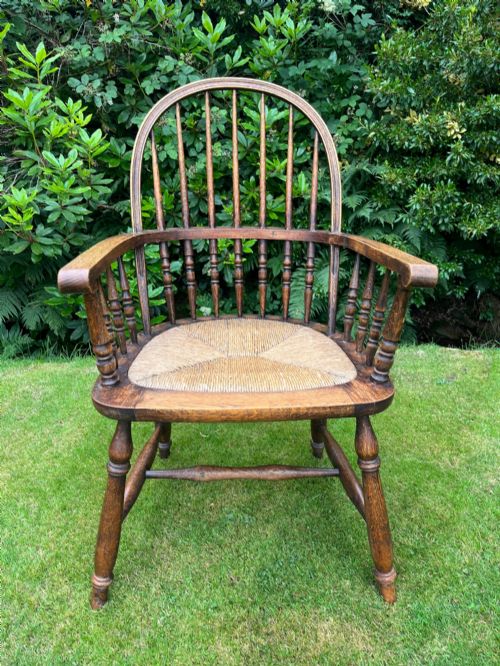
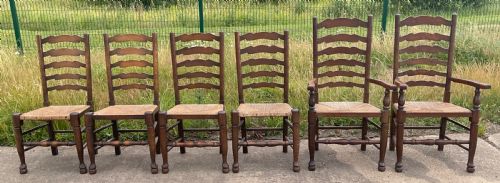
Ladder-back and spindle-back forms dominate the selections, alongside Windsor frameworks and corner seats designed for specific domestic corners.
Materials and construction
Local hardwoods such as elm, ash, oak, beech, fruitwood, and cherrywood form the structural frames, often turned on pole lathes or joined with pegged mortise and tenon joints.
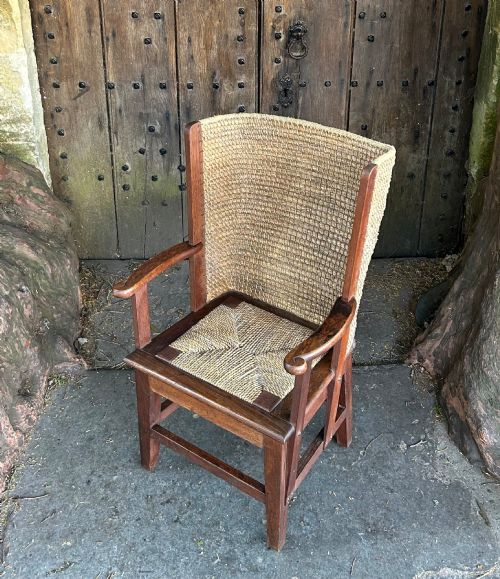
Seats are tightly woven from natural river rush around wooden rungs, creating a supportive surface that flexes with use.
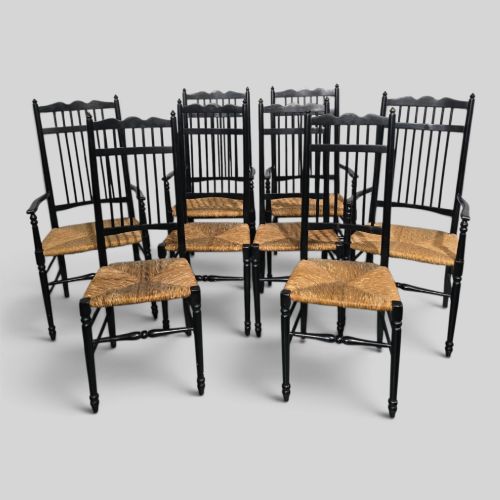
Some examples retain their original paint or surface finishes, while others show exposed timber patinated through generations of handling.
Children's high chairs and miniature rocking seats prove that rural households ensured even the smallest family members dined in proper traditional style.
Assessing quality and survival
The integrity of the woven rush surface dictates utility, with tightly packed twists surviving better than dried, brittle strands.
Frame stability relies on original joinery without excessive replacement components, though minor repairs remain common in vernacular seating subjected to heavy kitchen use.
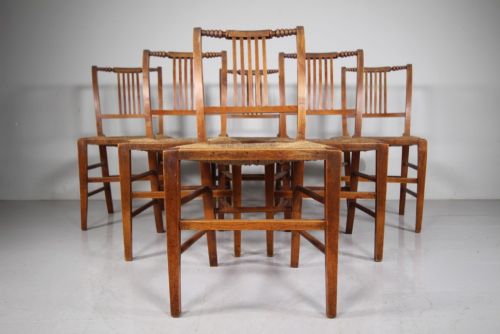
Sets matching in timber grain and turning detail command attention over assembled harlequin groupings, preserving the unified intent of the original rural workshop.
Philip Clissett·E W Godwin
The Rush Seat Country Chairs Glossary
- Rush
- Marsh grass twisted into cordage and woven tightly around chair rungs to form a resilient seat. This material was gathered locally and soaked before weaving to ensure flexibility.
- Ladder-back
- A chair back featuring multiple horizontal arched rails between two upright posts. This regional design allowed for lightweight construction using turned timbers.
- Spindle-back
- A framework incorporating numerous thin vertical turned rods supporting the backrest. Makers utilised this technique to distribute weight while keeping chairs light.
- Harlequin set
- A collection of chairs assembled to match in general style and era rather than originating from a single workshop. Such groups often share ladder-back or spindle-back profiles.
- Carver
- An armchair featuring arms, traditionally placed at the head of a dining table. These pieces match side chair designs within larger dining sets.
Rush Seat Country Chairs: Frequently Asked Questions
How do I care for a rush seat?
Keep rush seated chairs away from direct heat sources and excessive moisture to prevent the natural fibres from becoming brittle.
Apply occasional light cleaning with a dry brush and avoid heavy liquid polishes on the woven surface.
Can I use these chairs daily?
Vernacular seating was built for everyday household use and handles standard dining activity well when joints remain stable.
Check frame tightness periodically and avoid rocking on the back legs to protect the turned stretchers.
What is a harlequin set?
A harlequin set combines individual chairs that share similar heights, ladder-backs, and rush seats while originating from slightly different sources.
This grouping method reflects how rural households gathered seating over time rather than purchasing uniform suites.
How do I date an elm chair?
Examine the turning style, tool marks left by lathes, and the overall wear patterns on the foot rails and arms.
Elm was frequently paired with ash in eighteenth and nineteenth-century regional frames before factory production increased later.