
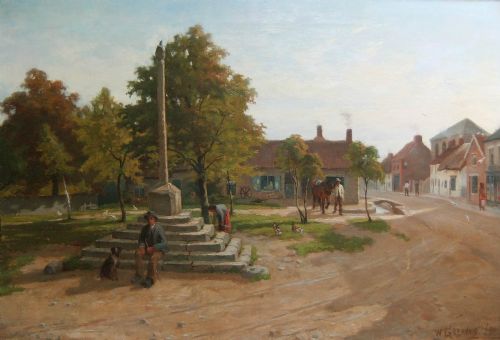


Rural Village Scene Painting
A rural village scene painting captures country life through brush and canvas, offering a quiet window into past rural communities.
Rural Village Scene Painting
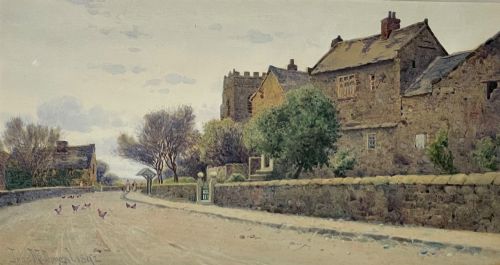
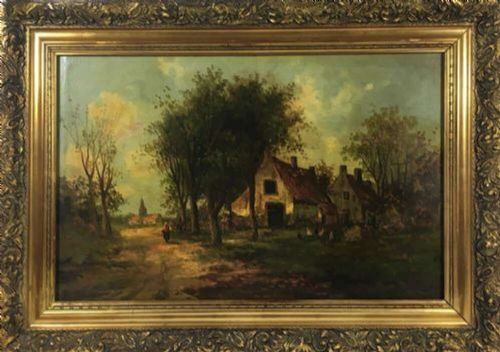
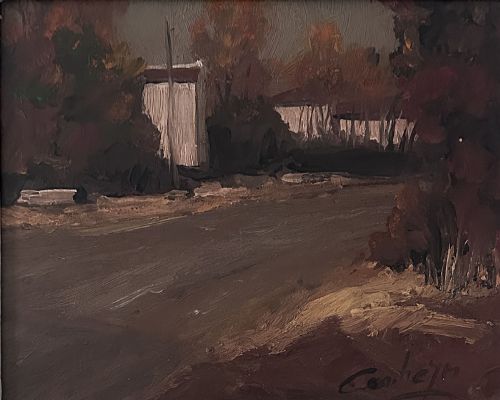
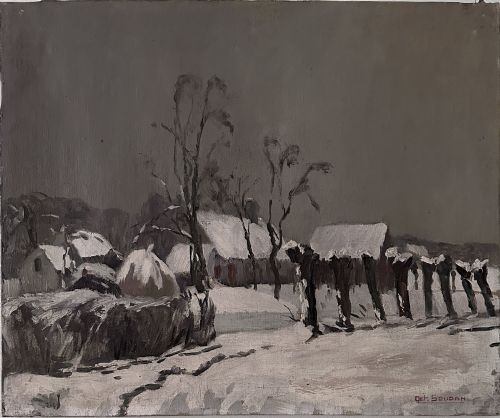
A rural village scene painting depicts country communities, local lanes, farmyards, and village taverns across different periods. These works record historic settlements, agricultural routines, and domestic architecture through varied artistic lenses.
The selections available range from 19th-century British Realist views to mid-century examples. Works span Victorian watercolours of specific English and Welsh locations to French landscapes and later expressionist interpretations.
Buyers encounter oil on canvas, oil paint on wood, and watercolour on paper. Framed pieces frequently retain period gilt surrounds that complement the traditional subjects.
Materials and construction
Artists painted primarily with oil on canvas or applied watercolour to paper. Wooden stretchers and panels provided rigid support for heavier oil pigments, while watercolours relied on absorbent paper grounds.
Framing utilised carved and moulded wood, often finished with gilt layers. These decorative surrounds protected the edges of the canvas and paper while framing the pictorial space.
A young foal steals fruit from a basket in one watercolour.
Quality factors in rural art
Brushwork precision and handling of light define the upper tier of works. Masterful application creates convincing atmospheric depth, seasonal atmosphere, and convincing architectural perspective.
Provenance and attribution elevate specific pieces. Signed works by documented artists command closer attention than anonymous or primitive folk art examples.
John McDougal·William Greaves·M. C. Hider·Charles Vickers·Helena Maguire·Robert Hollands Walker·Robert McGregor·B W Leader·J.V.R.Parsons·Henry Charles Bryant·Maurice Asselin·Georgina Lara·Eugene Battaille·Joseph Thors·David Heward·Stephanie Cooper·John Holland Snr
The Rural Village Scene Painting Glossary
- Oil on canvas
- Pigments bound in drying oil applied to a stretched woven fabric support. This medium allowed artists to build rich textures and blend tones gradually.
- Watercolour
- Pigments suspended in a water-soluble vehicle applied to paper. It yields transparent washes that capture light effects swiftly.
- Gilt frame
- A wooden moulding coated with gold leaf or metallic paint. It isolates the painted surface from the surrounding wall.
- Genre scene
- A painting depicting aspects of everyday life by depicting ordinary people engaged in common activities. These works document social history alongside landscape details.
- Barbizon School
- A group of French painters associated with the village of Barbizon who emphasised direct observation of nature. Their work preceded impressionism by focusing on rural realism.
Rural Village Scene Painting: Frequently Asked Questions
What periods do these paintings cover?
The available works span from the nineteenth century through the mid-twentieth century. Examples include Victorian realisms, Edwardian folk art, and later post-impressionist interpretations.
Dates range from the 1860s up to the 1950s and 1960s, reflecting changing artistic approaches to rural subject matter.
How do I identify a watercolour from an oil?
Oils possess a heavier pigment layer applied to canvas or wood, sometimes showing visible brush ridges and a cured sheen. Watercolours display thin, translucent washes on paper beneath glass.
Watercolours rely on the white of the paper for highlights, whereas oils build opaque layers of light.
Where were these village scenes painted?
Many depict specific British locations in Yorkshire, Sussex, Derbyshire, Hampshire, and Wales. Others record continental settings in France.
Inscribed titles on the reverse or front often identify exact villages, rivers, and lanes.
How should I hang a framed oil painting?
Select a wall away from direct sunlight and steady heat sources to protect canvas and gilt frames. Ensure picture hooks match the weight of the wooden frame and stretcher.
Allow paintings to hang flat against the wall using secure picture wire attached firmly to the frame sides.