



Thatched Cottage Oil Painting
A thatched cottage oil painting brings rustic English charm into a room, capturing rural tranquility and traditional pastoral life.
Thatched Cottage Oil Painting
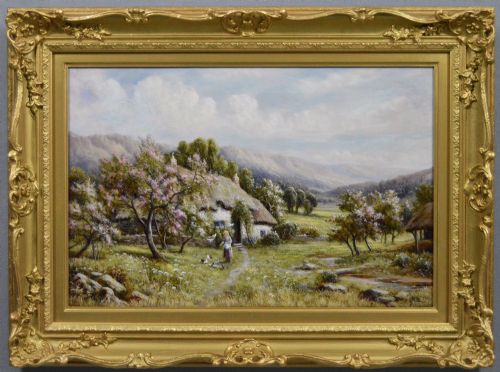
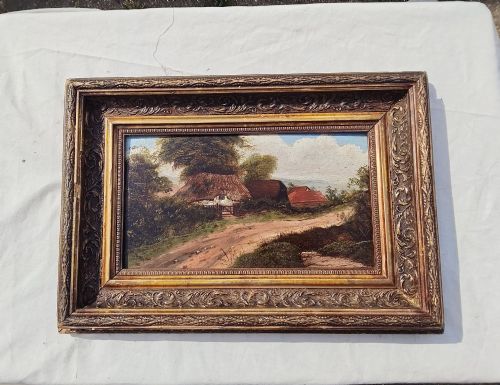
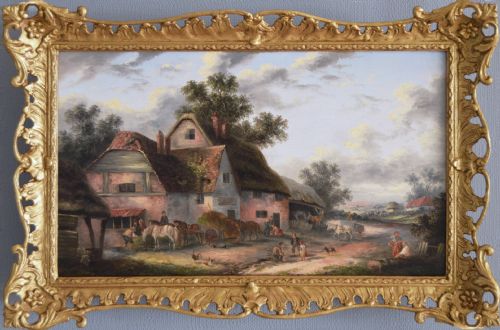
A thatched cottage oil painting depicts rural buildings with straw roofs set within countryside landscapes, often featuring figures, gardens, or domestic animals. These artworks capture pastoral scenes ranging from Victorian village views to mid-century rural streetscapes.
The pieces on this page span the nineteenth century through the twentieth century, encompassing English, Scottish, and continental schools. You will encounter works executed on canvas, wood panel, and card, housed in timber or gilt wood frames.
Subject matter frequently includes domestic details such as women feeding ducks, figures outside cottage doors, and flowering gardens. The style shifts from detailed nineteenth-century realism and followers of traditional artists to looser twentieth-century impressionism and primitive folk art.
Materials and methods
Artists painted primarily with oil paint upon stretched canvas, prepared wooden panels, or stiff card. Oil medium allowed painters to build rich textures and blend tones gradually across sky and foliage.
Frames utilise wood, timber, and gold leaf, providing structural support and decorative borders that complement the pastoral subject matter.
Ducks, pigs, hens, and wandering storks frequently share the canvas with the cottages, keeping the human residents company.
Distinctions in quality
Quality rests in the handling of light and atmospheric depth, where accomplished artists render subtle shifts in tone across the thatched roof and surrounding landscape. Lesser works rely on stiff composition and flat application of pigment.
The vitality of the brushwork and the anatomical accuracy of figures and animals distinguish skilled practitioners of the English and continental schools from anonymous amateur productions.
Robert John Hammond·George Morland·G R Vaughan·Georgina Lara·Joseph Paul·Singleton Jowett·Edward Williams·Alfred Broge·Christian Berthelsen·David Bates·F Fletcher·C F Watson·Harold Knight
The Thatched Cottage Oil Painting Glossary
- Oil on Canvas
- Pigment mixed with drying oil applied to a woven fabric support. This combination provides a flexible and durable surface for textured brushstrokes.
- Gilt Wood
- Timber carved and coated with gold leaf or metallic powder. It creates a bright reflective border around the painted canvas.
- Folk Art
- Artistic work created by untrained or self-taught painters working within traditional community styles. These pieces emphasise expressive simplicity over academic perspective.
- English School
- A classification for artists trained or working within England during a specific era. It groups regional landscapes sharing common stylistic influences.
- Norwich School
- The first provincial art movement in Britain, active during the nineteenth century. Painters associated with this group focused on local Norfolk landscapes and rural daily life.
Thatched Cottage Oil Painting: Frequently Asked Questions
What periods do these paintings come from?
The selection includes works produced across the nineteenth and twentieth centuries, spanning Victorian, Edwardian, and mid-century periods. Each era brings distinct framing choices and shifts in landscape painting conventions.
Dates range from mid-nineteenth-century village studies to twentieth-century impressionist interpretations of the English countryside.
How should I hang an oil painting?
Hang paintings away from direct sunlight and damp environments to protect the canvas and oil medium from degradation. Use appropriate wall fixings that match the weight of the timber and gilt wood frames.
Ensure the piece rests at eye level on a stable interior wall to maintain proper viewing angles.
Are these paintings signed by the artist?
Some canvases carry clear signatures or attribution to named painters, while others originate from anonymous British, Irish, or continental school artists. Signatures help historians connect specific rural views to documented regional workshops.
Unsigned works often rely on stylistic comparisons and period framing to indicate their approximate date of origin.
What frames accompany these artworks?
Many pieces retain their original timber or gilt wood frames, which show period-appropriate decorative moulding. These frames contribute to the overall presentation and historical context of the landscape.
Some paintings feature simpler wooden surrounds that reflect mid-century or provincial framing practices.