
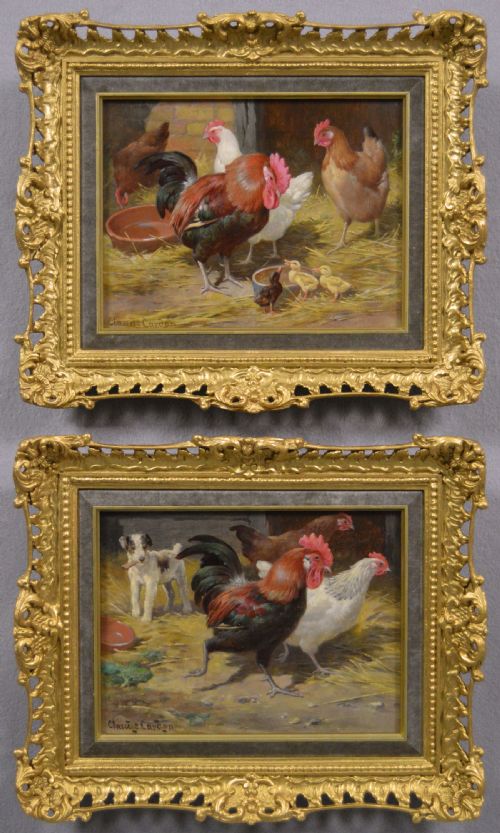


Edwardian Country Scene Artwork
Edwardian country scene artwork captures rural life through watercolours and oils, bringing pastoral charm and quiet fields directly into a room.
Edwardian Country Scene Artwork
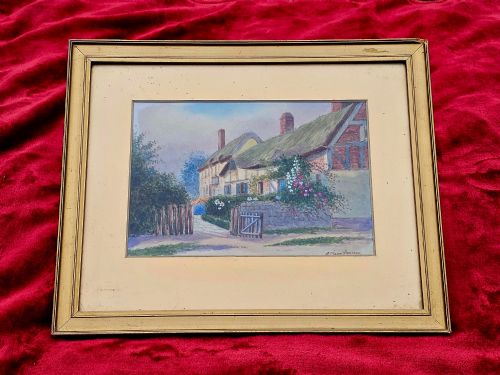
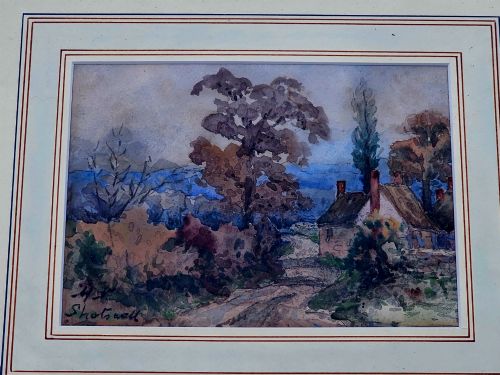
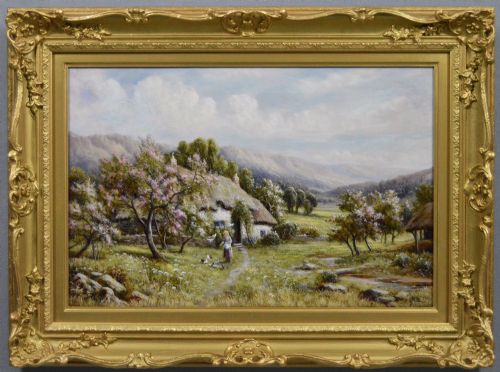
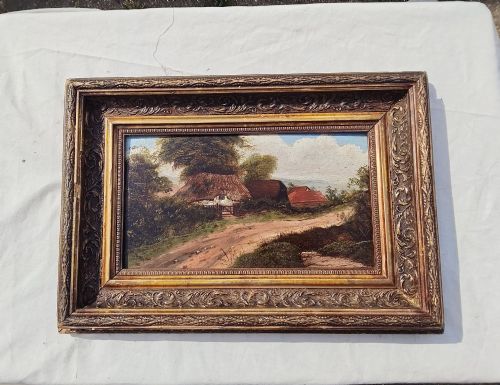
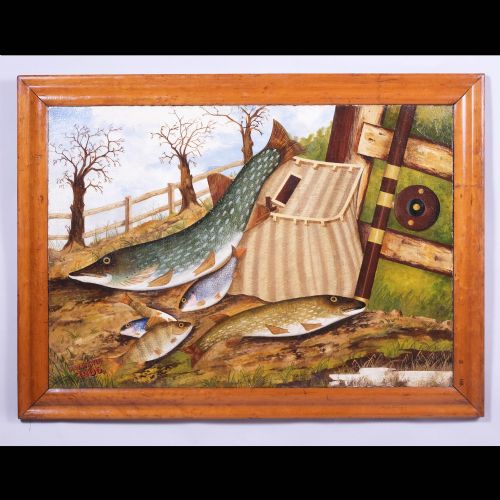
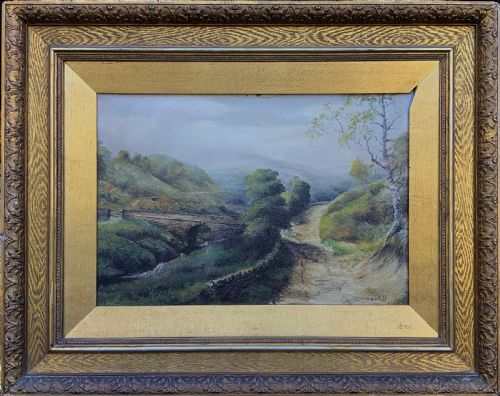
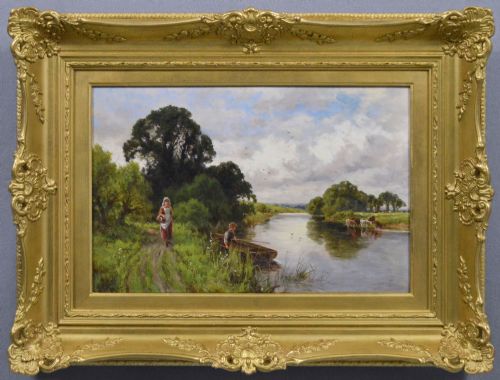
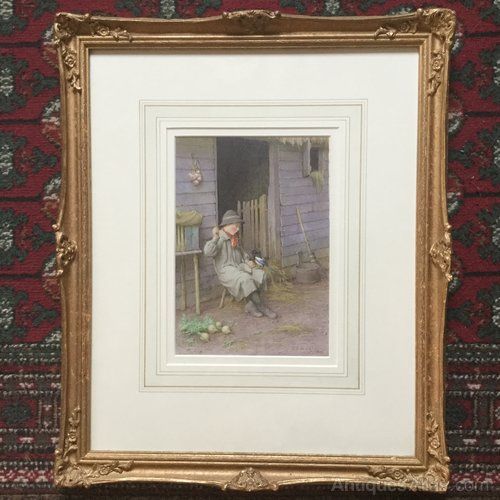
Edwardian country scene artwork represents a broad selection of paintings focusing on rural life, farming, and landscapes from the late nineteenth and early twentieth centuries. These pieces typically depict cottages, farmyard animals, river banks, and agricultural labour across the British countryside.
A buyer examining these listings will predominantly encounter watercolours on paper and oil paintings on canvas or card. The works frequently lean towards Impressionist or pastoral styles, reflecting contemporary artistic interest in natural light and traditional village settings.
Materials and methods
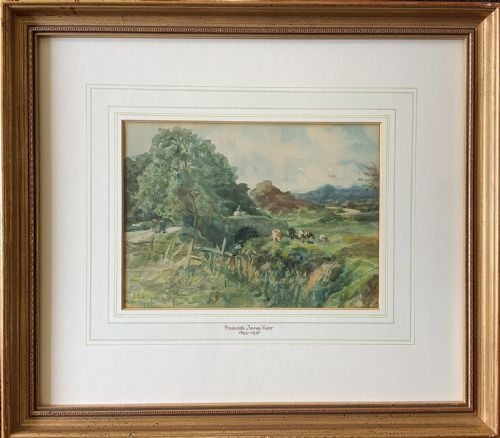
Painters of this period relied on traditional oil paint applied to canvas, wood panels, or card, allowing for layered brushwork and rich colour. Watercolours executed on heavy paper were equally common, often utilised for lighter landscape studies and coastal scenes.
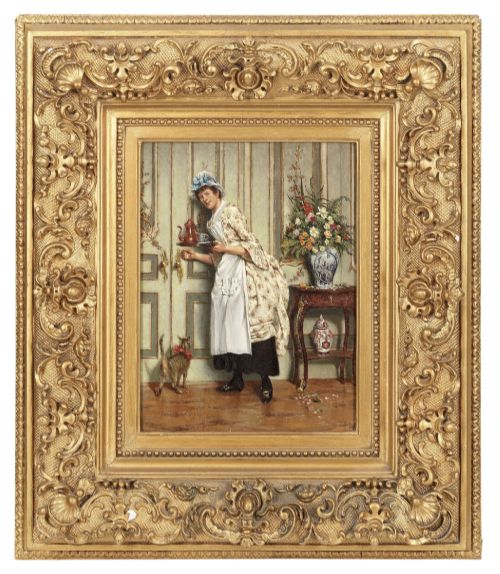
Finished works were typically housed within wooden or giltwood frames that protected the delicate surfaces of paper and canvas. The physical construction combined stretched fabric or paper with substantial framing to ensure preservation over generations.
Mediums documented in current inventory include oil on canvas, watercolour on paper, and oil on card.
Assessing quality
The strength of a composition largely dictates the quality of these rural pieces, particularly in how the artist handles light, shadow, and atmospheric depth within a landscape. Works that demonstrate confident brushwork and accurate anatomical rendering of animals stand apart from simpler decorative sketches.
The preservation of the original medium also influences overall desirability, especially for watercolours that remain free from fading or heavy foxing on the paper. Furthermore, the presence of a clear signature and historical attribution by a recognised painter elevates the standing of an individual piece.
Stephen Samuel Lewin·Henry Silkstone Hopwood·Robert John Hammond·Edgar Hunt·Henry H Parker·Claude Cardon·Owen Bowen·Ernest Pile Bucknall·Philip Henry Rideout·Frederick James Knowles·Ernest Higgins Rigg·Herbert Royle·Arthur Winter Shaw·Harry Sylvester Stannard·John Sanderson Wells
The Edwardian Country Scene Artwork Glossary
- Watercolour
- A painting method where fine pigment is suspended in a water-based solution and applied to paper. This technique often yields translucent washes and delicate atmospheric effects.
- Oil on Canvas
- A traditional painting medium utilising pigments bound in oil applied to a stretched woven fabric support. This combination permits rich textures and extensive blending.
- Giltwood
- Wood carved and coated with a thin layer of gold leaf or metallic gilt paint. It is commonly found on traditional picture frames from the period.
- Impressionism
- An art movement focusing on transient effects of light and ordinary subject matter through small, visible brush strokes. In this context, it describes the looser treatment of rural light and scenery.
- Pastoral
- A genre of art depicting rural life and agricultural landscapes in an idealized or peaceful manner. These scenes often feature farms, livestock, and cottages.
Edwardian Country Scene Artwork: Frequently Asked Questions
What subjects appear in these paintings?
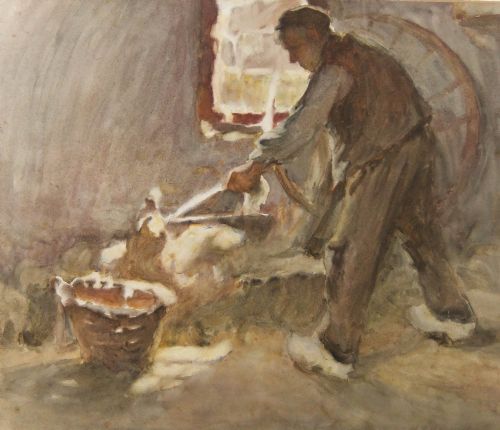
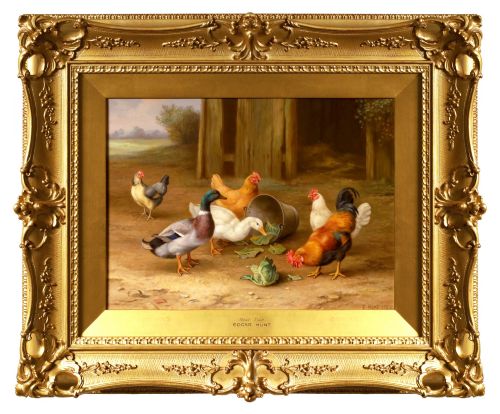
These works primarily feature British rural life, including thatched cottages, farmyard animals, river landscapes, and agricultural work such as hay cutting.
Artists of the period also recorded coastal scenes, village streets, and equestrian sports set against traditional countryside backdrops.
How should I frame and hang these watercolours?
Watercolours require careful framing behind protective glass to prevent damage from moisture and ultraviolet light. They should be hung away from direct sunlight to preserve the pigments on paper.
Using acid-free mounts further protects the artwork from chemical deterioration over time.
How do I identify the period of a landscape painting?
Dating often relies on stylistic clues, clothing styles of any figures depicted, and the construction methods of the original frame. Signatures can also be cross-referenced against artist registries from the late nineteenth and early twentieth centuries.
Examinig the reverse of the canvas or card frequently reveals old gallery labels, titles, or handwritten dates.
Are these works original or prints?
The selection includes both unique hand-painted original works in oil and watercolour alongside period lithographs or printed reproductions. Individual listings specify whether a piece is an original paint application or a print after an artist's work.
Examining the surface texture closely under magnification generally reveals the distinct brush strokes of an original painting.