

Rural Pastoral Artwork
Rural pastoral artwork brings agricultural life, cottages and open countryside onto the wall through the eyes of Victorian and Edwardian painters.
Rural Pastoral Artwork
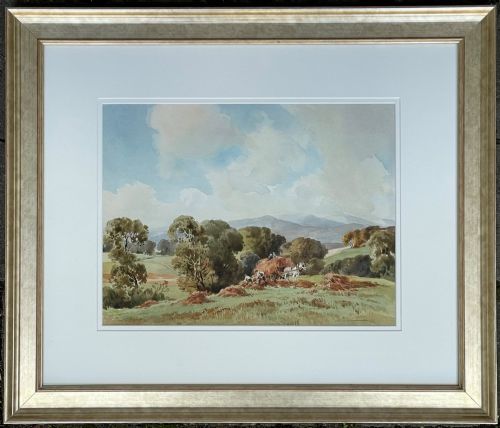
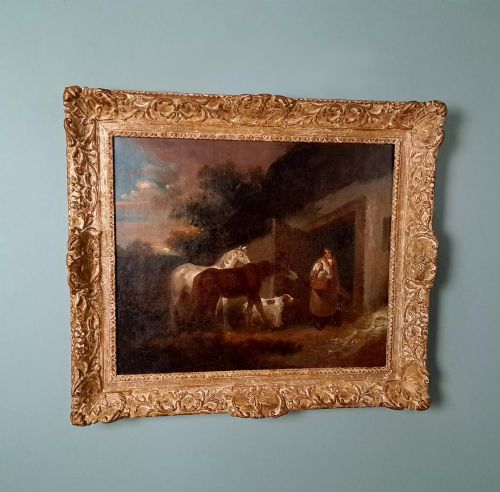
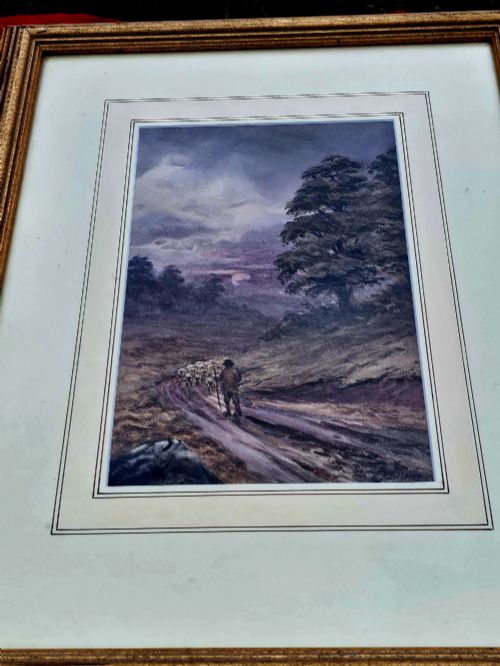
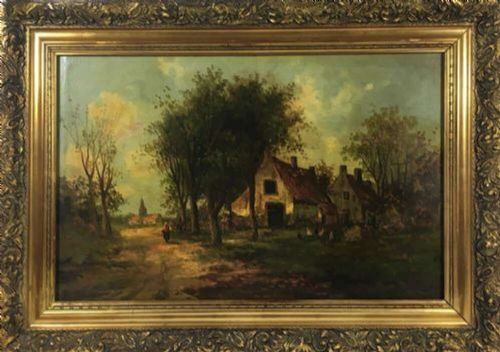
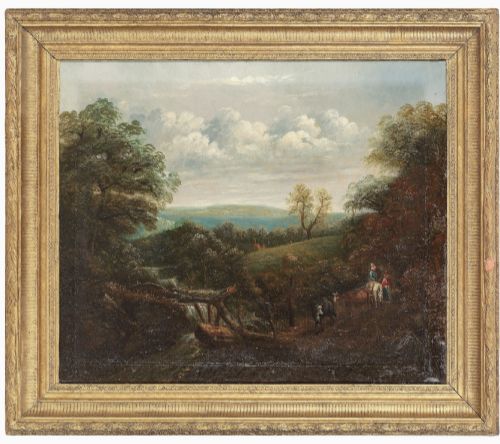
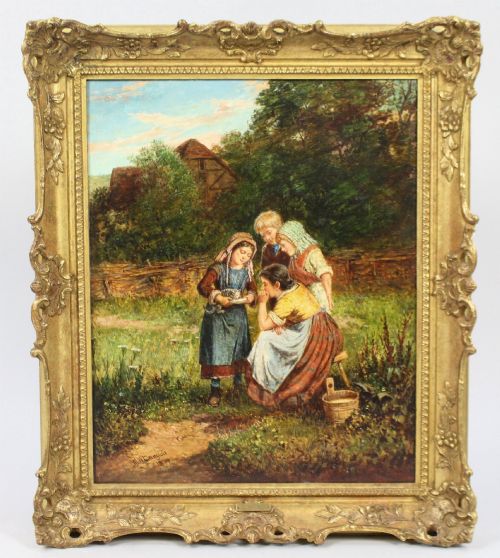
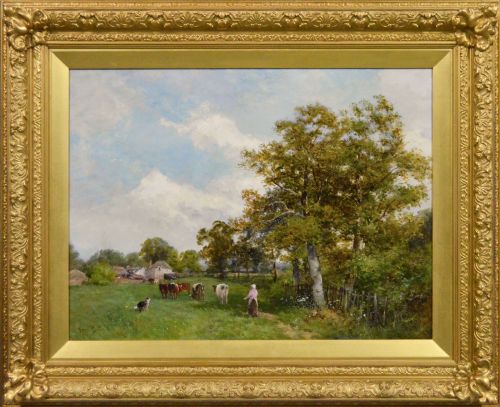
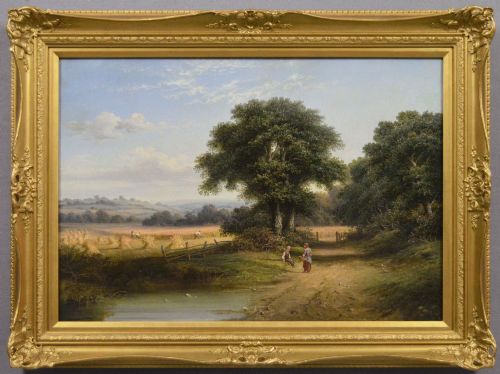
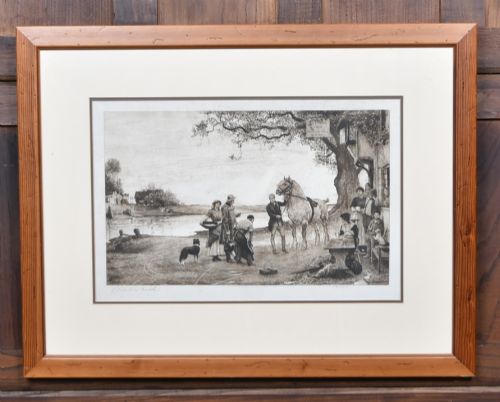
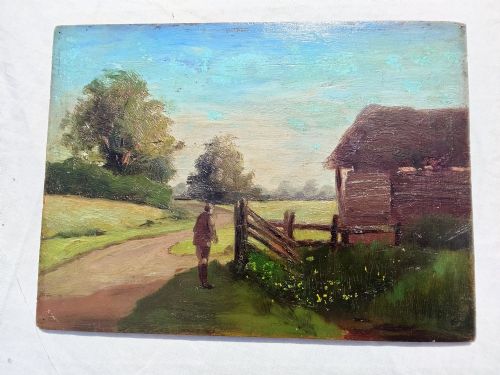
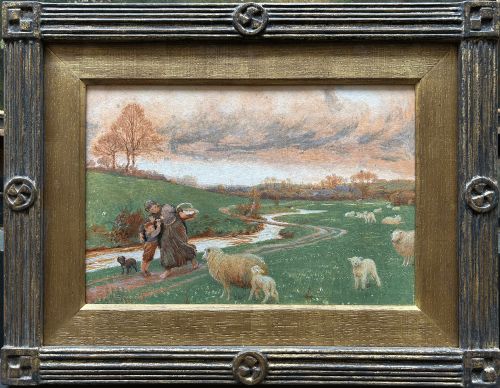
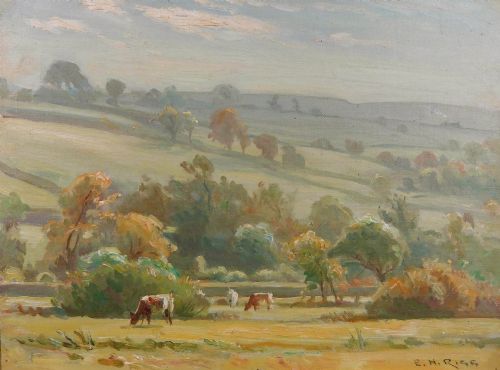
Rural pastoral artwork captures the quiet routines of the countryside, featuring figures herding sheep, harvesting fields, and tending cattle near rustic cottages. These scenes depict agricultural life across Britain and Europe during the nineteenth and early twentieth centuries.
The selections available here rely heavily on oil paintings on canvas or wood panels alongside delicate watercolours on paper. Artists from the Norwich School, British Impressionist circles, and traditional English schools dominate the forms.
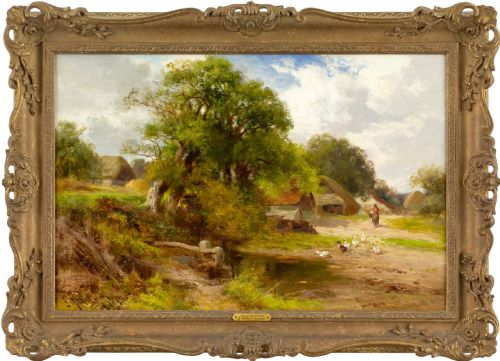
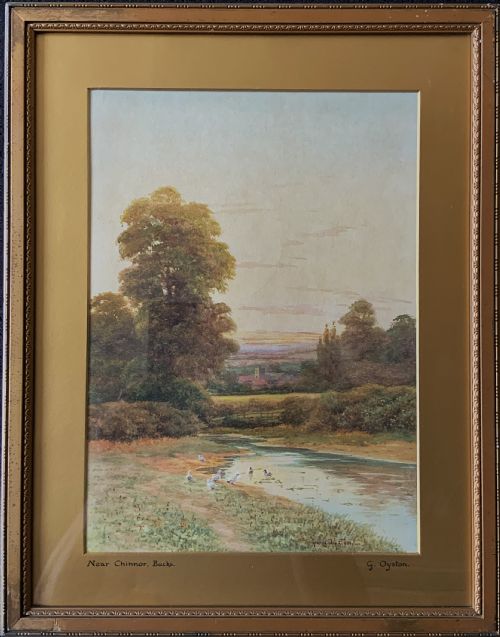
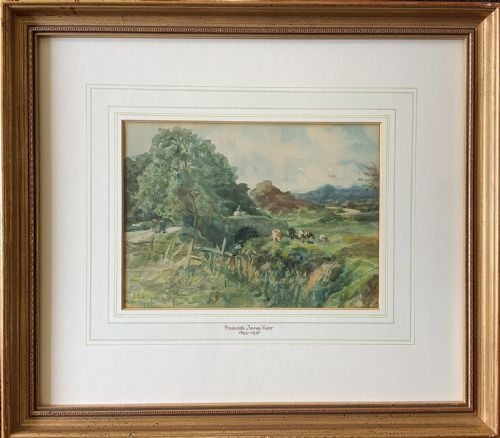
Buyers meet framed watercolours of river landscapes and substantial oil paintings portraying farmyards, damp pastures, and grazing beasts. Each piece preserves a vanished rural economy through period pigments and textured brushwork.
Materials and methods of creation
Painters utilised oil paint on canvas, wooden boards, and wooden panels, applying pigment with brushes to build up layered landscapes and detailed animal portraits. Gilt framing frequently complemented these oil works to enhance the warmth of the pastoral palette.
Watercolour paintings on paper employed transparent washes combined with pencil underdrawings to render luminous skies, harvested fields, and winding country paths. Glass protected these watercolours within traditional frames.
Several sheep make repeat appearances across different pastures, bravely ignoring the rain.
Distinctions in quality and execution
Quality rests upon the artist's handling of light, anatomical precision in depicting cattle and sheep, and the atmospheric depth of the landscape. Master works achieve a convincing sense of weather and distance, whereas lesser examples rely on formulaic foliage and stiff figures.
The preservation of the original surface, stability of the canvas or wooden panel, and the crispness of watercolour washes determine the longevity and visual impact of each piece.
W Klombeck·Percy Lancaster·William Joseph Shayer Senior·EJ Letheren·Mark William Langlois·David Bates·Walter Heath Williams·Robert W. Macbeth·John Horace Hooper·Frederick Walker·Ernest Higgins Rigg·George Oyston·Frederick James Kerr·Miles Birkett Foster·Charles Henry Slater·George Morland·Frederick Hines·Charles Clair·Oswald Garside·Henry Charles Fox·William Henry Mander·Thomas Sidney Cooper·James William Booth·Owen Bowen·Ernest Pile Bucknall
The Rural Pastoral Artwork Glossary
- Watercolour
- A painting method where fine pigments are suspended in a water-based, soluble binder on paper. This medium allows for luminous washes and delicate detail.
- Oil on Canvas
- Pigment mixed with drying oil applied to a stretched woven fabric support. This combination permits rich texture and deep colour saturation.
- Wood Panel
- A rigid wooden support used by artists instead of canvas. It provides a smooth, stable surface for detailed brushwork.
- British Impressionism
- A late nineteenth and early twentieth century painting style focusing on natural light and loose brushwork. Artists working in this manner moved outdoors to capture transient atmospheric effects.
- Norwich School
- The first provincial art movement in Britain, centred around East Anglian artists. Members painted local landscapes, rivers, and rural scenes.
Rural Pastoral Artwork: Frequently Asked Questions
What subjects appear in rural pastoral artwork?
These paintings portray agricultural scenes, including shepherds herding sheep, cattle grazing in meadows, harvest fields, and thatched cottages along country rivers.
Artists focused on the daily labour and tranquil environments of rural life during the nineteenth and early twentieth centuries.
How do I care for antique watercolours?
Watercolours require placement away from direct sunlight to prevent the fading of delicate pigments on paper. Maintaining stable indoor humidity protects both the paper support and the antique frame.
Glazing should remain intact to shield the surface from atmospheric dust and moisture.
What periods do these paintings represent?
The inventory spans the nineteenth century through the 1930s, encompassing Victorian, Edwardian, and early modern eras. Works range from mid nineteenth century English School scenes to later impressionistic depictions.
Stylistic shifts reflect the transition from traditional topographical recording to looser, light-driven brushwork.
How were these framed originally?
Period works typically feature gilt wood frames that complement the warm tones of pastoral oil paintings and watercolours. Mouldings vary from ornate Victorian designs to simpler Edwardian profiles.
Original frames provide context and help date the presentation of the artwork.