




Muted Green Canvas Artwork
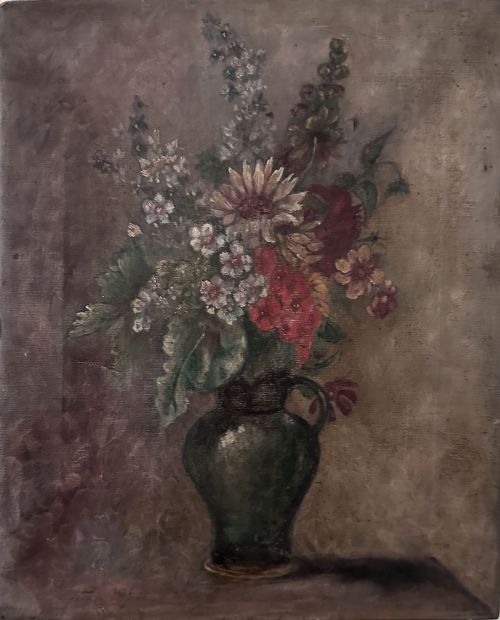
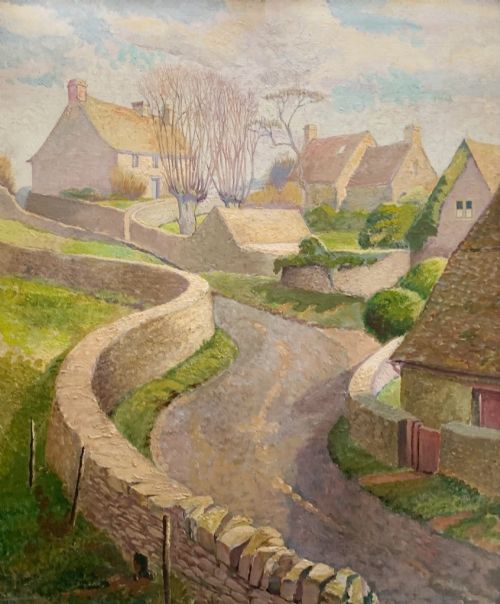
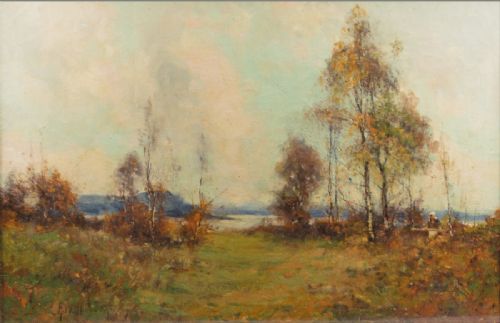
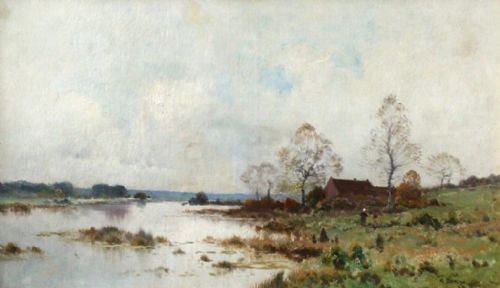
Muted green canvas artwork brings quiet landscape tones into a room through oil paint applied to canvas, board, or wood.
Muted Green Canvas Artwork
Muted green canvas artwork encompasses oil paintings depicting landscapes, rivers, farms, and coastal scenes from the nineteenth century through the mid-twentieth century. Buyers searching this phrase seek the earthy greens and subdued palettes characteristic of British Impressionism, Scottish Impressionism, and Post-Impressionism.
The pieces on this page span the Victorian era, 1900, 1910, 1920, 1930, 1940, 1950, and 1960. You will regularly encounter rural views, canals, riverbanks, and woodland scenes rendered by regional schools and named painters.
Works range from intimate small panels to large framed compositions. Landscapes dominate the selection, capturing fields, streams, and rural structures in subdued natural hues.
Materials and Technique
These works are painted using oil paint on supports of woven canvas, canvas board, traditional board, or wood panels. Artists built up textures using impasto techniques, applying thick pigments that retain the movement of the brush or knife.
Supports were prepared with grounds before the application of oil colours. Pigments were blended or layered directly to capture the subdued light of rural British and European landscapes.
Horses, carts, and river barges quietly share the canvas with earnest nineteenth-century sheep.
Distinctions in Quality
Quality rests in the handling of light, brushwork confidence, and atmospheric depth within the landscape. Stronger works convey a distinct sense of place and time through assured tonal control.
The presence of a recognised hand, such as a member of the Staithes group or Scottish painting traditions, elevates a piece. Secondary works by anonymous school painters rely entirely on atmospheric composition rather than attribution.
Alexander Wellwood Rattray·Ernest Higgins Rigg·Herbert Royle·Robert Russell MacNee·Pierre Emmanuel Eugene Damoye·William Greaves·Frank Shenton·Kershaw Schofield·James Bertrand·Bernard Meninsky·Augustus William Ennes·James Kay·Samuel Bough
The Muted Green Canvas Artwork Glossary
- Impasto
- Paint applied thickly to a canvas or board so that it stands out from the surface. This technique allows the physical marks of the brush or palette knife to remain visible.
- Canvas Board
- A stiff board faced with primed canvas cloth. It provided artists with a portable, rigid alternative to stretched canvas during the nineteenth and twentieth centuries.
- British Impressionism
- A painting movement influenced by French techniques but rooted in British light and landscape subjects. Practitioners focused on plein air observation and looser brushwork.
- Post-Impressionism
- Art that extended impressionism while rejecting its limitations. Painters focused on expressive forms, vivid or muted emotional tones, and symbolic structures.
- Wood Panel
- A rigid wooden support used by artists before stretching canvas became standard. These boards offer a smooth, stable surface for fine oil applications.
Muted Green Canvas Artwork: Frequently Asked Questions
What periods do these paintings represent?
The selection spans from the Victorian era and the nineteenth century through the 1900s, 1910s, 1920s, 1930s, 1940s, 1950s, and 1960s.
Most pieces reflect early-to-mid-twentieth-century British and Scottish landscape traditions.
What supports were used for these artworks?
Artists painted on stretched canvas, canvas board, prepared wood panels, and traditional board.
Canvas and canvas board remain the most common surfaces found across these landscape oil paintings.
How do I identify a regional British school?
Signatures, exhibition labels, and stylistic markers point to specific groups like the Staithes art colony or Yorkshire painters.
Subjects often focus on local rivers, farmyards, valleys, and coastal villages.
How should I hang an oil painting on canvas?
Ensure the wall is away from direct heat sources and strong, prolonged direct sunlight to protect the oil pigments and canvas substrate.
Use appropriate picture hooks rated for the weight of the framed artwork.