


Rural Harvesting Artwork
Rural harvesting artwork captures agricultural labour and golden fields through Victorian and twentieth-century paintings.
Rural Harvesting Artwork
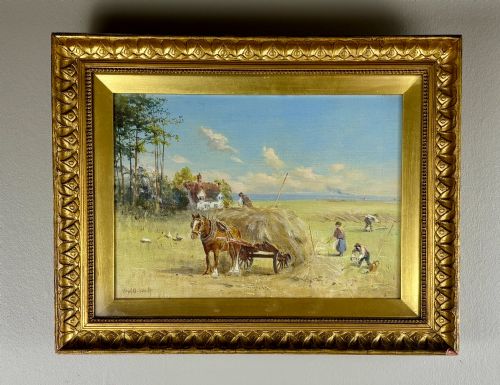
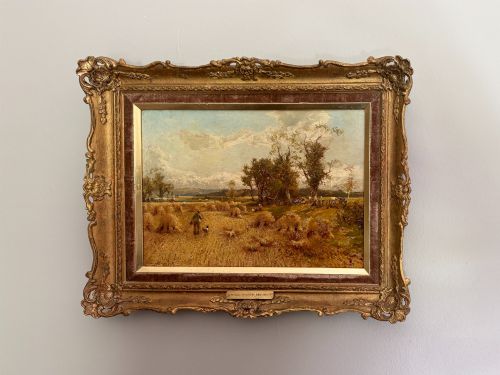
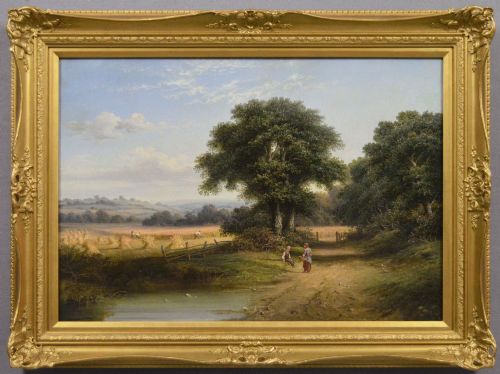
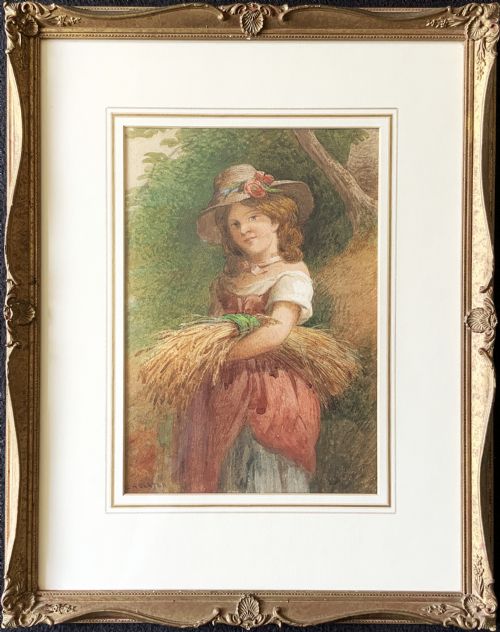
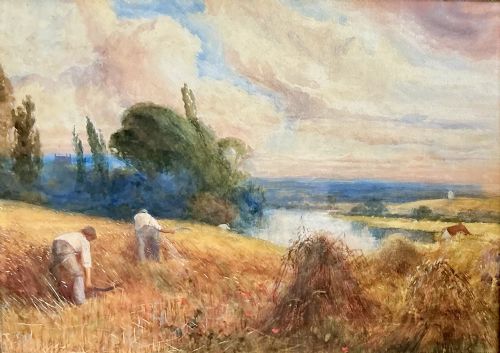
Rural harvesting artwork depicts agricultural scenes, specifically figures working in cornfields, hay meadows, and riverbanks during the gathering season. These pieces document traditional farming methods through paintings and watercolours created across the nineteenth and twentieth centuries.
Buyers encountering this selection will most frequently find watercolours and oil paintings dating from the Victorian and Edwardian periods up to the mid-twentieth century. British artists dominate these works, recording regional landscapes from Sussex to Yorkshire with figures labouring near hay carts and stacks.
The subjects range from intimate watercolour sketches to large oil paintings on canvas, framed behind glass or mounted in wood. Each piece presents an observational record of rural life before mechanisation transformed the countryside.
Materials and techniques
Artists relied primarily on oil paint applied to canvas or wood panels, alongside watercolours worked on paper. Oil mediums allowed for deep colour saturation and layered textures, which painters utilised to render glowing sunset skies and dense wheat sheaves.
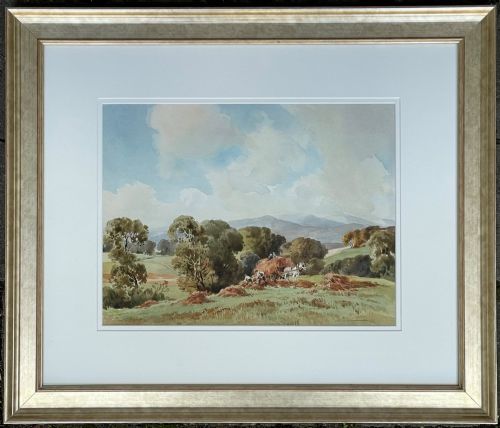
Watercolour works employ transparent washes on paper to capture natural light and atmospheric weather across open fields. Gouache appears selectively to add opaque highlights to landscape details and figures.
Surviving pieces are generally housed in period wooden frames that complement the natural tones of the painted rural scenes. The physical support often bears the texture of the original artist's brushwork and preparatory sketching.
Listings feature works executed in oil on canvas, watercolour on paper, and gouache, spanning the Victorian period through the mid-twentieth century.
Factors determining quality
The strength of the composition and the handling of natural light distinguish exceptional pieces from standard topographical records. Superior works demonstrate confident brushwork in rendering human figures and animal forms actively engaged in labour rather than static placement.
The condition of the pigment and the paper support dictates the visual impact of each piece. Well-preserved works retain their original colour vibrancy without excessive fading, foxing on paper, or heavy craquelure across oil surfaces.
Percy Lancaster·Walter Heath Williams·Charles Henry Slater·Frederick Hines·James William Booth·John Atkinson·William Grant Murray·J.C. Grey·Helmut Reuter·Henry H Parker·Arthur Walker Redgate·Rowland Henry Hill·Herbert Royle·Frederick J. Knowles·Joseph Paulman·Henry John Kinnaird·Frederick William Jackson·Walter Duncan·George Hamilton Constantine·William Greaves·Joseph Thors·David Heward·William Kay Blacklock·Wilmot Pilsbury·John Clayton Adams
The Rural Harvesting Artwork Glossary
- Watercolour
- A painting method where fine pigment is suspended in a water-based solution and applied to paper. This medium produces translucent washes and delicate atmospheric effects.
- Oil paint
- A slow-drying paint made by mixing pigments with oils such as linseed. It permits rich blending and substantial texture on canvas or wood supports.
- Gouache
- An opaque water-based paint containing pigment mixed with gum and chalk. It creates solid areas of colour and distinct highlights.
- Canvas
- A heavy woven fabric stretched across a wooden frame to serve as a sturdy foundation for oil paintings. It provides a distinct textural surface for the artist's brush.
- Impressionism
- An art style focused on accurate depiction of light and shifting qualities of weather. British practitioners applied these principles to rural landscapes and farming scenes.
Rural Harvesting Artwork: Frequently Asked Questions
What subjects appear in rural harvesting artwork?
These pieces show farm workers cutting corn, loading hay carts, and gathering crops in fields across Britain. Scenes frequently include rivers, windmills, and rural cottages alongside the labourers.
Artists focused on the seasonal rhythm of agriculture, capturing haymaking, wheat harvesting, and evening rest periods.
How should I display antique paintings at home?
Hang these works away from direct sunlight and damp walls to protect the paper, canvas, and pigments from fading or deterioration. Stable indoor temperatures preserve both the paint surface and the original wooden frame.
Pairing watercolours with acid-free backing boards during reframing ensures long-term preservation of works on paper.
How do I distinguish watercolours from oil paintings?
Watercolours are painted on paper, typically displayed under glass to protect the delicate pigment and paper surface from moisture and dust. They offer a lighter, translucent quality.
Oil paintings are executed on canvas or wood panels with thicker, textured paint layers that reflect light differently and do not require glass protection.
What periods do these artworks represent?
The listings span from the mid-nineteenth century through the Edwardian era up to the mid-twentieth century. Victorian pieces often emphasise detailed realism, while later works incorporate impressionist techniques.
Each period reflects contemporary artistic approaches to capturing traditional British rural labour before modern machinery altered farming practices.