
Rural Country Landscape Painting
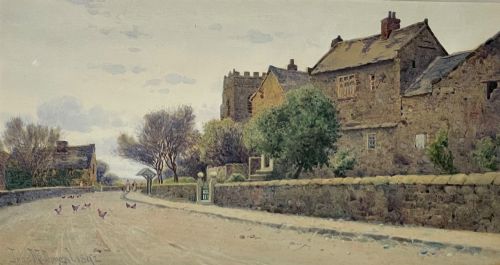
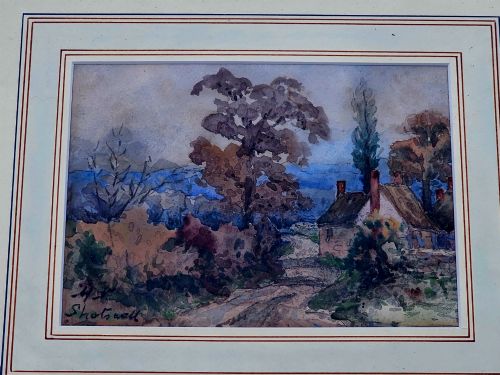
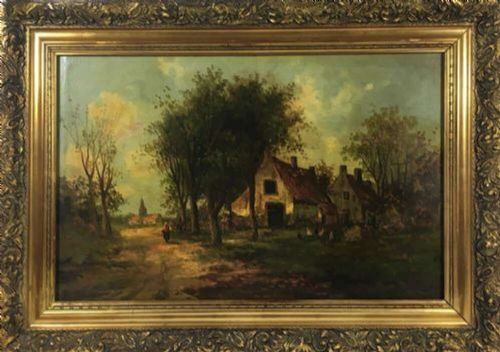
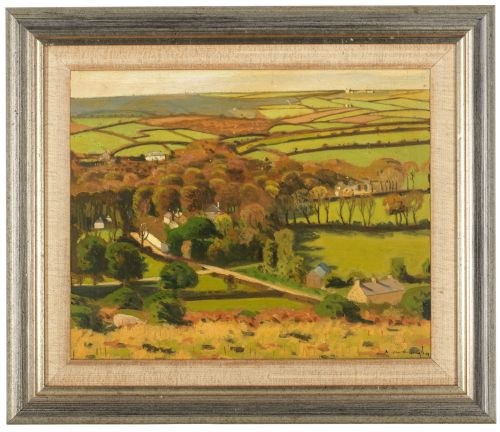
When searching for a rural country landscape painting, collectors find pastoral views of fields, cottages and rivers rendered in oil or watercolour.
Rural Country Landscape Painting
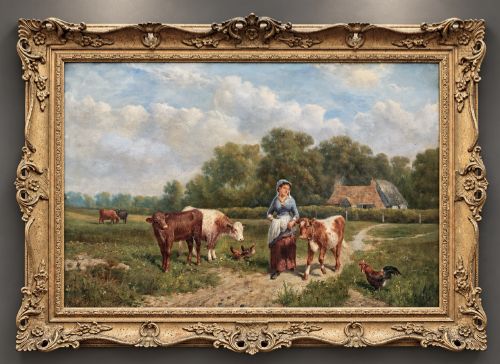
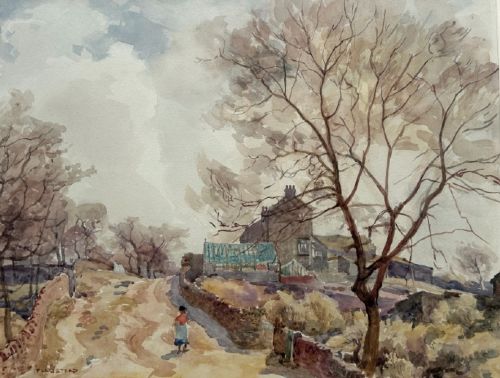
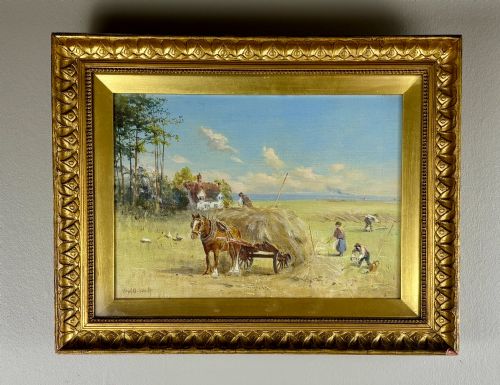
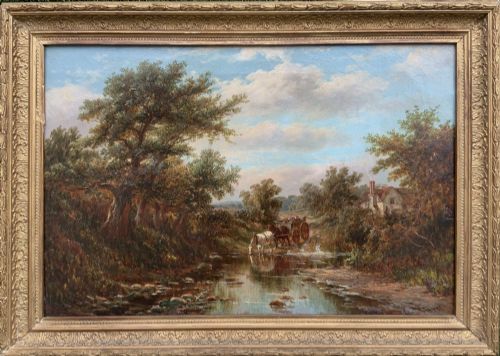
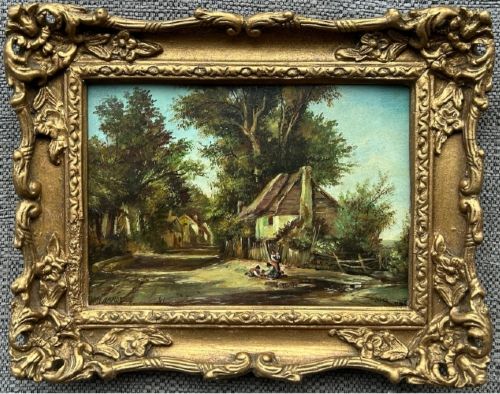
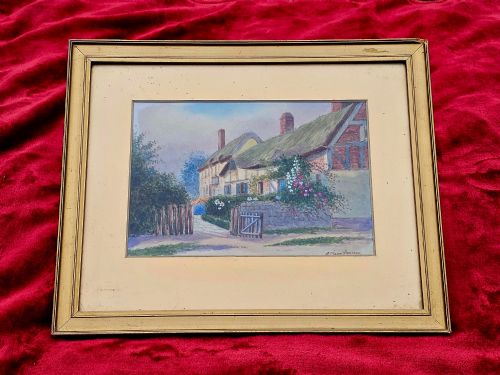
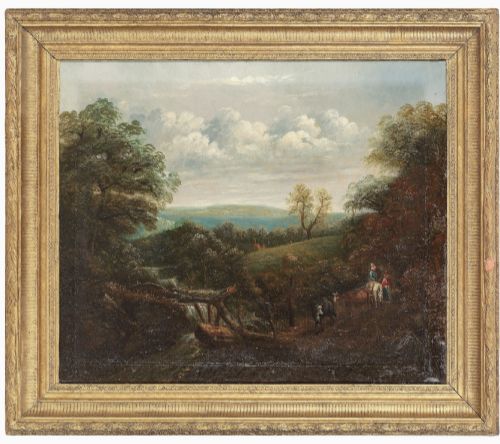
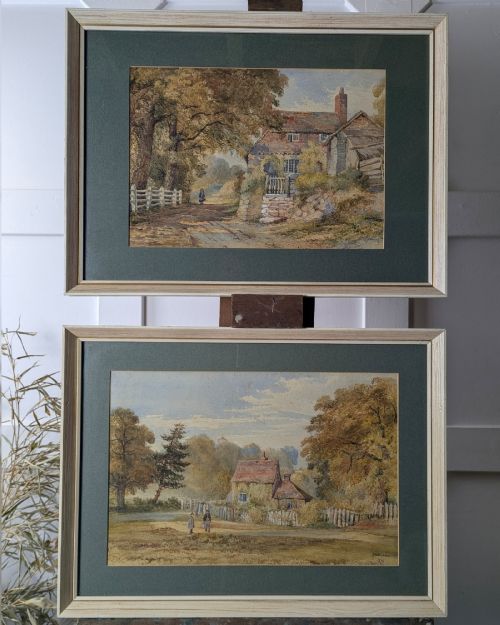
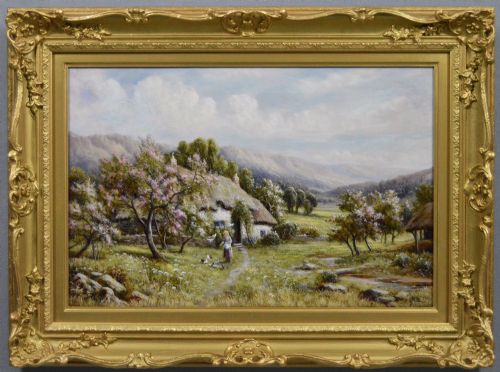
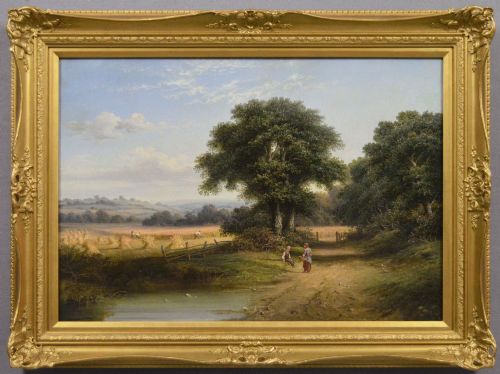
A rural country landscape painting captures agrarian life, depicting harvest fields, thatched cottages, livestock and wooded paths across the British countryside and beyond. These works span from the nineteenth century through the Edwardian era and into the mid twentieth century, reflecting shifting artistic approaches to the natural world.
The selections available here rely heavily on traditional British and European schools, showing pastoral scenes set near villages, streams and farms. Pieces range from intimate watercolours on paper to substantial oil paintings on canvas, panel and board, framed in period gilt wood.
Most examples date from the Victorian period up to the nineteen-thirties, though pieces from nineteen-sixty and the late nineteenth century also appear. Buyers encounter both signed works by known artists and pieces attributed to regional British schools.
Materials and methods
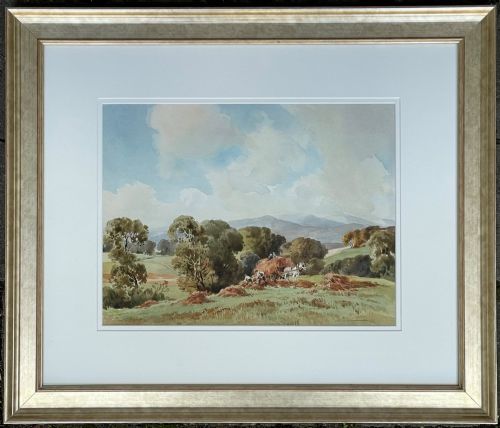
Painters utilised oil paint on canvas, panel, board or card, building rich textures and deep colour tones to capture light and shadow in open fields. Watercolours on paper offer a lighter, more transparent medium, frequently employed for detailed topographical and village views.
Support materials varied according to period and artist preference, with wooden panels and heavy stretched canvas dominating the nineteenth-century works. Gilt wood frames provide the traditional enclosing structure for these artworks, preserving the edges of the canvas or paper.
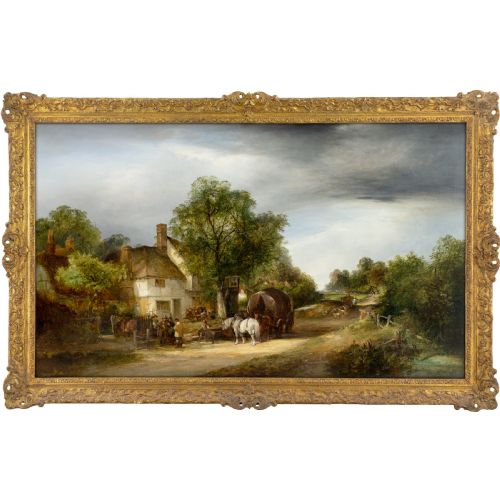
Several canvases quietly record the daily commute of sturdy shire horses hauling heavy timber and ploughing stubborn village fields.
Quality and execution
Quality rests upon the artist's handling of light, atmospheric perspective and the natural proportions of figures, animals and architecture within the composition. Stronger works demonstrate confident brushwork and a coherent tonal balance that brings depth to the pastoral setting.
The skill evident in the rendering of foliage, water and sky distinguishes accomplished studio pieces from simpler decorative works. Original signatures, period framing and documented provenance further elevate individual examples.
Percy Lancaster·William Howard Hardy·John McDougal·Robert Morson Hughes·Robert John Hammond·Walter Heath Williams·John Horace Hooper·Frederick James Kerr·Herman S Melville·George Morland·Johannes de Haas·Sydney Yates Johnson·Owen Bowen·Edgar Woollatt·Harry Freckleton·Thomas Sidney Cooper·William JB Jenkins·Ernest Higgins Rigg·Henry John Yeend King·John Hobson Nicholson·William Greaves·David Bates·FW Hinsley·John Westall
The Rural Country Landscape Painting Glossary
- Oil on canvas
- Pigment suspended in drying oil applied to a stretched woven fabric support. This medium allowed artists to rework areas and build heavy impasto textures.
- Watercolour
- Pigments suspended in a water-soluble vehicle applied to paper. It yields translucent washes that capture delicate shifts in natural light.
- Panel
- A flat piece of wood used as a painting support instead of canvas. Wooden boards provided a rigid surface favoured by many nineteenth-century painters.
- Barbizon School
- A nineteenth-century French movement focused on plein-air painting of rural realism. These artists emphasised straightforward observation of ordinary countryside views.
- Impressionism
- A nineteenth-century style characterised by relatively small, thin yet visible brush strokes and open composition. The focus centres on accurate depiction of light in its changing qualities.
Rural Country Landscape Painting: Frequently Asked Questions
What periods do these paintings cover?
The works span from the late eighteenth century through the Victorian and Edwardian eras up to the mid twentieth century. Most pieces reflect nineteenth-century pastoral traditions and early twentieth-century British art.
Dates and stylistic markers help place each artwork within its specific decade of production.
How should I hang an oil painting?
Oil paintings on canvas or panel require secure wall fixings suited to the weight of the frame. Hang them away from direct sunlight and excessive moisture to protect the pigment and wooden support.
Stable indoor temperatures prevent warping in the wood and cracking in the paint surface.
Are watercolours sensitive to light?
Watercolours on paper are susceptible to fading when exposed to continuous direct sunlight. Framing behind conservation glass helps protect the pigments from ultraviolet degradation over time.
Displaying them in rooms with controlled, indirect lighting preserves the delicate washes.
How do I identify a school of painting?
Regional schools are often identified by recurring subject matter, geographic locations and shared technical methods among artists working in the same area. Signatures, exhibition labels and framing styles provide further clues.
Historical records link specific artists to groups like the Norwich School or the Barbizon School.