



Ruby Gold Pendant
When you search for ruby gold pendant, you uncover pieces that combine rich red stones with yellow and white precious metal.
Ruby Gold Pendant
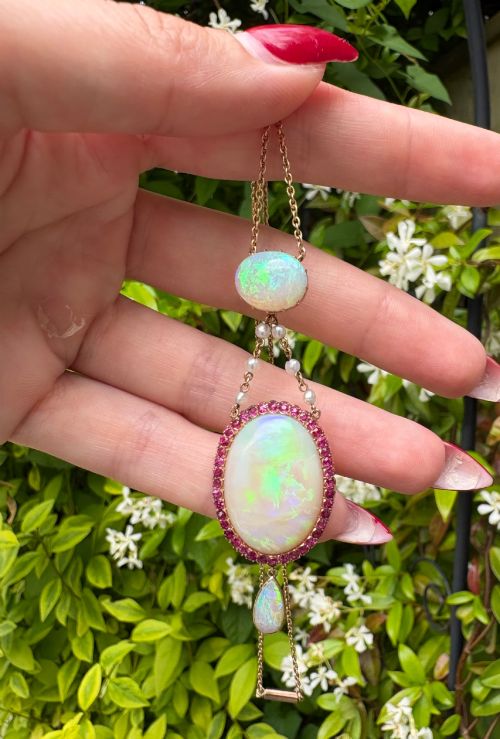
A ruby gold pendant brings together red corundum and precious metal into a wearable ornament that often doubles as a brooch.
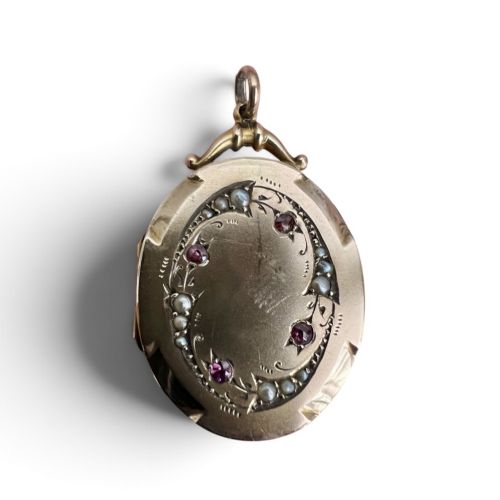
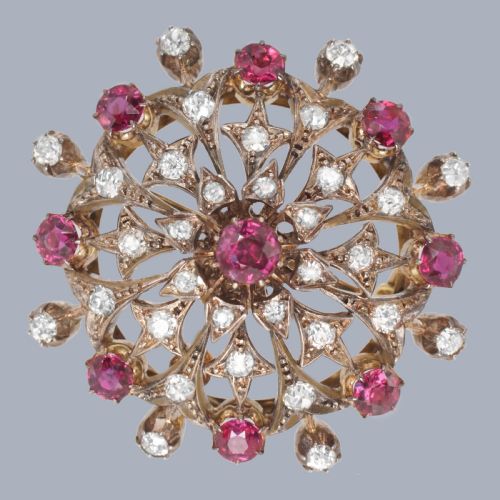
The selections span Victorian, Edwardian, and mid-century periods, showing cluster formations, floral motifs, and symbolic shapes.
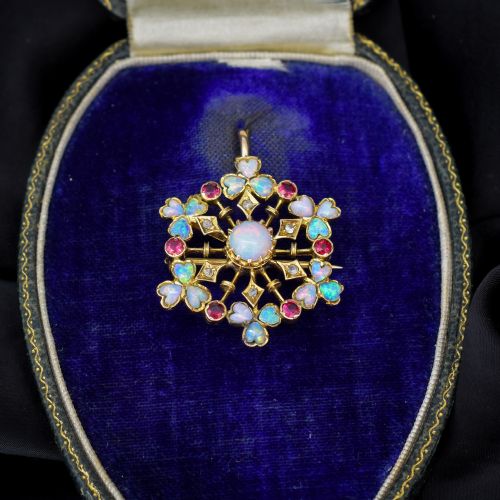
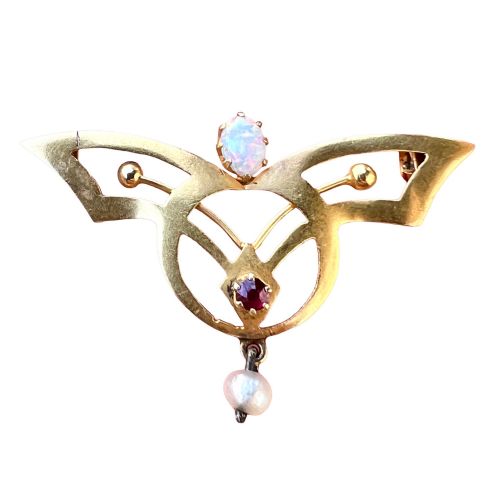
Many items incorporate diamonds, pearls, or opals alongside the central ruby, creating layered textures and varied colour palettes.
Materials and Construction
Goldsmiths utilised various purities including 9ct, 15ct, and 18ct yellow and rose gold to set the stones securely.
Gemstones such as diamonds, pearls, and opals were integrated using prong, bezel, and cluster settings characteristic of their period.
Artisans applied hand-carved details, enamel work, and convertible mechanisms to allow pieces to function as both pendants and brooches.
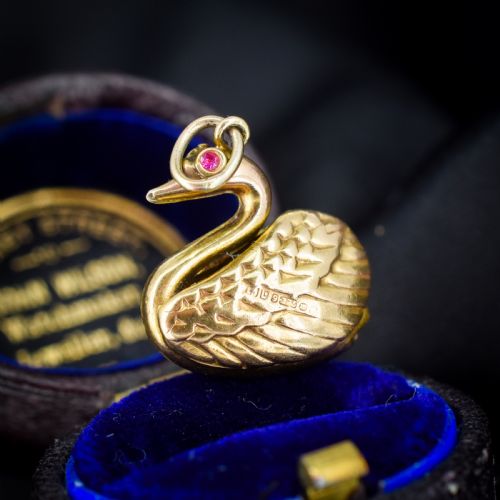
Snakes, snakeskins, and serpentine coils wind through multiple Victorian designs, acting as protective charms while holding ruby eyes.
Distinctions in Quality
The depth of colour and clarity in the ruby dictate visual impact, distinguishing natural untreated stones from synthetic alternatives or paste.
The weight, purity, and structural integrity of the gold setting reveal the standard of workshop execution.
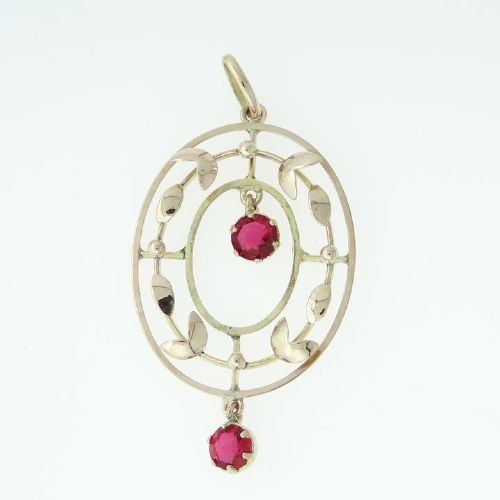
Complexity in design, such as delicate openwork metal frames or well-matched diamond surrounds, marks the distinction between standard production and fine craftsmanship.
Cropp and Farr
The Ruby Gold Pendant Glossary
- Cluster pendant
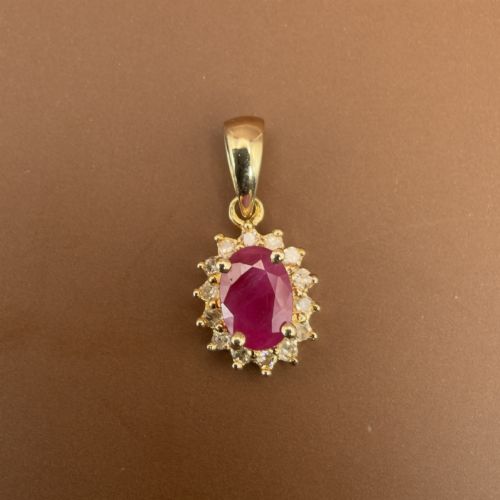
- A setting style where a central ruby is encircled by a border of smaller diamonds or pearls. This arrangement maximises the visual presence of the stones.
- Rose cut
- A historic diamond cutting style featuring a flat base and a domed crown with triangular facets. It imparts a soft, candlelit sparkle common in older pieces.
- Seed pearl
- Very small, naturally occurring pearls often used in floral and star clusters during the Victorian and Edwardian eras. They add a delicate texture to the gold work.
- Paste
- Hand-cut and polished lead glass used as a gemstone substitute in historic jewellery. It mimics the light reflection of rubies or diamonds.
Ruby Gold Pendant: Frequently Asked Questions
How do I date a ruby gold pendant?
Dating relies on stylistic clues like motif design, metal hallmarks, and gemstone cuts. Victorian pieces often use seed pearls and closed-back settings, whereas mid-century examples favor cleaner lines and cluster configurations.
Examining the clasp type, chain attachment, and any maker marks provides further chronological context.
Can these pendants be worn daily?
Rubies rank very high on the hardness scale, making the central stone resilient for regular wear. However, older gold settings and seed pearls require careful handling to avoid damage.
It is advisable to remove antique pieces before engaging in physical activities or applying cosmetics.
What is the difference between natural and synthetic rubies in antiques?
Natural rubies formed within the earth over millennia, often containing minor inclusions visible under magnification. Synthetic stones, which appeared in jewellery production during the late nineteenth and twentieth centuries, share identical chemical properties but were grown in a laboratory.
Gemological reports often accompany older untreated stones to confirm their origin.
Why do some pendants also function as brooches?
Versatility was a priority for makers in the nineteenth and early twentieth centuries. Adding a hinged pin and a hidden loop allowed the owner to pin the jewel to a lapel or suspend it from a chain.
This dual functionality gives modern collectors flexibility in how they display and wear the piece.