




Ruby Glass Light
A ruby glass light brings a deep crimson glow to a room, spanning Victorian oil lamps, lustres, and chandeliers.
Ruby Glass Light
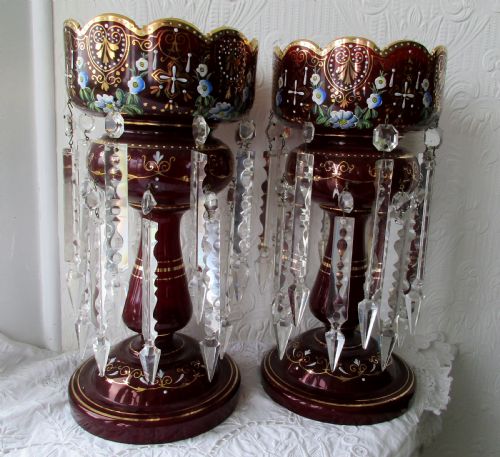
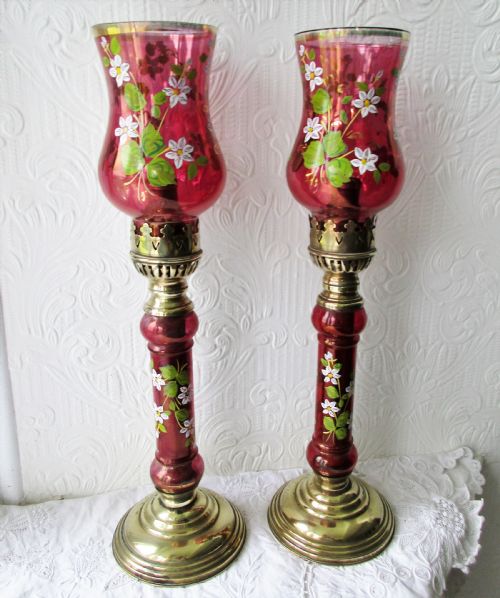
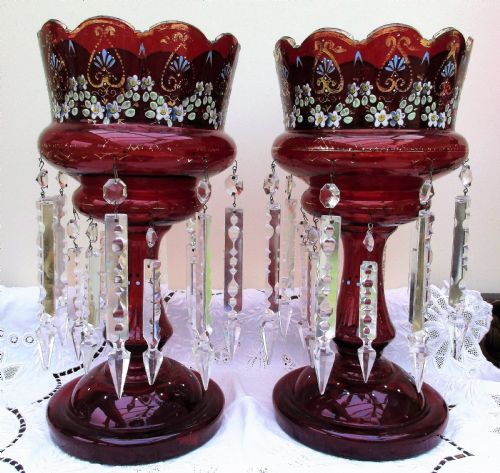
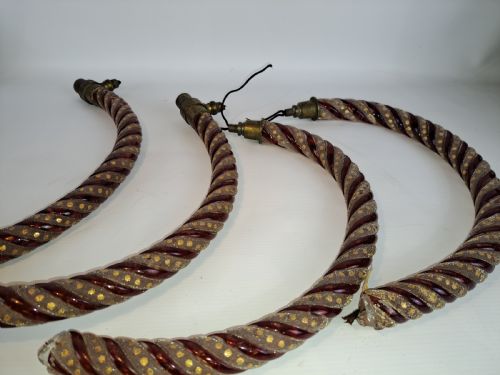
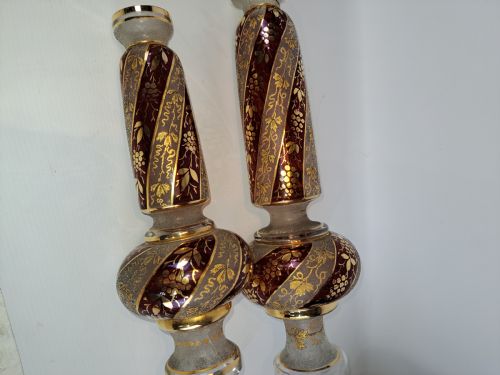
A ruby glass light encompasses diverse forms from the nineteenth century onward, including mantel lustres, ceiling pendant lampshades, chandeliers, and oil lamps. The selection ranges from English pairs to Bohemian flash glass pieces and French crystal fixtures.
Buyers most frequently encounter Victorian mantel lustres and oil lamps on this page, often paired with brass or cut crystal components. These items originate predominantly from nineteenth-century English and Bohemian workshops.
The objects serve both decorative and functional purposes, shifting from candle-lamps and oil burners to electric pendant lights and wall-mounted fittings. Each period brings distinct mounting styles and glass treatments to the category.
Assessing quality and craftsmanship
Quality rests in the depth and uniformity of the ruby glass colour, alongside the crispness of any cut crystal facets or etched motifs. Superior examples display refined gilding and well-balanced proportions across paired items.
The integration of brass or gilded metal components reveals the standard of manufacture, where heavy cast brass and secure mountings distinguish finer pieces from simpler utilitarian fittings.
Listings feature nineteenth-century and Edwardian pieces, incorporating ruby glass, cranberry glass, brass, gold leaf, and cut crystal.
The Ruby Glass Light Glossary
- Lustre
- A decorative vase or candlestick hung with cut glass prisms or pendants that refract candlelight or daylight. These items frequently appear in pairs on Victorian mantelpieces.
- Flash glass
- A two-layer glass formed by dipping a core of clear or tinted glass into molten ruby glass before blowing and cutting. This technique allows artisans to cut through the outer red layer to reveal the contrasting glass beneath.
- Cranberry glass
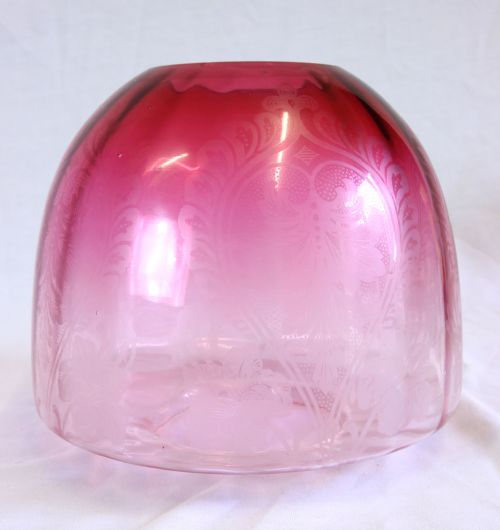
- A transparent pinkish-red glass coloured with gold chloride during production. It is commonly found in Victorian oil lamp shades and mantel lustres.
- Chandelier arm
- A curved glass or metal channel that projects outward from a central stem to support a light fitting. These components are often moulded or cut with flutes and panels.
Ruby Glass Light: Frequently Asked Questions
How do I clean a ruby glass light?
Wash the glass gently in lukewarm water using mild soap, avoiding harsh abrasives that might damage surface gilding or enamel. Dry each component thoroughly with a soft cloth before reassembly.
Metal mounts require separate care, keeping polishes away from the glass surfaces to prevent chemical staining or scratching.
Can old oil lamps be electrified?
Many oil lamps and pendant fixtures undergo conversion to electricity to suit modern homes while retaining their original nineteenth-century appearance. This process adapts the burner or reservoir to house internal wiring.
Original oil peg lamps and ceiling pendants often accept modern bulb fittings without altering the external ruby glass or brass elements.
What is the difference between ruby glass and cranberry glass?
Ruby glass typically displays a deeper, saturated crimson tone achieved through copper or gold additives, whereas cranberry glass exhibits a lighter, translucent pinkish-red hue.
Both types were widely utilised during the Victorian era for decorative lighting, mantel lustres, and tableware.
How do I date a ruby glass light?
Dating relies on examining the manufacturing techniques, mounting metals, and stylistic details such as Gothic Revival motifs or French Rococo curves. Nineteenth-century pieces often feature hand-cut facets and heavy brass collars.
Edwardian and later twentieth-century examples tend toward lighter metalwork and simpler cut crystal configurations.