


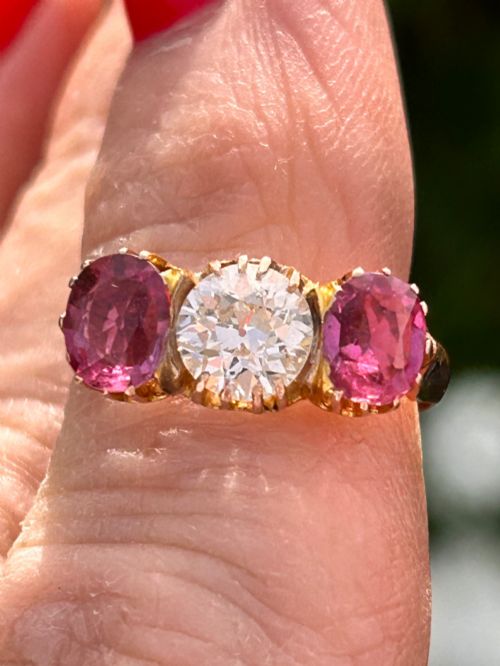
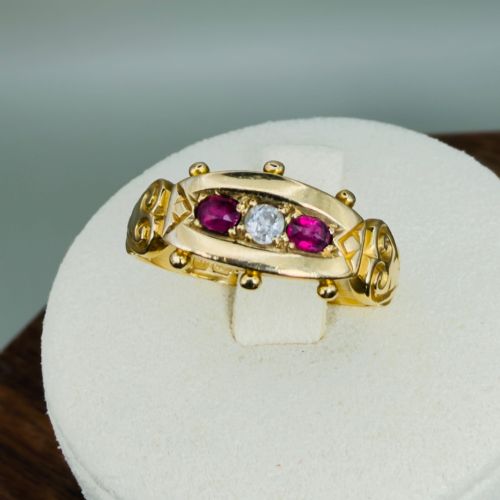
Ruby Diamond Ring
A ruby diamond ring brings together fiery red stones and brilliant white gems in gold or platinum settings.
The Ruby Diamond Ring
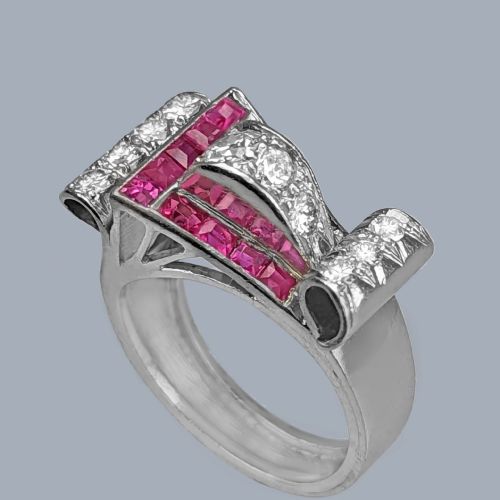
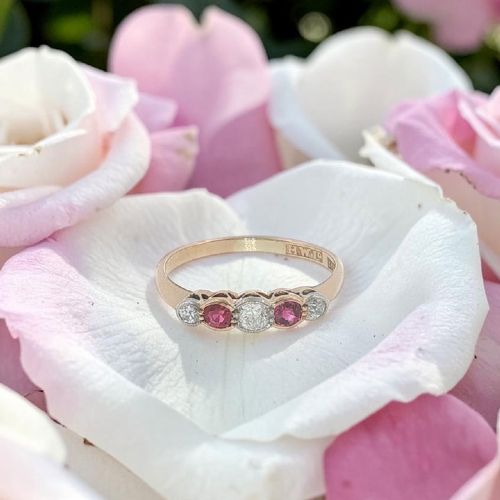
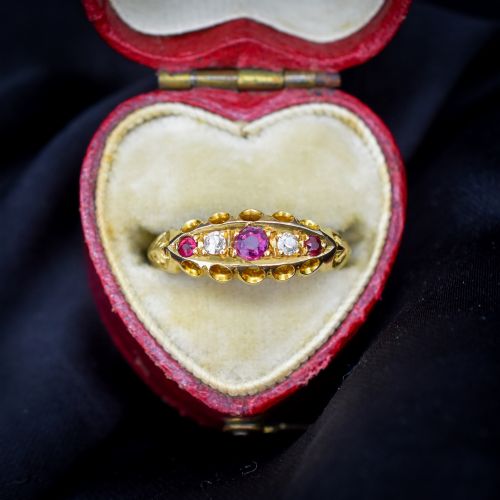
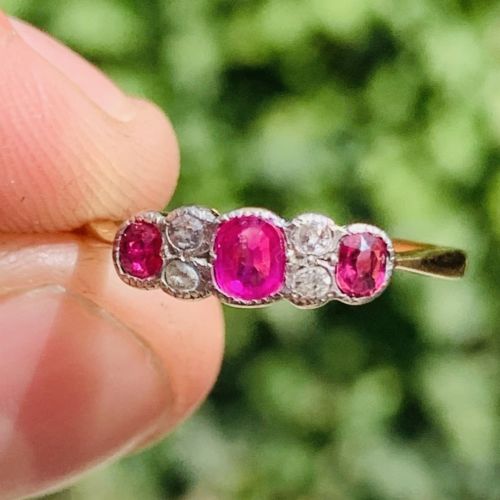
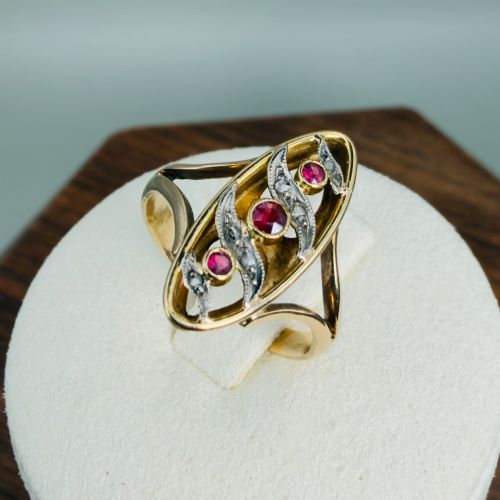
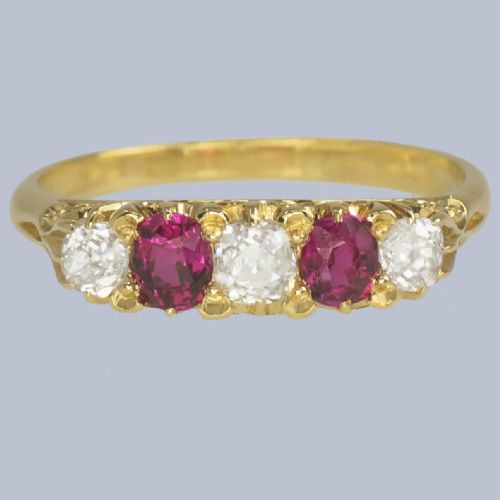
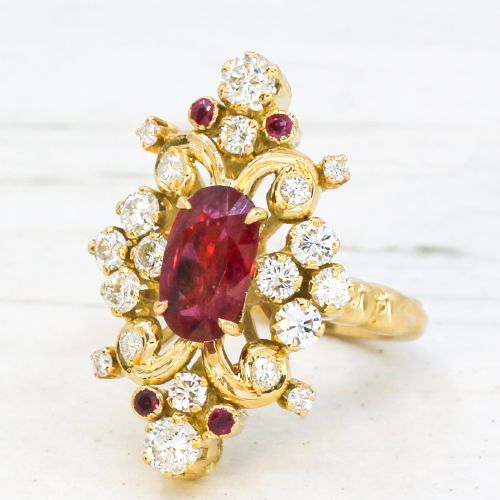
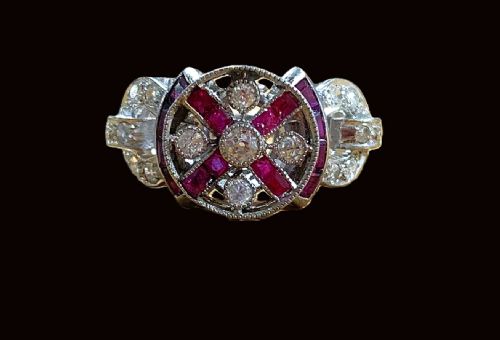
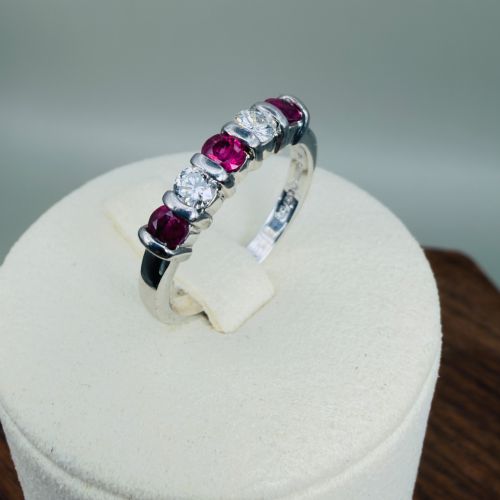
A ruby diamond ring combines two distinct gemstones into a single band, uniting deep red corundum with sparkling carbon crystals. These pieces appear across Victorian, Edwardian, and mid-century periods, showcasing various traditional layouts.
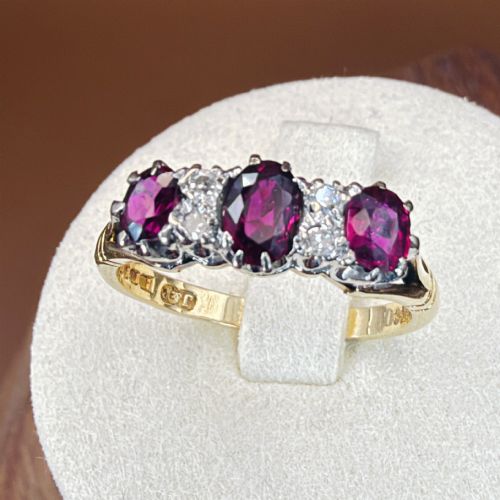
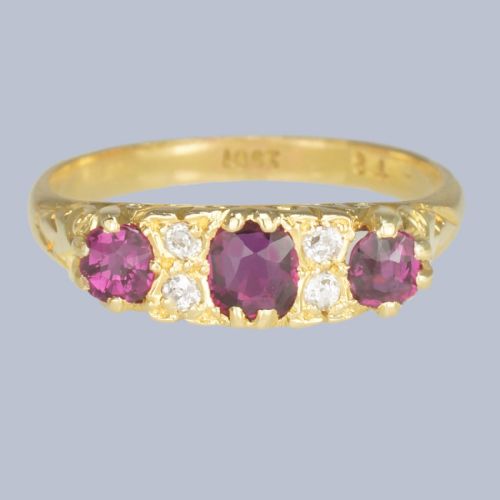
The trilogy or three-stone layout is a common form on this page, alongside cluster arrangements and crossover designs. Settings span yellow gold, white gold, 18ct gold, and platinum.
Earrings and pendants also appear in the wider archive, but rings remain the primary form encountered here. Pieces date from around 1900 through to the mid-twentieth century.
Materials and Construction
Goldsmiths utilised 18ct gold, 9ct gold, and platinum to fabricate the mounts and bands for these stones. Metals were cast and hand-finished to hold the gems securely.
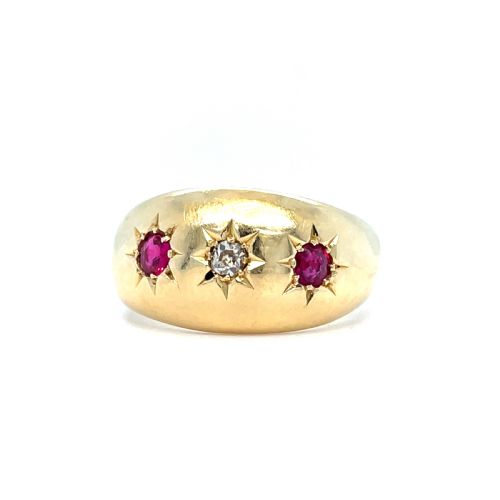
Gemstones include old cut, transitional cut, and rose cut diamonds paired with natural rubies. Stones are held by claws, bezels, or flush gypsy settings depending on the period.
Retail Price Guide 2026
Typical UK retail prices for ruby diamond ring, calculated from the Sellingantiques database of over a million retail prices indexed since 2003. This retail price guide relies exclusively on Sellingantiques data; no external sources or auction records are used, so the figures do not describe the wider market.
Some mid-century designs include a clever flip mechanism allowing the wearer to alternate between different gemstone faces.
Evaluating Quality
The value and quality of a piece depend on the saturation and clarity of the ruby and the cut and brilliance of the diamond. Burmese origins and lack of heavy treatment elevate the standing of the red stones.
Metalwork execution distinguishes finer examples, visible in the precision of the claw work, the symmetry of the cluster surrounds, and the weight of the gold or platinum shank.
The Ruby Diamond Ring Glossary
- Trilogy ring
- A ring set with three stones in a row, often representing the past, present, and future.
- Cluster ring
- A design featuring a central stone surrounded by a border of smaller gems, resembling a floral pattern.
- Old cut diamond
- An earlier diamond faceting style with a smaller table and larger culet, cut by hand to catch candlelight.
- Gypsy set
- A setting where the gemstone is flush with the metal surface, pushed into a thick band.
Frequently Asked Questions
How do I wear an antique ring daily?
These rings tolerate daily wear if treated with care, but the softer nature of rubies compared to diamonds means they benefit from removal during heavy manual tasks.
Store them separately in fabric pouches to prevent the diamonds from scratching the gold or softer gems.
What periods do these rings come from?
The pieces span the Victorian, Edwardian, Art Deco, and mid-century eras, reflecting changing tastes in jewellery design.
Victorian and Edwardian examples often feature intricate gold work, while later pieces lean towards platinum and geometric cluster arrangements.
Are these engagement rings?
Many of these pieces served as engagement rings in their original eras, particularly the trilogy and diamond-surrounded cluster formats.
Today, buyers choose them for weddings, anniversaries, or simply as distinctive everyday dress rings.
How do I clean my ruby ring?
Use warm soapy water and a soft brush to clean away oils and dust accumulated beneath the stone settings.
Avoid harsh chemical dips or ultrasonic cleaners, especially if the rubies have traditional fracture-filling treatments.