

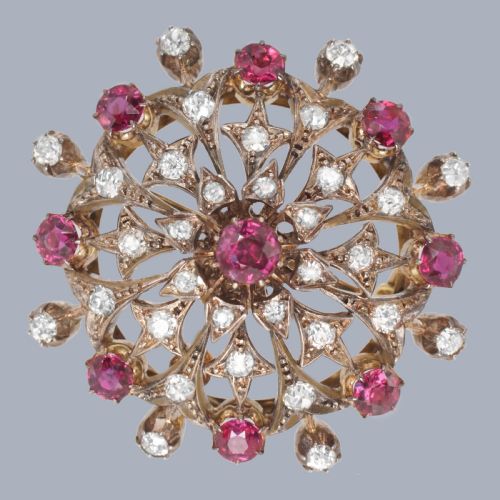


Ruby Diamond Gold Brooch
A ruby diamond gold brooch brings together rich red gems and sparkling stones in yellow gold, rose gold, or platinum settings across Victorian, Edwardian, and Art Deco periods.
Ruby Diamond Gold Brooch
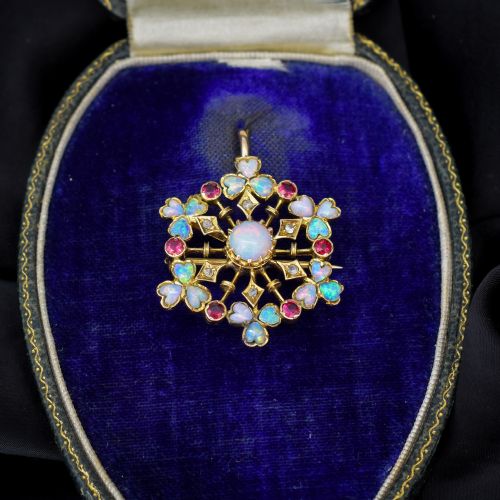
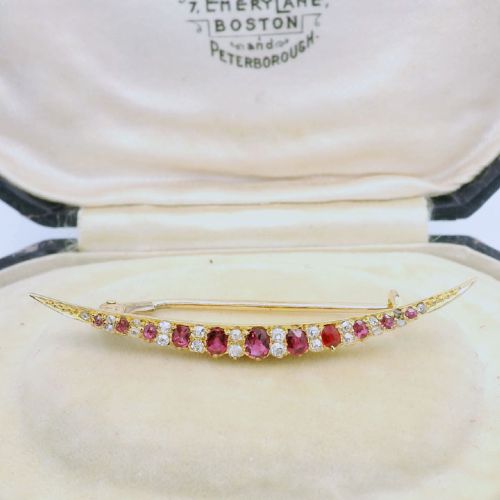
A ruby diamond gold brooch is a wearable ornament designed to fasten garments while displaying precious gemstones set in various forms of gold. These pieces appear frequently as crescent brooches, bar brooches, and convertible pendant brooches dating from the nineteenth and twentieth centuries.
Many items serve dual functions as both brooches and pendants, providing versatility in how the jewellery is worn. The selection spans distinct eras including the 1880s, 1890s, 1900s, 1910s, 1920s, and 1960s.
Materials and construction
Goldsmiths utilised varying purities of gold, including 8ct, 9ct, 14ct, 15ct, 18ct, and 21ct yellow, rose, and white gold, alongside platinum and silver settings to secure the stones. Gemstones such as rubies and diamonds were combined with occasional accents of pearls, emeralds, sapphires, and enamel.
Construction techniques evolved from traditional Victorian claw and collet settings to Edwardian platinum-topped gold work and Art Deco geometric framing. Figurative motifs like birds, insects, and floral sprays required meticulous hand-chasing and stone-setting by period artisans.
Listings incorporate yellow gold, white gold, rose gold, silver, and platinum across Victorian, Edwardian, Art Deco, and mid-century periods.
Quality variations
The distinction between standard and exceptional pieces rests upon the origin, treatment, and visual presence of the rubies and diamonds. Natural, untreated rubies originating from Burma or Thailand alongside well-matched diamonds elevate a piece significantly compared to lesser stones.
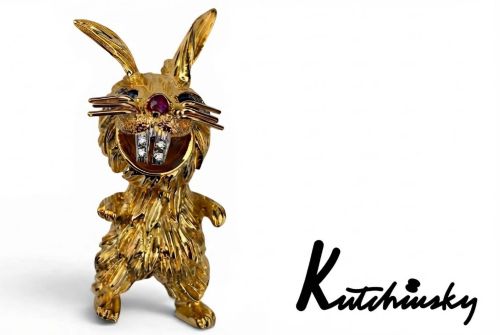
Artistic execution in figurative designs, such as animal or floral brooches, separates mass-produced items from masterworks. The integration of maker signatures, original boxes, and documented gem reports further differentiates the standing of individual pieces.
Kutchinsky·Ben Rosenfeld·Gubelin
The Ruby Diamond Gold Brooch Glossary
- Crescent brooch
- A curved, moon-shaped brooch popular during the Victorian and Edwardian eras. These pieces frequently alternate rubies and diamonds along the curving gold bar.
- Bar brooch
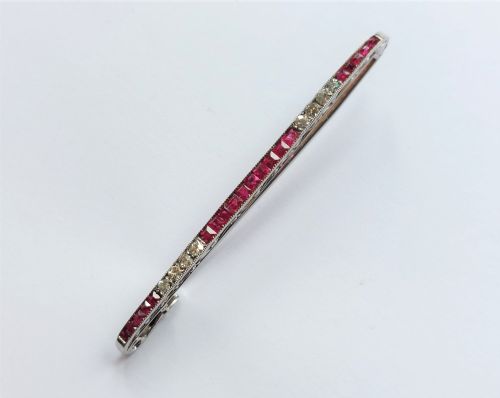
- A slender horizontal pin featuring gemstones set centrally or spaced evenly along the metal rod. This form was common during the Edwardian and Art Deco periods.
- Pendant brooch
- A convertible jewel equipped with both a pin fitting and a hidden loop. This allows the ornament to be worn pinned to clothing or suspended from a neck chain.
- Collet setting
- A collar of metal that encircles the gemstone, holding it securely in place by pushing the upper edge over the girdle of the stone. This technique predates modern prong settings.
Ruby Diamond Gold Brooch: Frequently Asked Questions
How do I wear a brooch?
Brooches fasten securely to lapels, collars, scarves, and heavy fabrics using a pin and safety catch mechanism on the reverse.
Convertible pendant brooches offer additional versatility by sliding onto chains to be worn around the neck.
How do I date an antique brooch?
Dating relies on stylistic clues, metal types, gemstone cuts, and hallmarks stamped into the gold or platinum work.
Victorian pieces often use lower-carat yellow gold and rose-cut stones, while Edwardian items lean toward platinum and geometric Art Deco designs emerged in the 1920s.
Are these rubies natural?
Many listings feature natural rubies originating from sources such as Burma or Thailand, sometimes accompanied by official gemological reports.
Period pieces from the nineteenth and early twentieth centuries predate modern synthetic gemstone manufacturing.