

Ruby Cluster Ring
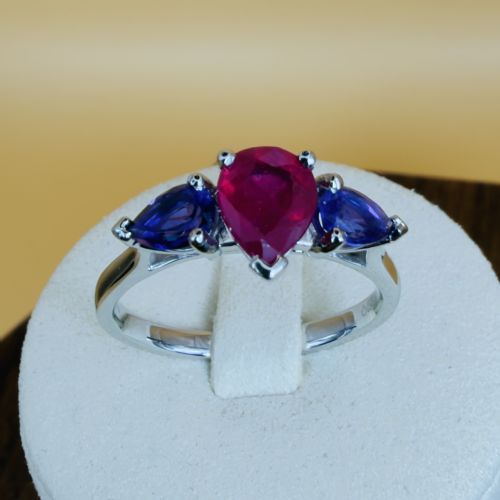
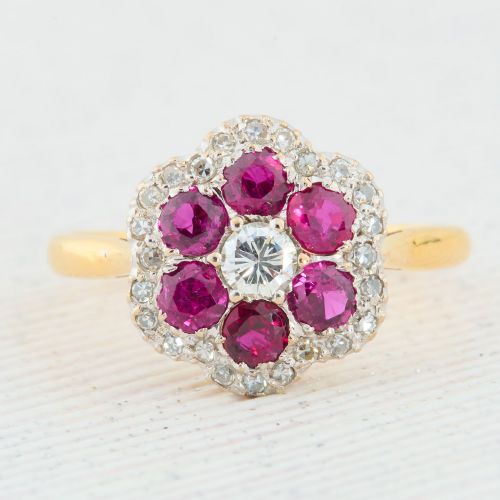
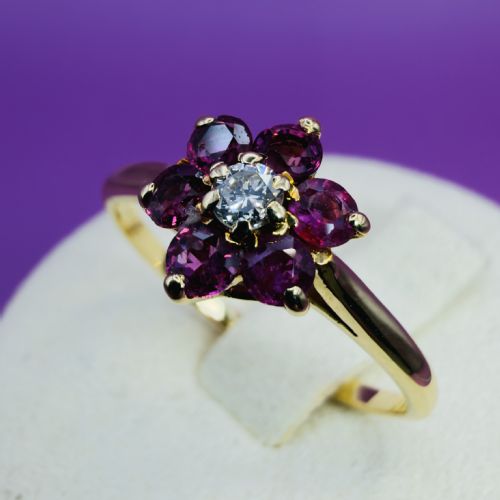
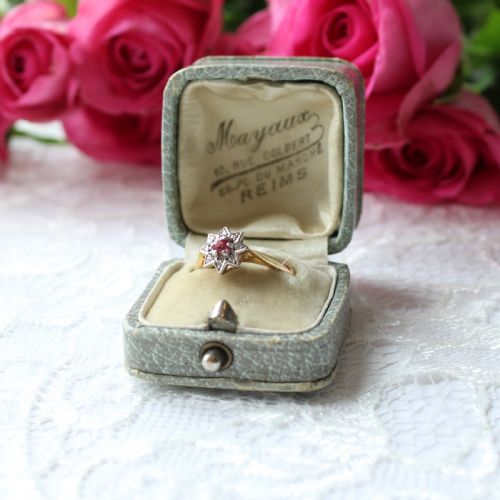
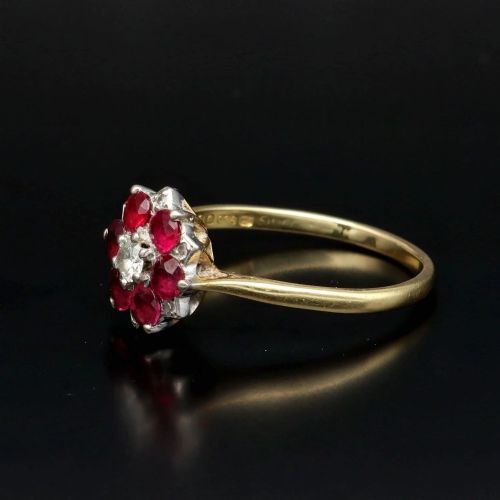
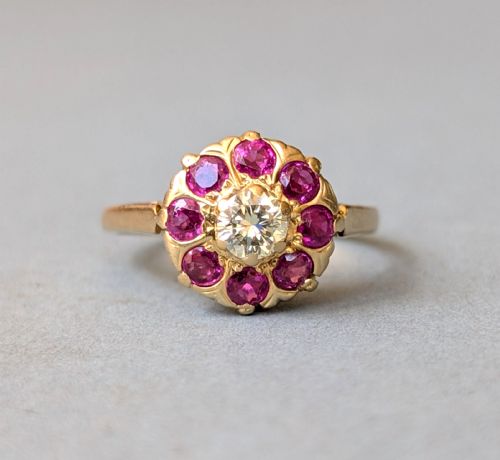
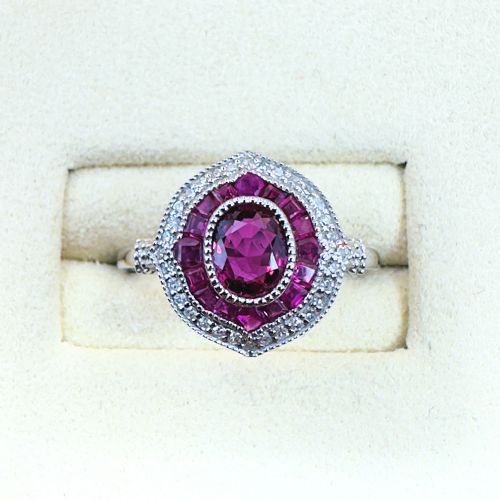
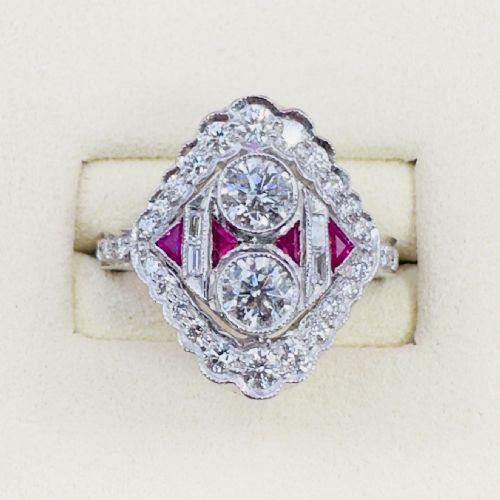
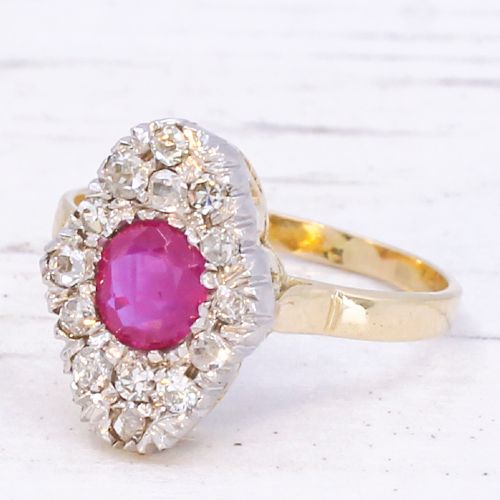
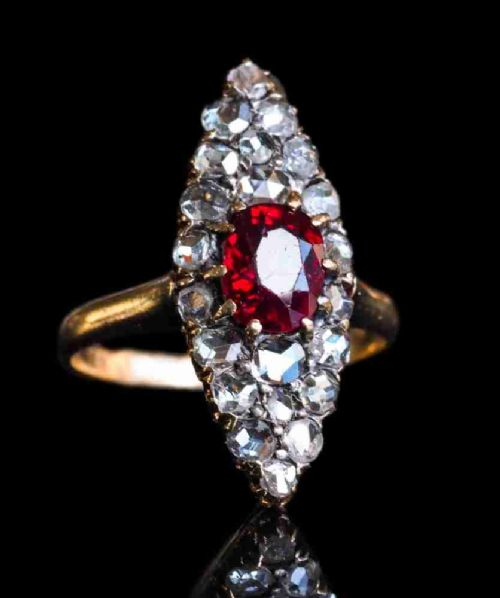
A ruby cluster ring gathers a central red stone within a bright border of diamonds, offering rich colour and geometric presence on the hand.
Ruby Cluster Ring
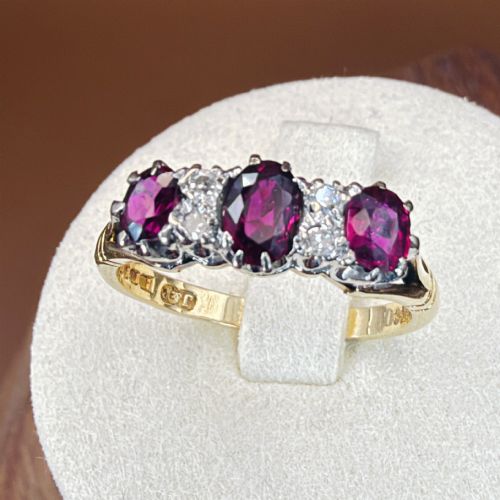
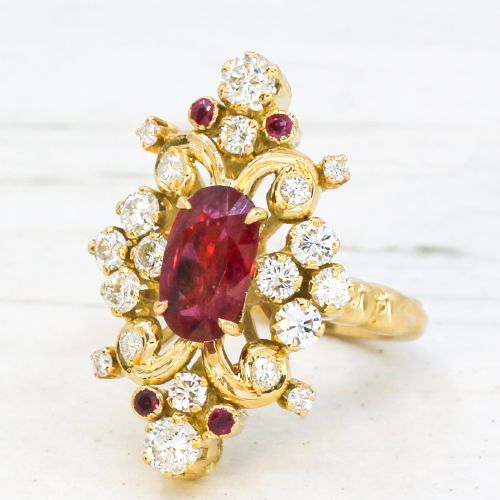
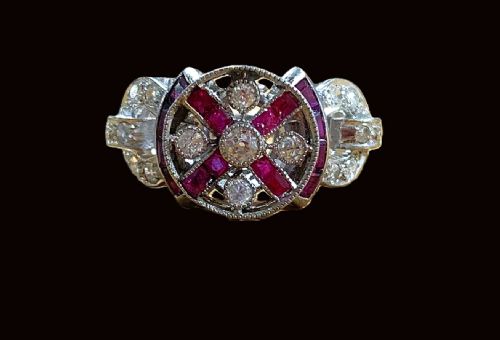
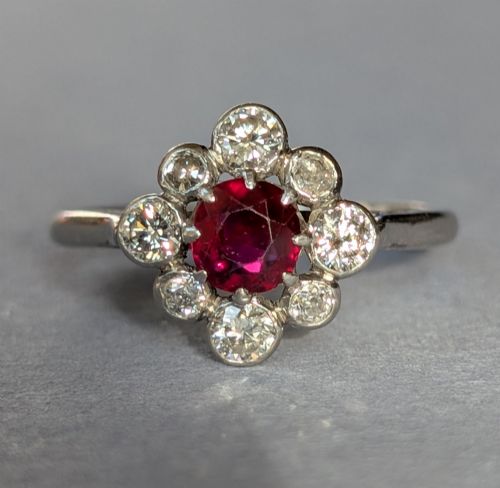
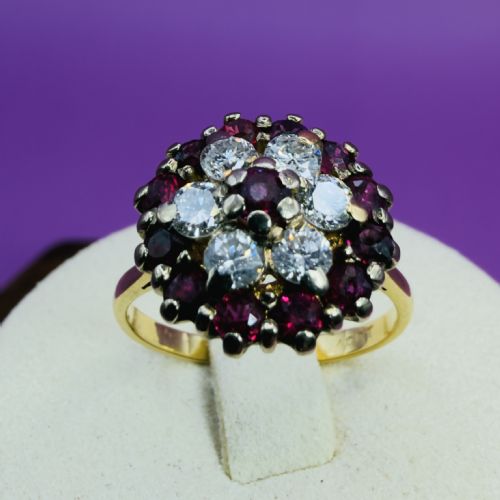
A ruby cluster ring centres on a vibrant red corundum surrounded by supporting diamonds, forming a distinct floral or geometric shape. Buyers seeking this phrase encounter examples originating from the Victorian era through the mid-century, with Art Deco designs and circular halos appearing frequently.
The configurations span traditional round and oval formats alongside elongated navette and bold bombé silhouettes. Platinum, yellow gold, and white gold serve as the primary settings for these clustered stones.
Materials and construction
Goldsmiths set natural rubies and diamonds into durable mountings of platinum or eighteen-carat gold, occasionally utilising lower gold purities or white gold alloys. Stones receive various cuts, including old cuts, round cuts, oval cuts, and marquise shapes, secured closely together to maximise brilliance.
Settings incorporate detailed basket work, channel mounting, and claw or bezel placements to hold the central ruby firmly amidst its diamond border.
Ruby Cluster Ring Retail Price Guide 2026
Typical asking prices for ruby cluster ring among the pieces listed under this phrase on Sellingantiques today, from the lower quarter to the upper quarter. They describe what is for sale here now, not the wider market.
Listings feature platinum, yellow gold, and white gold combined with ruby, diamond, and opal across the Victorian, Edwardian, Art Deco, and Mid-Century periods.
Factors of quality
Quality rests upon the saturation and clarity of the central ruby, alongside the matching scale and brilliance of the surrounding diamonds. Finer pieces demonstrate careful stone selection where individual gems align in colour and proportion without dead space in the cluster.
The integrity of the metalwork, whether crisp platinum geometric lines or substantial gold shanks, distinguishes higher-grade examples from simpler production.
Kutchinsky
The Ruby Cluster Ring Glossary
- Cluster ring
- A ring design featuring a central gemstone encircled by a group of smaller surrounding stones, typically diamonds.
- Navette
- A boat-shaped or marquise-like silhouette that extends along the finger, common in Edwardian and Art Deco cluster rings.
- Bombé
- A rounded, dome-shaped ring profile popular in mid-century cocktail jewellery that projects prominently from the hand.
- Old cut
- A traditional diamond cutting style characterised by a high crown, small table, and deep pavilion, common in antique pieces.
- Halo
- A concentric ring of smaller pavé or prong-set diamonds surrounding a larger central gemstone.
Ruby Cluster Ring: Frequently Asked Questions
How do I clean a ruby cluster ring?
Use warm soapy water and a soft brush to remove everyday oils from beneath the cluster setting. Avoid harsh chemical dips that might harm softer surrounding metals or stones.
Dry the piece thoroughly with a lint-free cloth before storing it separately from other jewellery to prevent scratching.
Can I wear a ruby cluster ring daily?
Rubies rank high on the hardness scale, making them durable enough for regular wear when mounted securely in gold or platinum. However, vintage settings with delicate claws benefit from occasional checks by a jeweller.
Remove the ring during heavy manual tasks to protect the smaller accent stones and intricate metalwork from impact.
What periods do these rings come from?
Surviving examples span the Victorian and Edwardian eras, through the geometric lines of the 1920s Art Deco period, up to 1950s mid-century designs. Each era brings distinct proportions and setting styles to the cluster format.
Examining the shank construction and stone cuts helps reveal the specific decade of manufacture.
Are the rubies in these rings natural?
Many antique and vintage pieces feature natural corundum sourced from traditional locations, displaying characteristic inclusions under magnification. Certification or expert appraisal can confirm the exact origin and treatment status.
Documented pieces from earlier decades predate modern synthetic stone dominance, though scientific testing provides definitive answers.