


Royal Worcester Fruit Porcelain
Royal Worcester fruit porcelain brings together botanical precision and rich gilding, offering collectors cabinet plates and vases painted by notable hand artists.
Royal Worcester Fruit Porcelain
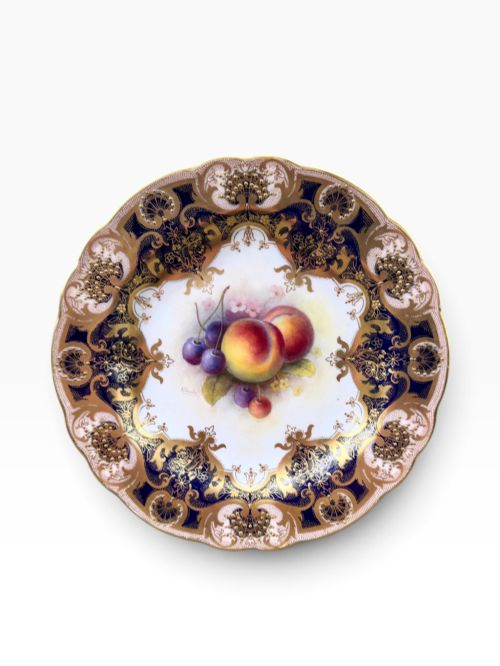
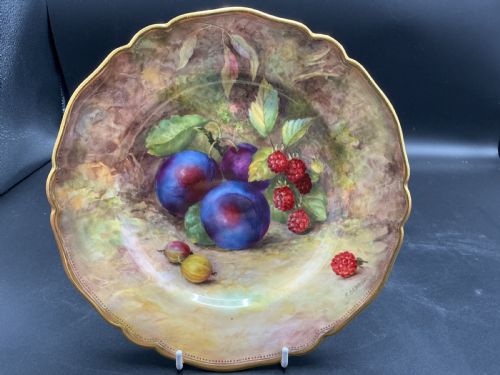
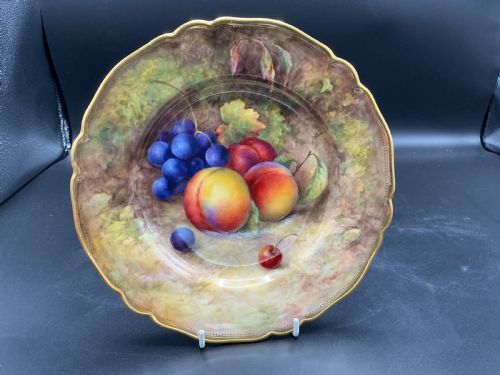
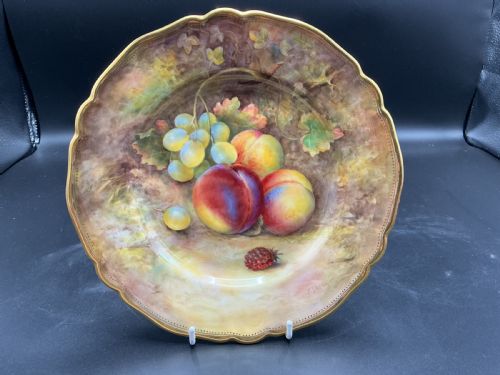
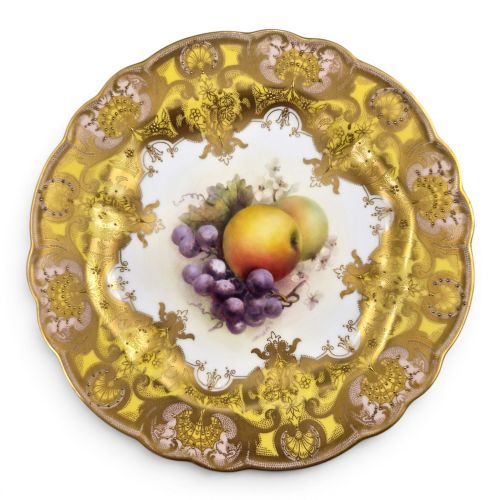
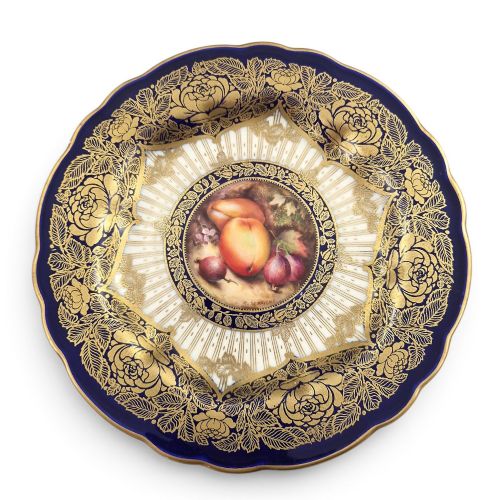
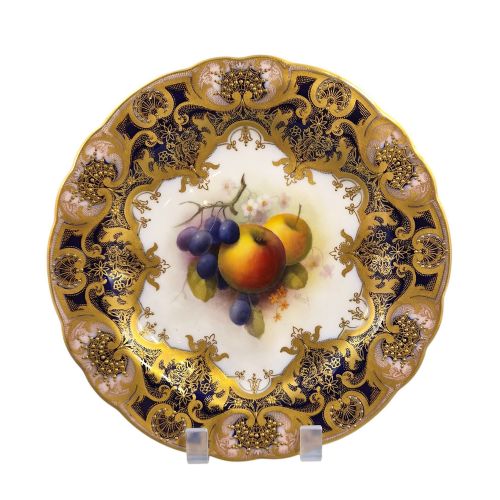
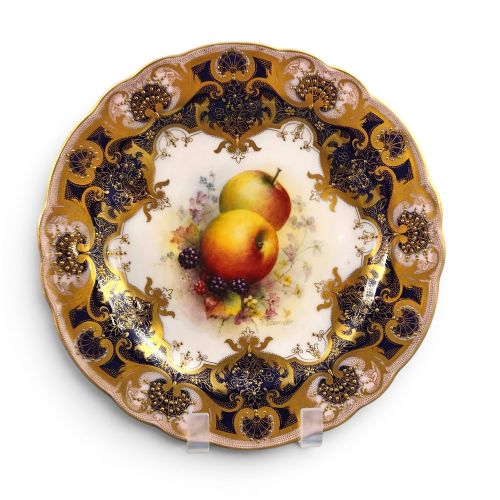
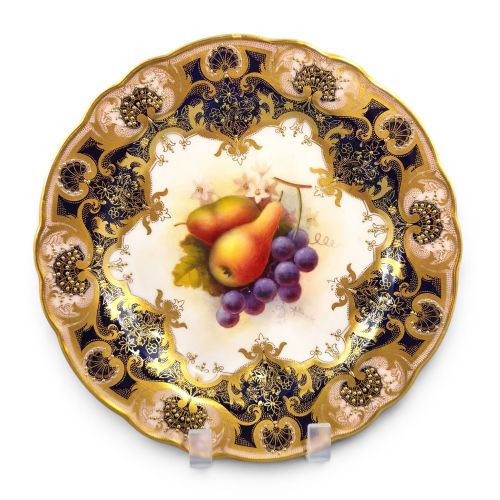
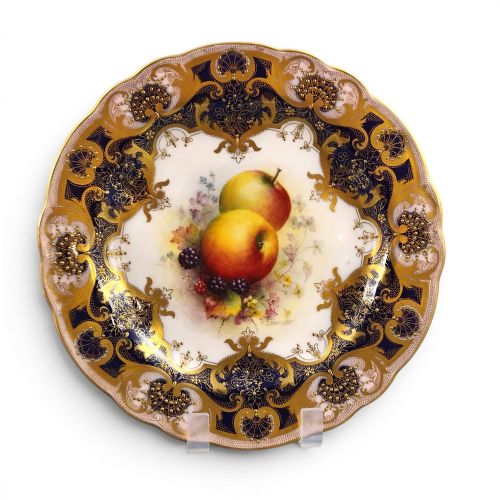
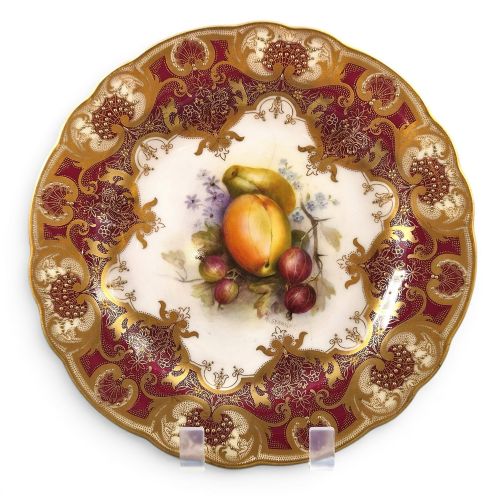
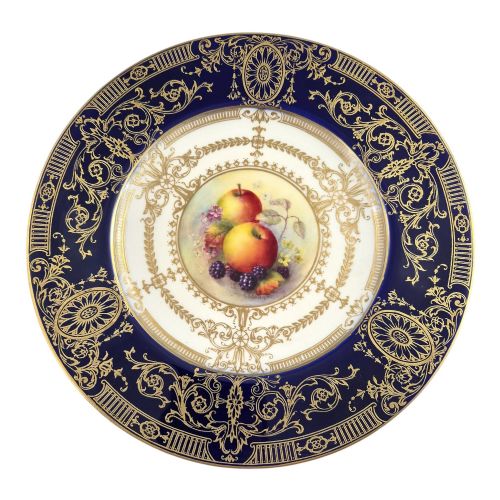
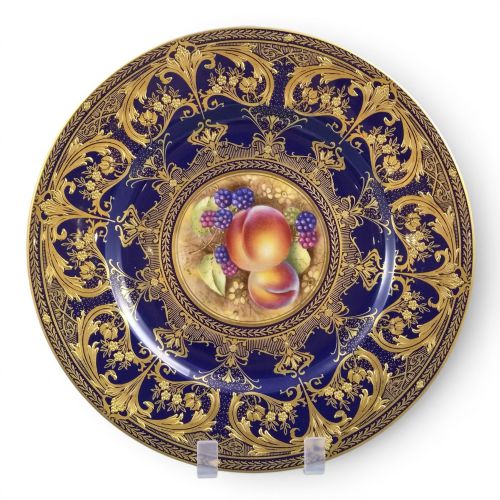
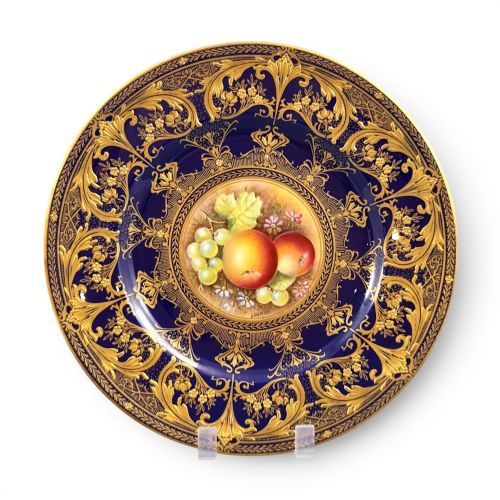
Royal worcester fruit porcelain comprises decorative items created for display, featuring hand-painted studies of apples, pears, berries and foliage against shaded backgrounds. Cabinet plates form the majority of the selections here, alongside vases, pot pourri urns, bowls and coffee sets.
The objects stem from periods spanning the early twentieth century through the nineteen-sixties, capturing decades of studio painting traditions. Edwardian examples sit alongside pieces from the interwar years and mid-century decades.
Forms vary from standard cabinet plates and rope-edge dishes to boat-shaped bowls, ginger jars and miniature vases. Each piece displays distinct compositional choices by individual painters.
Materials and construction
Makers utilised porcelain and bone china as the primary white bodies, providing a smooth surface for detailed pigment work. Enamel paints were applied by hand to build up layers of colour for the fruit studies.
Gold leaf, gilding and gilt accents were added to borders and rims, often framing the central painted panels with raised or flat metallic patterns.
Object forms span cabinet plates, ginger jars, boat-shaped bowls, coffee sets and lidded pot pourri vases.
Factors of quality
Quality rests upon the skill of the individual artist and the complexity of the painted subject matter. Signed works by established painters demonstrate finer brushwork and more detailed botanical accuracy than unsigned or standard production items.
The extent and execution of the gilding also distinguish pieces, with heavy raised gold work and intricate borders marking out superior examples.
Albert Shuck·Richard Sebright·Brian Leaman·Chivers·H Ayrton·J Southall·Freeman·P Love·J Smith·William Hawkins·John Smith·William Ricketts·HH Price·Harry Ayrton·George Moseley·Thomas Lockyer·E Townsend·Louis Flexman
The Royal Worcester Fruit Porcelain Glossary
- Cabinet plate
- A decorative plate intended for display in a cabinet rather than for table use. These typically feature elaborate hand-painted central subjects and gilded rims.
- Pot pourri vase
- A lidded vessel perforated to allow scented dried plant materials to fragrance a room. Many examples incorporate painted fruit panels and pierced ceramic covers.
- Gilding
- The application of gold leaf or gold paint to ceramic surfaces. This finish outlines panels and decorates plate borders.
- Rope edge
- A moulded rim decoration resembling a twisted rope. This detail appears on several plates and dishes in the collection.
- Bone china
- A type of soft-paste porcelain containing bone ash. It provides a bright white and durable base for enamel painting.
Royal Worcester Fruit Porcelain: Frequently Asked Questions
Are these plates meant for dining?
These items were designed primarily for display in cabinets or on sideboards rather than everyday dining use. Their delicate hand-painted surfaces and extensive gilding require careful handling.
Using them for food risks damaging the painted enamel and metallic finishes over time.
How do I identify the artist?
Artists generally signed their work directly onto the painted surface near the bottom of the fruit study. Initials or full surnames appear in fine brushstrokes.
Comparing these signatures with factory records helps confirm the painter and often provides a precise date of creation.
What periods do these pieces cover?
The inventory spans the Edwardian era through the mid-twentieth century, including pieces dated from nineteen hundred up to the nineteen-seventies.
Earlier items often feature more intricate raised gilding, while later decades introduce varied plate shapes such as rope-edge designs.
How should I display them?
Cabinet plates fit securely in specialised wall hangers or dedicated display stands that protect the edges. Vases and pot pourri jars benefit from well-lit cabinets away from direct sunlight.
Keeping them enclosed also minimises dust accumulation on detailed gilt surfaces.