





Royal Worcester Covered Jar
A royal worcester covered jar brings together fine English porcelain and master hand-painting from the Edwardian years through to the mid-twentieth century.
Royal Worcester Covered Jar
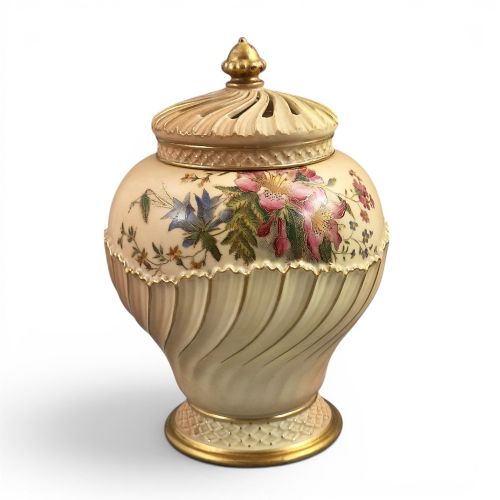
A royal worcester covered jar is primarily a decorative vessel, often formed as a pot-pourri container, ginger jar, or urn complete with its original cover. These pieces are designed to showcase delicate ceramic forms combined with intricate painted decoration.
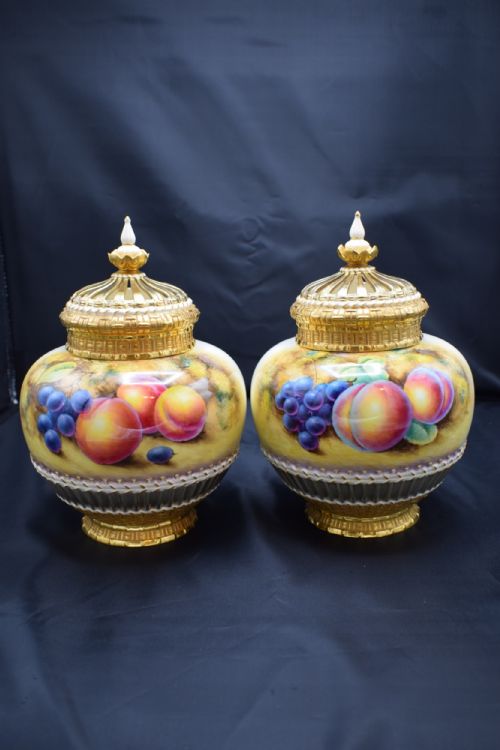
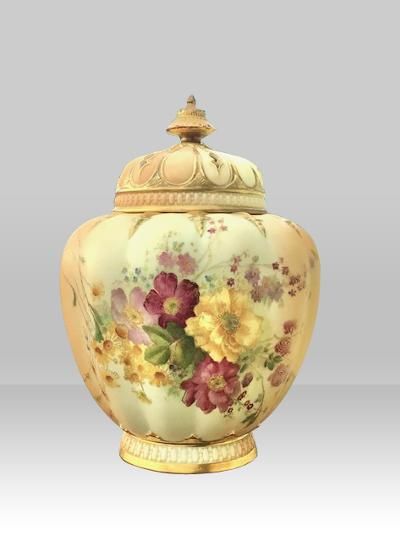
The versions most frequently encountered on this page belong to the blush ivory range of the early twentieth century or mid-century hand-painted fruit and bird studies. Collectors find these vessels prized for their combination of traditional English porcelain bodies and detailed artistic skill.
Materials and Techniques
These vessels are fashioned from traditional English porcelain and ceramic, providing a smooth, pale canvas for the decorator's brush. Artisans applied rich enamels and gold leaf, frequently incorporating gilding and heavy gilt highlights around the rims, bases, and crown covers.
Decoration relied heavily on skilled hand-painting, with notable artists rendering botanical specimens, game birds, swans, and fruit directly onto the porcelain body. Once painted, the pieces underwent firing to set the enamels and secure the gilding.
Pheasants, swans, and blackberries frequently share cabinet space with luscious painted peaches.
Markers of Quality
Quality rests significantly on the identity of the artist whose signature appears on the porcelain, with works by known painters commanding greater attention. The intricacy and preservation of the hand-painted motifs, whether fruit, birds, or floral studies, separate standard production from exceptional examples.
The presence of matching crown covers and the crispness of the gilt details further distinguish superior pieces. Intact gilding and undamaged enamel work indicate careful handling over the decades since their manufacture.
Royal Worcester
The Royal Worcester Covered Jar Glossary
- Blush ivory
- A soft, matte cream-coloured porcelain body introduced by the factory in the late nineteenth century. It served as a subtle background for pastel floral and botanical decoration.
- Pot-pourri
- A jar or vase featuring a pierced or openwork cover designed to diffuse scent from dried flower petals. These vessels often include an inner lid beneath the decorative crown top.
- Gilding
- The application of gold leaf or gold paint to ceramic surfaces. It accentuates rims, handles, and shoulders on traditional English porcelain.
- Crown cover
- A domed or pierced lid shaped like a coronet, frequently paired with larger jars and urns. It completes the classical silhouette of the vessel.
- Enamel
- Vitreous coloured glass fused to the ceramic body during firing. It provides the vibrant hues seen in painted fruit and bird scenes.
Royal Worcester Covered Jar: Frequently Asked Questions
What is a royal worcester covered jar used for?
These vessels were originally made to hold fragrant dried plant materials or ginger, functioning as ornamental items for Victorian and Edwardian drawing rooms.
Today, they serve purely as decorative display pieces in cabinets or on mantelpieces, appreciated for their artistry and heritage.
How do I identify a blush ivory piece?
Blush ivory pieces feature a distinctive, warm, matte cream glaze rather than a bright white porcelain finish. They often display delicate floral painting enhanced with soft gilding.
Checking the base for factory date ciphers helps confirm the exact period of manufacture during the early twentieth century.
Are painted fruit jars signed by artists?
Many fine pieces feature the signature of the painter near the base of the scene, naming artists such as John Smith, Kitty Blake, or members of the Stinton family.
Signed works indicate higher studio standing and greater interest among collectors of mid-century English porcelain.
How should I care for a covered jar?
Keep these porcelain vessels away from direct sunlight to protect the stability of the enamel colours and the brightness of the gold leaf. Dust them gently with a soft, dry cloth without using liquid cleaners that might harm the antique finish.