


Royal Vienna Porcelain
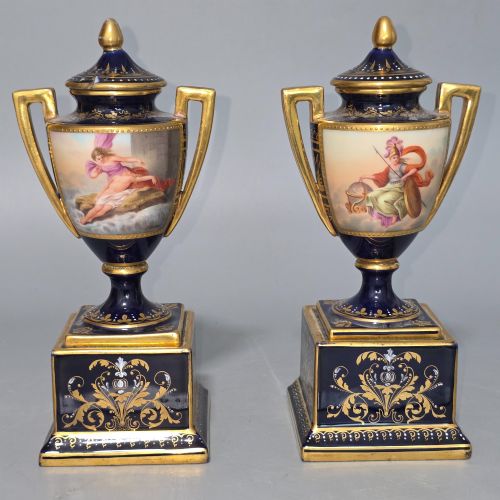
Royal vienna porcelain brings together rich figural painting, deep cobalt glaze, and heavy gilding from the nineteenth century.
Royal Vienna Porcelain
Royal vienna porcelain encompasses highly decorative items produced primarily during the nineteenth century, ranging from cabinet plates and chargers to monumental vases and urns. Buyers seeking these pieces encounter substantial painted surfaces depicting classical mythology, literature, and romantic historical scenes.
The objects frequently appear in neoclassical, empire, and rococo revival styles, often marked with variations of the traditional beehive or shield stamp. Decorative chargers and cabinet plates dominate the selection, alongside matched pairs of lidded urns and ewers intended for prominent display.
Materials and Manufacture
Pieces are formed from fine white porcelain, which serves as a smooth canvas for intricate hand-painted figurative scenes executed in polychrome enamels. Artisans applied cobalt blue glazes as a deep background colour to frame the central illustrations.
Heavy application of gold leaf, gilding, and gilt detailing frames the painted panels and rims, creating high-contrast visual weight. Wood stands and carved wooden elements occasionally accompany large vases and ewers to support their considerable physical presence.
Classical heroes and tragic literary figures gaze stoically from cabinet plates while resting quietly in modern living rooms.
Assessing Quality
The standard of execution in the hand-painted figural scenes dictates the distinction between ordinary production and masterwork pieces. Skilled artists achieved remarkable anatomical precision, delicate facial expressions, and complex narrative composition on curved porcelain surfaces.
The density and purity of the gold leaf application, alongside the crispness of the raised tooling within the gilt borders, indicate workshop tier. Cobalt grounds displaying absolute evenness without clouding or pooling separate superior cabinet plates and urns from simpler output.
F. Koller·S. Stanley·Sibl·Wagner·A. Heer·Ernst Wahliss
The Royal Vienna Porcelain Glossary
- Cabinet plate
- A decorative ceramic plate intended for display on a wall or within a glass-fronted cabinet rather than dining use. These items frequently feature elaborate painted borders and central mythological subjects.
- Gilding
- The application of gold leaf or powdered gold suspended in a medium to the surface of porcelain. This technique creates reflective metallic borders and ornamental highlights.
- Cobalt glaze
- A deep blue metallic oxide pigment applied under or over the glaze before firing. It provides a striking dark contrast against white porcelain and gold leaf.
- Garniture set
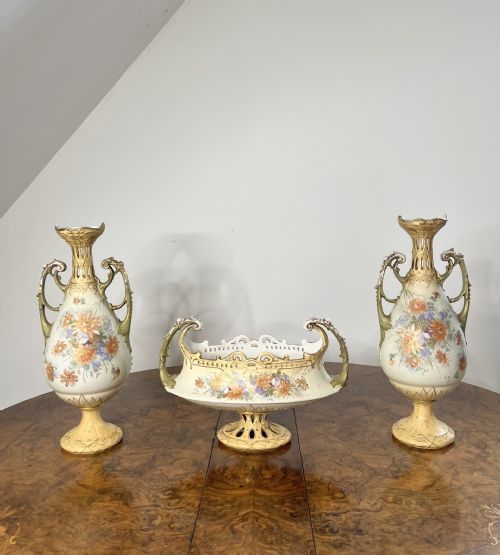
- A matched group of three or more vases, urns, or jars designed to be displayed together on a mantelpiece or sideboard. They follow a symmetrical arrangement with a central taller vessel flanked by smaller matching pieces.
- Enamel
- Opaque or translucent coloured glass fused to the porcelain body through kiln firing. It forms the durable palette used for detailed portraiture and narrative scenes.
Royal Vienna Porcelain: Frequently Asked Questions
What subjects appear on royal vienna porcelain?
Painted surfaces commonly feature scenes drawn from classical mythology, historical narratives, and romantic literature. Figures such as Venus, Bacchus, and historical rulers dominate the central pictorial panels.
Surrounding borders frequently incorporate classical motifs, allegorical figures, and intricate foliate scrolls executed in rich polychrome enamels and gold leaf.
How do I identify the beehive mark?
The beehive mark, or shield stamp, appears under the glaze on the base of many pieces. It was used in various forms during the nineteenth century to indicate Vienna production.
Authentication requires looking closely at the precision of the mark, though many genuine pieces and subsequent revival items carry painted or impressed variations.
How were large vases and urns used?
Large vases, urns, and ewers served as grand decorative focal points in nineteenth-century drawing rooms and formal reception spaces. They were often displayed on dedicated stands, pedestals, or mantelpieces as symbols of refined taste.
Many of these monumental vessels included fitted covers and were produced as symmetrical pairs or garniture sets to balance interior architectural schemes.
How should I care for gilded porcelain?
Gilded and enamelled porcelain requires gentle handling to preserve the delicate gold leaf and hand-painted surfaces. Dusting with a soft, dry cloth is recommended to prevent abrasion.
Pieces should be kept away from direct sunlight to maintain the vibrancy of the enamel colours and protected from sudden temperature changes.