




Hand Painted Vienna Urns
These hand painted vienna urns are porcelain vessels that bring Neoclassical and Empire ornament into a room through rich enamel and gilt detail.
Hand Painted Vienna Urns
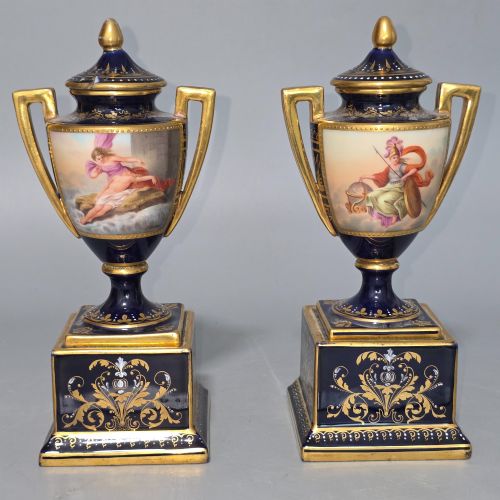
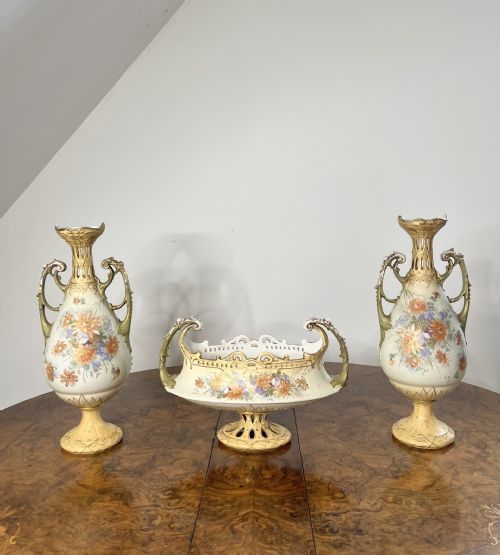
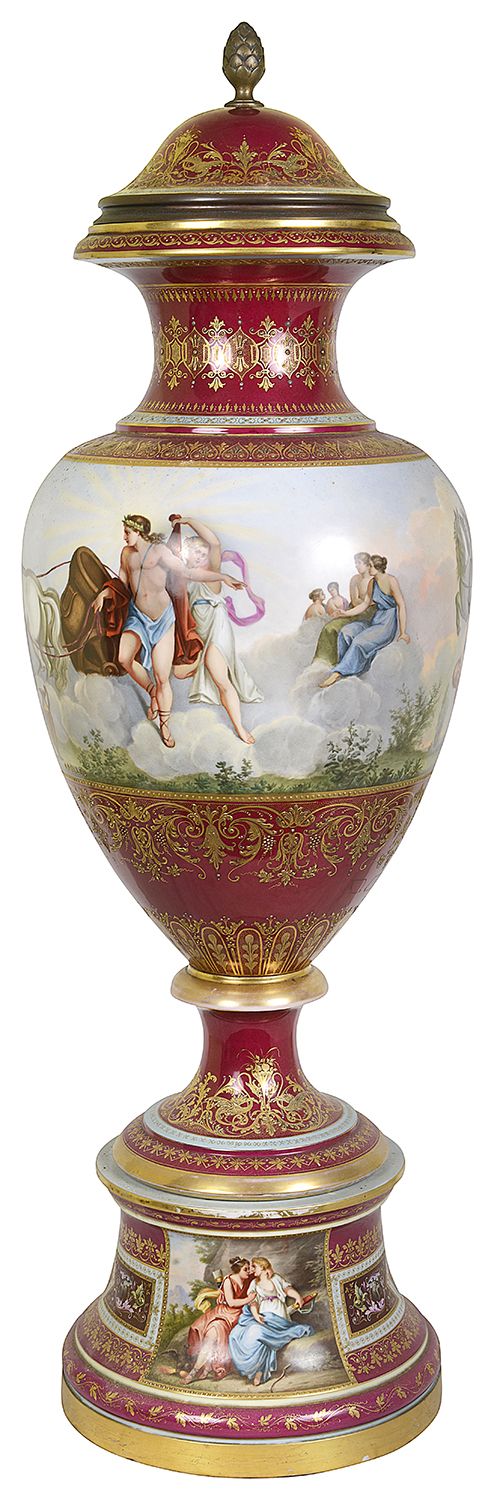
When you search for hand painted vienna urns, you encounter porcelain decorative pieces originating from the nineteenth century. The selection on this page centres on lidded urns, garniture sets, and ewers shaped by Neoclassical, Empire, and Art Nouveau influences.
Most items you meet here date from the 1800s through to 1900, appearing as single display objects or matched pairs. Makers and decorators produced these vessels using classic forms such as amphora shapes and classical lidded vases.
The objects serve as decorative centrepieces or mantel ornaments rather than utilitarian vessels. Their presence combines nineteenth-century ceramic traditions with ornate hand-painted figurative or floral panels.
Materials and construction
The foundation of these objects is porcelain, shaped into vases, urns, and ewers. Artisans applied hand-painted enamels directly to the ceramic body to create detailed portrait subjects and classical motifs.
Gilding and gold leaf accent the rims, handles, and borders of the porcelain. Certain pieces incorporate wood elements or gilt mounts to support the ceramic body and complete the garniture formation.
Porcelain Lissette portraits peer out from nineteenth-century Vienna.
Understanding quality differences
The standard of hand painting on the porcelain body sets the top tier apart from simpler production. Signed artist works and intricate portrait subjects demonstrate superior brushwork compared to basic floral decoration.
Scale and completeness define the standing of garniture sets and lidded pairs. Large matched sets and pieces retaining their original covers hold greater presence than single damaged vessels.
F. Koller·Ernst Wahliss
The Hand Painted Vienna Urns Glossary
- Garniture set
- A matched group of three or more vases or urns designed to be displayed together on a mantelpiece or sideboard. They typically feature a larger central vessel flanked by smaller matching pieces.
- Ewer
- A large jug with a wide spout and ornate handle, produced as a decorative display object rather than for pouring liquids. These often match lidded urns in garniture arrangements.
- Gilding
- The application of gold leaf or gold paint to the surface of porcelain. This technique highlights handles, rims, and panel borders.
Hand Painted Vienna Urns: Frequently Asked Questions
What periods do these urns come from?
The listings span the nineteenth century, with specific pieces dated across the 1850s, 1870s, 1880s, and 1890s up to around 1900.
Most items reflect nineteenth-century revival styles including Neoclassical, Empire, and Art Nouveau.
How were garniture sets displayed?
Garniture sets of three lidded vases or urns sat together on mantelpieces or large sideboards as a decorative centrepiece.
The central vessel paired with matching side vases to create symmetrical visual weight in a room.
What materials make up these pieces?
The primary material is porcelain, decorated with hand-painted enamel scenes and finished with gold leaf or gilding.
Some pieces integrate wood elements or metal mounts alongside the ceramic body.
How do I spot signed pieces?
Certain nineteenth-century items bear artist signatures such as F. Koller or factory attributions like Ernst Wahliss on the porcelain body.
Hand-painted portrait subjects and detailed classical scenes often accompany these specific maker marks.