


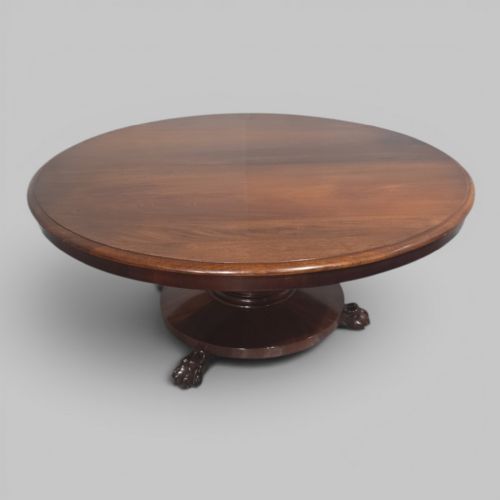


Round Wood Coffee Table
A round wood coffee table anchors a seating area with circular geometry, bringing warmth and character to a room through varied period craftsmanship.
Round Wood Coffee Table
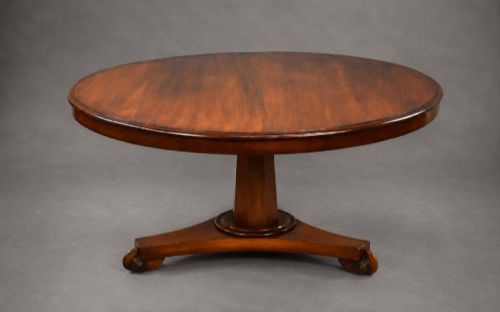
A round wood coffee table brings together circular tops and timber construction, appearing in forms such as coffee tables, occasional tables, side tables, and nests of tables. These low or standard pieces serve living spaces by providing a central surface for daily use.
Buyers meeting this search phrase encounter numerous examples from the nineteenth and twentieth centuries, spanning Victorian, Edwardian, and Art Deco periods. Many pieces originate from revival movements or international workshops, offering diverse stylistic interpretations.
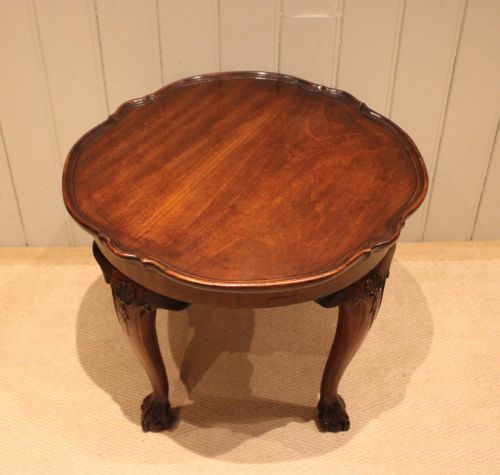
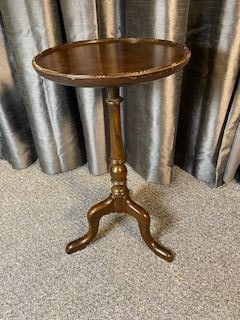
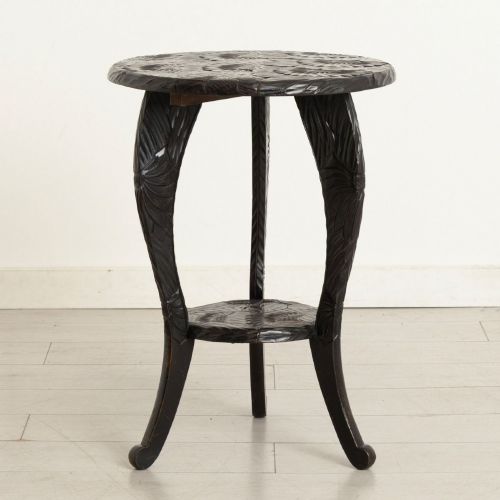
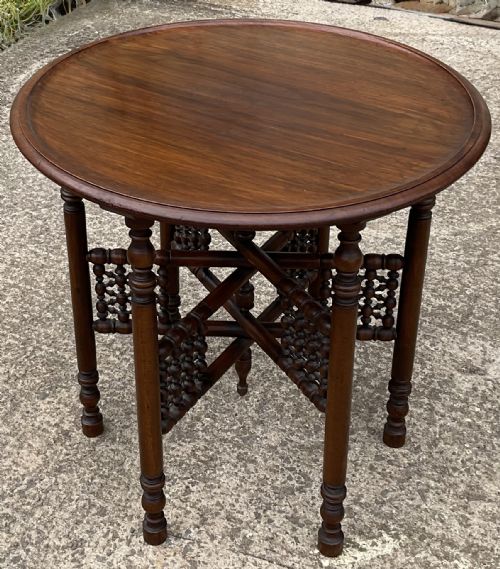
Common variants on this page include mahogany, walnut, and teak designs, alongside specialised items featuring marquetry, marble tops, or intricate carving. Selection ranges from simple occasional tables adapted for coffee use to dedicated low tables from the mid-century era.
How they were made
Construction relies on solid timbers and applied veneers, utilising woods such as mahogany, walnut, oak, elm, and teak. Artisans shaped these materials using traditional joinery and turning techniques to form stable frames and circular tops.
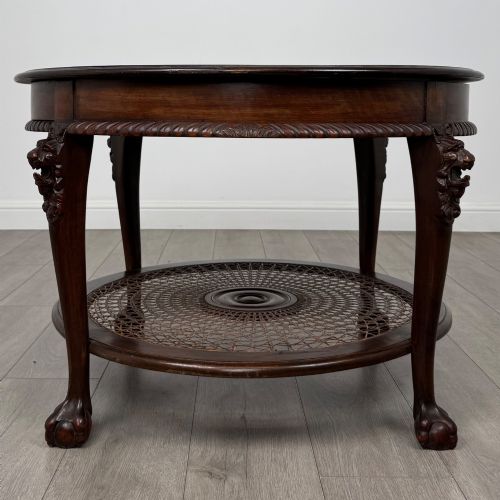
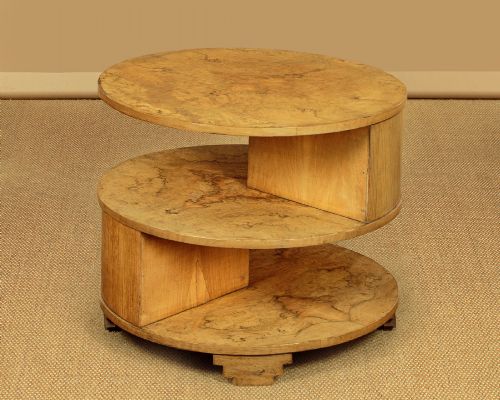
Decorative surfaces frequently employ burl veneers, marquetry inlay, or hand carving, particularly evident in Art Deco, Chippendale revival, and Anglo-Indian examples. Natural grain patterns are deliberately positioned to create visual contrast across the circular planes.
Listings feature pieces spanning the Victorian and Edwardian eras through the 1920s, 1930s, and mid-century modern periods.
What varies in quality
Quality separates ordinary utilitarian furniture from exceptional cabinet work through the choice of timber and the complexity of its figure. Highly figured burr walnut, satin birch, and huanghuali demonstrate superior material selection compared to standard hardwoods.
Execution of decorative details defines the upper tier of pieces, where hand carving, marquetry, and matched veneer patterns display precise craftsmanship. The integrity of the underlying construction and the preservation of original surfaces further distinguish finer examples.
Liberty of London
The Round Wood Coffee Table Glossary
- Marquetry
- The art of applying small pieces of veneer to a structure to form decorative patterns and pictures. Skilled makers utilise contrasting woods to create detailed tabletop designs.
- Pie crust
- A raised, scalloped edge carved along the perimeter of a circular tabletop. This traditional detail appears frequently on revival occasional tables.
Round Wood Coffee Table: Frequently Asked Questions
What is a round wood coffee table?
A round wood coffee table is a low surface built from timber with a circular top, designed to sit centrally before seating. These pieces span multiple decades and stylistic revivals.
Such tables accommodate diverse interiors through different heights, turnings, and surface treatments, functioning as practical furniture and decorative focal points.
How do I identify Art Deco tables?
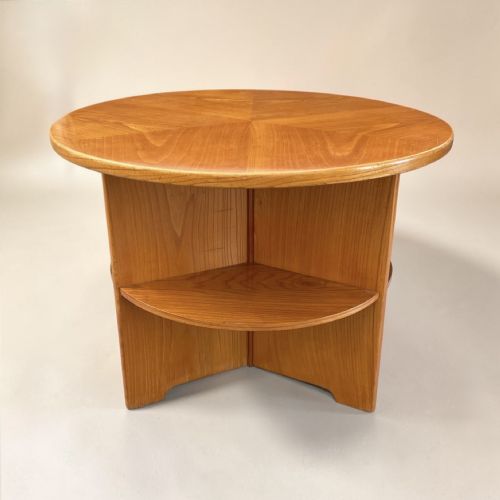
Art Deco tables typically display streamlined forms, geometric balance, and striking use of figured veneers such as burr walnut or satin birch. They frequently date from the 1920s and 1930s.
These pieces prioritise clean silhouettes over heavy ornamentation, letting the natural grain of the wood provide the primary visual decoration.
Are these tables solid wood?
Construction varies between solid timbers and veneered surfaces applied over a supportive core. Hardwoods like mahogany, oak, and teak often appear in solid form.
Finer decorative pieces frequently utilise wood veneers to showcase elaborate grain patterns that would be unstable or unavailable in solid planks.
How do I care for antique wood?
Antique wood surfaces benefit from regular dusting with a soft, dry cloth and protection from direct sunlight and extreme humidity changes. Avoiding synthetic polishes preserves the original finish.
Maintaining stable indoor conditions prevents timber from warping and protects delicate veneers and applied decorative carvings over time.