

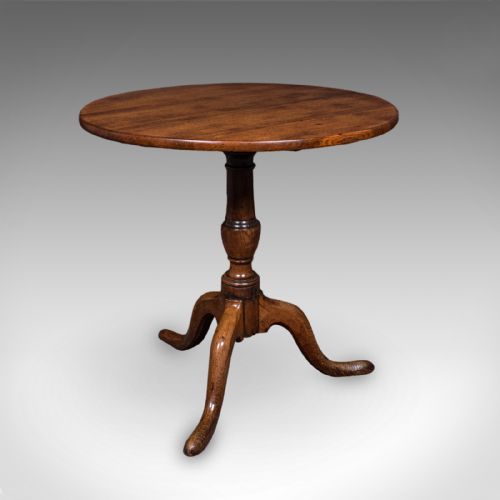


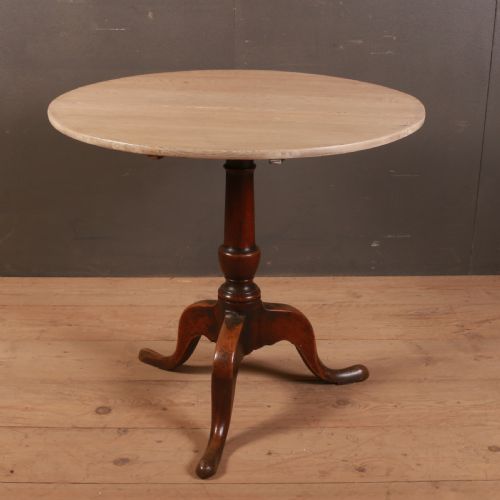
Round Oak Tilt Top Table
A round oak tilt top table is a practical British classic designed to fold away neatly against a wall when not in use.
Round Oak Tilt Top Table
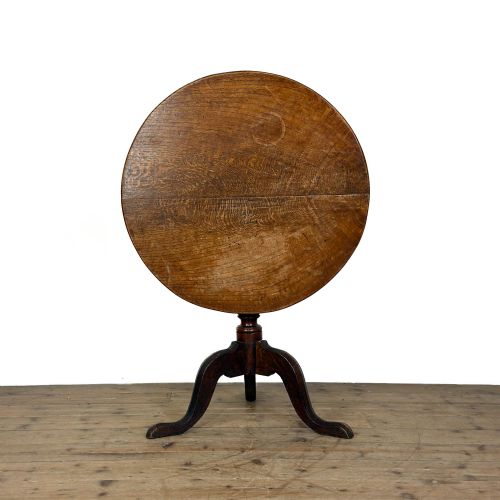
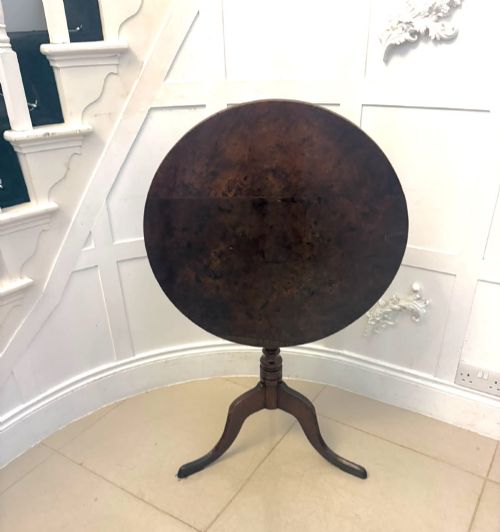
A round oak tilt top table combines solid timber construction with a pivoting mechanism that allows the circular top to lock vertically. You will most frequently encounter Georgian and nineteenth-century examples on tripod bases, designed as occasional, lamp, or supper tables.
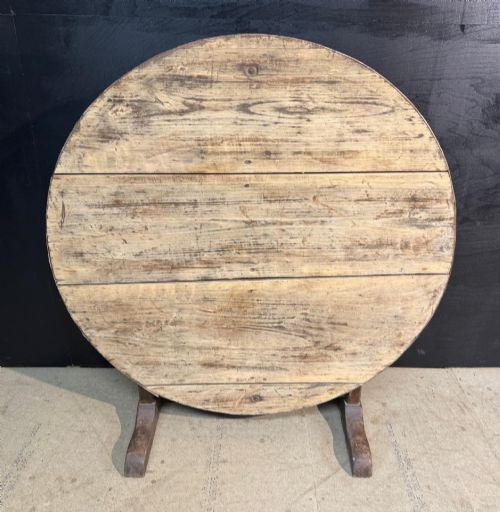
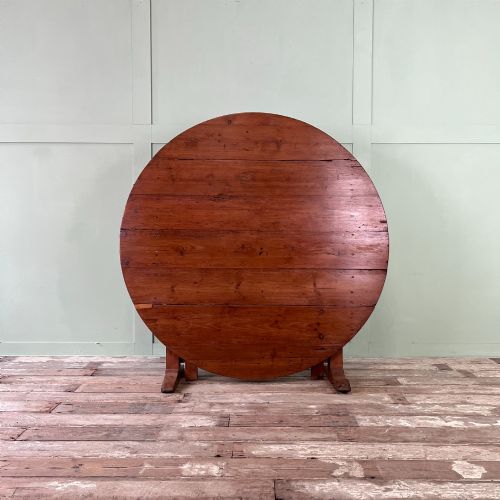
The selection ranges from compact tripod tea tables to larger breakfast and centre tables in pollard or burr oak. French provincial vendange and folding vineyard tables also appear, offering alternative folding formats in oak paired with cherry or beech.
How they were made
Cabinetmakers utilised solid oak for the circular tops and turned pillars, often selecting figured timbers like pollard and burr oak for visual depth. Beech and fruitwood frequently appear in the underlying structural turns and tripod legs.
Mechanisms rely on a birdcage or catch block beneath the top, allowing the surface to pivot and tilt on a central pillar supported by three legs. Brass fittings secure the hinges and latches on folding variants.
Round Oak Tilt Top Table Retail Price Guide 2026
Typical asking prices for round oak tilt top table among the pieces listed under this phrase on Sellingantiques today, from the lower quarter to the upper quarter. They describe what is for sale here now, not the wider market.
What varies in quality
Quality rests in the selection of the timber and the turning of the central column. Tables featuring figured burr or pollard oak display greater cabinetmaking ambition than plain boards.
The integrity of the tilting mechanism and the snug fit of the catch determine the stability of the top when lowered. Finely carved tripod legs with clean, sharp junctions distinguish better workshops from simpler utility pieces.
The Round Oak Tilt Top Table Glossary
- Tilt top
- A table mechanism featuring a hinged block that allows the top to rotate to a vertical position. This saved valuable floor space in smaller period rooms.
- Tripod base
- A support structure comprising three legs radiating from a central turned column. It ensures stability on uneven floors.
- Pollard oak
- Timber taken from trees that were cut back to encourage dense, highly figured branch growth. It creates a rich, mottled pattern across the table surface.
- Birdcage
- A timber framework beneath the top that allows the surface to both pivot and rotate. It is a mark of superior eighteenth-century joinery.
- Vendange table
- A French folding table traditionally used during the grape harvest. The top often tilts or folds for compact storage.
Round Oak Tilt Top Table: Frequently Asked Questions
How did people use tilt top tables?
These tables served as versatile furniture for tea, reading, or supper in domestic parlours. When the meal or evening ended, the top tilted vertically to clear the centre of the room.
Their mobility meant they could easily move closer to the hearth or window as daylight and warmth dictated.
How do I identify a Georgian table?
Georgian examples typically feature tripod bases with pad or snake feet supporting a turned pillar. The timber patination shows deep warmth accumulated over centuries of use.
Construction details like pegged joints and hand-turned pillars point firmly to this period of origin.
Are all these tables English?
While many originate from English workshops spanning the eighteenth and nineteenth centuries, continental pieces also appear. French provincial vendange tables bring alternative folding mechanisms to the selection.
Materials and turning styles generally give away the regional workshop traditions behind each piece.
How do I care for an oak surface?
Keep these tables away from direct heat sources and sudden humidity changes to prevent the timber from splitting. Regular dusting with a dry cloth maintains the finish.
Applying a traditional beeswax occasionally helps nourish the historic grain without building up heavy residues.