

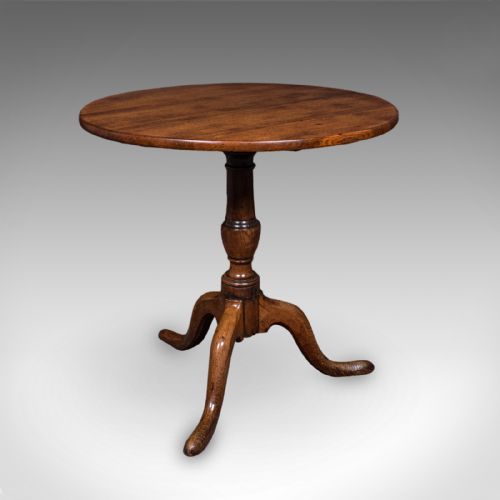


Round Oak Tea Table
These round oak tea table pieces are solid timber surfaces built for the parlour and sitting room, prized for their sturdy grain and practical tripod or gate-legged frames.
Round Oak Tea Table
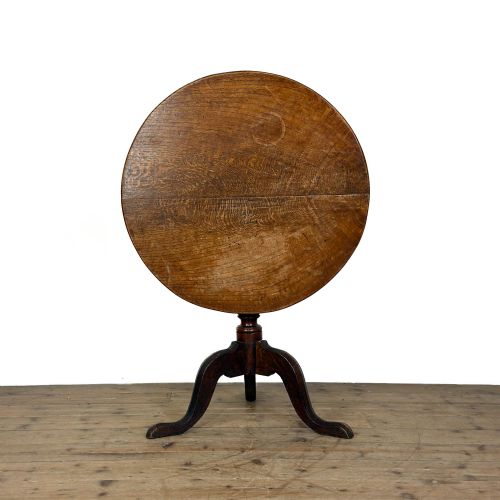
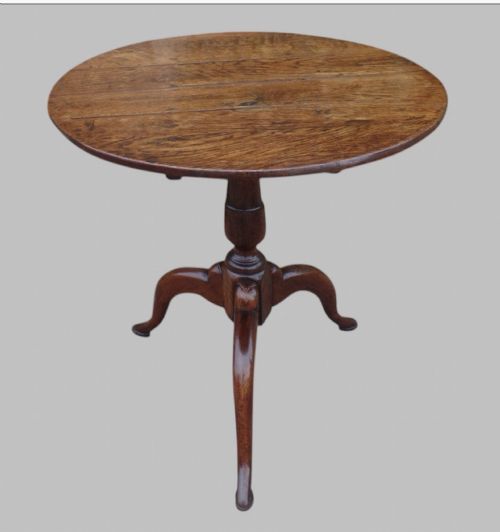
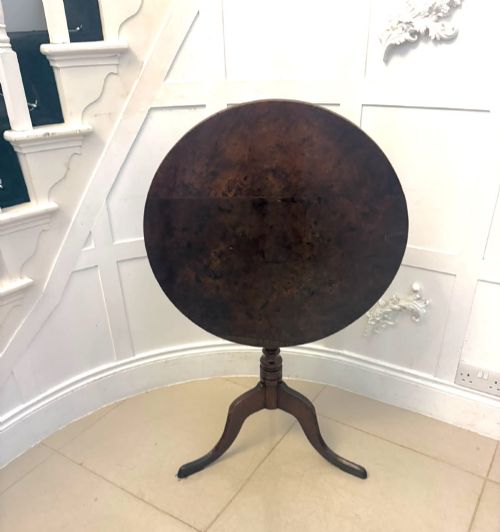
A round oak tea table most commonly appears on this page as a Georgian tripod table, often featuring a tilt-top mechanism designed to save space when not in use. You will also encounter later interpretations stretching from Victorian parlour examples to Art Deco and mid-century coffee tables.
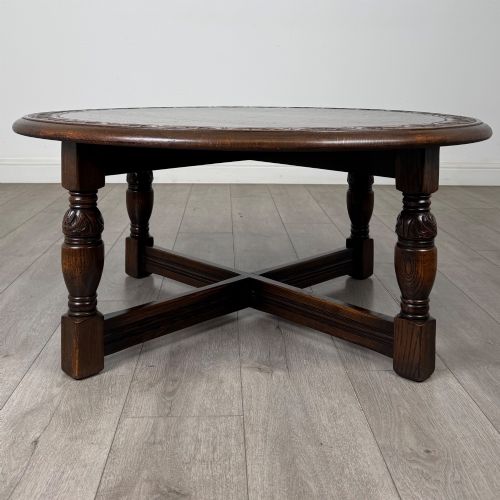
The forms span from small occasional and side tables to low coffee tables and specialised pieces like zodiac-carved tarot tables. Most examples rely on circular timber tops supported by turned central columns and three-leg bases.
Origins heavily favour English country workshops, ranging from mid-eighteenth-century Georgian items up to Edwardian and 1940s productions. The primary timber remains oak, occasionally enriched with burr figuring or marquetry inlay.
Materials and construction methods
Makers utilised solid oak alongside supporting timbers such as beech for internal frames, occasionally applying burr oak veneers or intricate marquetry inlay to the circular top surfaces. Ebonised wood and iron components also appear on specific stylistic variants.
Tripod bases were joined to turned central pillars using traditional carpentry methods, while tilt-top examples integrated wooden catches and birdcage mechanisms to allow the surface to pivot upright.
Round Oak Tea Table Retail Price Guide 2026
Typical asking prices for round oak tea table among the pieces listed under this phrase on Sellingantiques today, from the lower quarter to the upper quarter. They describe what is for sale here now, not the wider market.
Materials documented across the inventory include solid oak, burr oak, beech, iron, ebonised wood, and marquetry inlay.
Assessing craftsmanship and finish
Quality rests in the selection of the timber, where dense grain, rich figuring such as burr oak, and well-matched segments elevate a piece above standard utility items. The integration of the tilt-top mechanism and the turning of the tripod legs demonstrate the maker's skill.
Proportion and stability define the better examples, ensuring the circular top remains level upon its base without excessive play in the joints.
The Round Oak Tea Table Glossary
- Tilt top
- A tabletop mounted on a hinge mechanism that allows the surface to rotate vertically for storage against a wall.
- Tripod table
- A small freestanding table supported by a central pillar resting on three individual legs.
- Burr oak
- Timber taken from a tree growth where the grain has burl formation, producing highly decorative swirling patterns.
- Gate legged
- A table featuring hinged legs that swing outward to support folding drop leaves.
- Marquetry inlay
- Decorative patterns formed by fitting contrasting pieces of wood veneer into pre-cut recesses on the surface.
Round Oak Tea Table: Frequently Asked Questions
How do I date an oak table?
Dating relies on observing construction joints, timber selection, and stylistic details such as leg turning and edge profiles. Georgian pieces from the eighteenth century typically exhibit hand-cut joinery and pegged tenons.
Later Victorian, Edwardian, and Art Deco iterations introduce different proportions, machine-assisted elements, and distinct decorative motifs like zodiac carvings or blonde oak finishes.
Where were these tables used?
Historically, these tables served primarily in parlours and sitting rooms for holding tea service equipment, lamps, or reading materials. Their portable nature meant servants moved them about the home as needed.
In contemporary spaces, their compact circular proportions make them versatile surface options beside armchairs, sofas, or as standalone accent pieces in hallways.
What timber variations exist?
While solid oak forms the backbone of these pieces, makers often selected specialised cuts like burr oak to provide dramatic, swirling grain patterns on the top surfaces. Secondary woods such as beech frequently supported structural frames.
You will also find occasional decorative enhancements including marquetry inlay, ebonised wood details, or later oak veneers depending on the specific period of manufacture.