




Eighteenth Century Oak Table
An eighteenth century oak table brings sturdy provincial character into a room, offering honest timber construction that survives through generations of daily use.
Eighteenth Century Oak Table
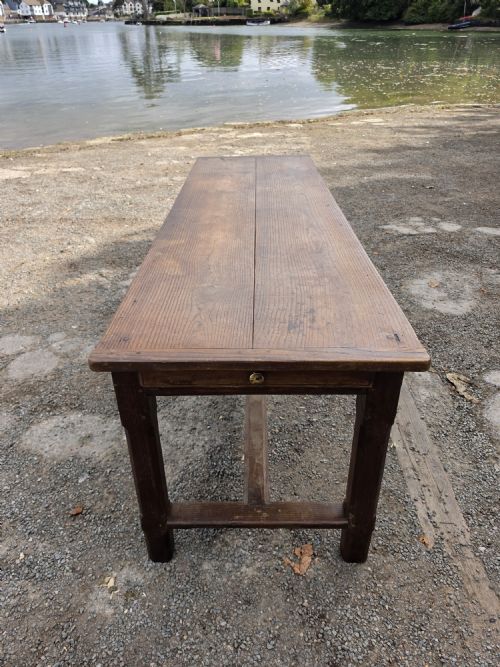
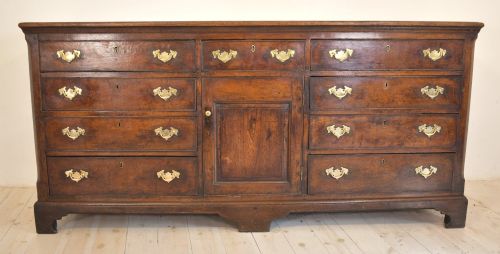
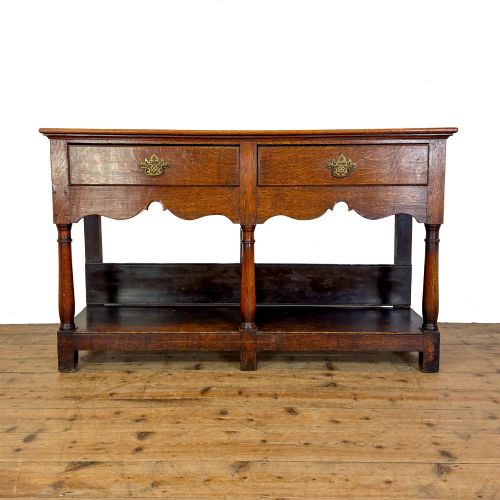
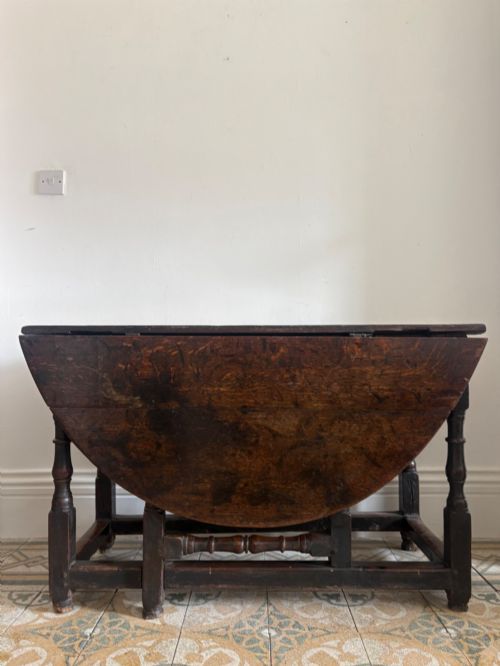
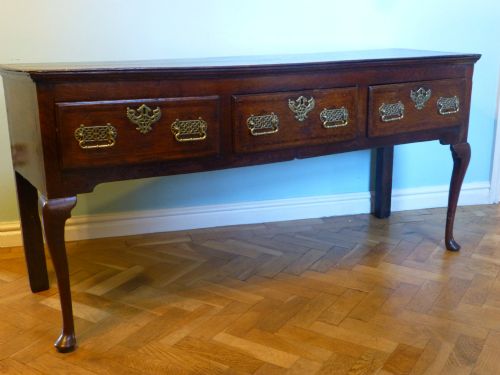
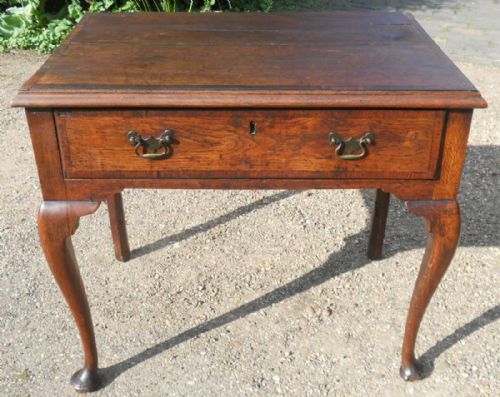
An eighteenth century oak table encompasses a broad range of vernacular furniture forms, from robust refectory dining boards to side tables, gatelegs, and low dresser bases. Buyers searching this phrase typically encounter sturdy domestic pieces shaped by regional British joinery traditions rather than courtly fashion.
The material palette is anchored firmly by solid oak, sometimes combined with walnut or supported by iron and brass fittings. Regional styles such as Welsh Country, English Country, and Queen Anne predominate across the available inventory, reflecting local workshops rather than metropolitan extravagance.
Forms vary from grand dining surfaces designed for communal meals to compact occasional tables, low boys, and cupboard dressers. The surviving examples demonstrate the practical utility demanded by households of the period, relying on pegged joints and thick planks.
Construction and Materials
Joiners built these tables using solid oak timbers, often quarter-sawn to reveal rich medullary rays and ensure structural stability. Boards were joined with mortise and tenon joints secured by wooden pegs, avoiding modern adhesives or metal fasteners.
Turning lathes shaped structural supports such as baluster legs on gateleg and refectory tables, while simpler side tables relied on straight or cabriole legs. Table tops utilised thick planks joined edge to edge, capable of withstanding heavy daily wear.
Eighteenth Century Oak Table Retail Price Guide 2026
Typical asking prices for eighteenth century oak table among the pieces listed under this phrase on Sellingantiques today, from the lower quarter to the upper quarter. They describe what is for sale here now, not the wider market.
Tables frequently bear the small, honest scars of spilled ale, hot tallow, and centuries of elbow grease that no cabinetmaker could ever forge.
Distinctions in Quality
Quality rests upon the integrity of the original timber and the restraint of subsequent restoration. Tables retaining their original plank tops and structural underframing without excessive timber replacement command greater appreciation among collectors.
The refinement of the joinery and turning sets finer examples apart from utilitarian work. Elegant proportions, well-balanced cabriole or turned legs, and patination developed through centuries of use define the upper tier of surviving pieces.
The Eighteenth Century Oak Table Glossary
- Refectory table
- A long dining table traditionally used in communal halls and large domestic kitchens. These boards feature substantial length and sturdy stretcher bases.
- Gateleg table
- A drop-leaf table with hinged flaps supported by swing legs that move outward like a gate. This design allowed tables to fold compactly when not in use.
- Dresser base
- A low sideboard or storage unit fitted with drawers and cupboards below a flat top surface. They served as primary storage and preparation furniture in country kitchens.
- Cabriole leg
- A furniture leg that curves outward in a convex arc and tapers inward in a concave arc, ending in a pad or foot. This stylistic feature appears on refined Georgian pieces.
- Plank top
- A solid wooden surface constructed from wide boards laid side by side. Early tables frequently display heavy grain and pegged construction across these surfaces.
Eighteenth Century Oak Table: Frequently Asked Questions
How do I clean an antique oak table?
Maintain the surface by dusting with a dry, soft cloth and occasionally applying natural beeswax to nourish the timber. Avoid modern liquid polishes, silicone sprays, and excessive moisture, which can damage the historic patination.
Keep the table away from direct heat sources and strong sunlight to prevent the oak from drying out and splitting over time. Gentle care preserves the colour and finish built up over centuries of use.
Were these tables used for dining?
Many larger forms such as refectory and gateleg tables served primarily for dining and food preparation in period households. Smaller side tables and low boys fulfilled different domestic storage and writing functions.
Buyers today frequently use larger refectory and drop-leaf formats for modern dining, while smaller tables function effectively as desks or occasional surfaces in living spaces.
How can I tell a genuine eighteenth century top?
Examine the underside and edges of the timber for authentic tool marks, shrinkage cracks, and consistent colour variation. Genuine boards show the natural movement and wear associated with centuries of age rather than uniform machine processing.
Check how the top connects to the base, as period fixing methods typically involve wooden buttons or pegged tenons rather than modern metal screws or brackets.
What defines regional styles in these tables?
Regional styles reflect the local availability of timber and the specific traditions of rural joiners working away from London workshops. Welsh and English country pieces often display heavier construction and simpler, more utilitarian ornament.
Characteristics such as turned baluster legs, shaped aprons, and specific drawer configurations help identify whether a piece originated in provincial workshops or urban centres.