



Round Mahogany Breakfast Table
A round mahogany breakfast table brings sociable dining and rich timber grain to a room.
Round Mahogany Breakfast Table
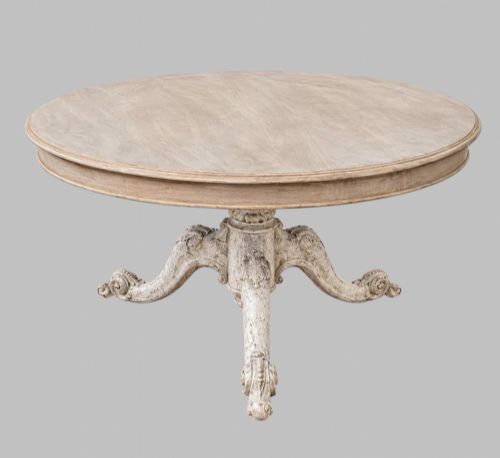
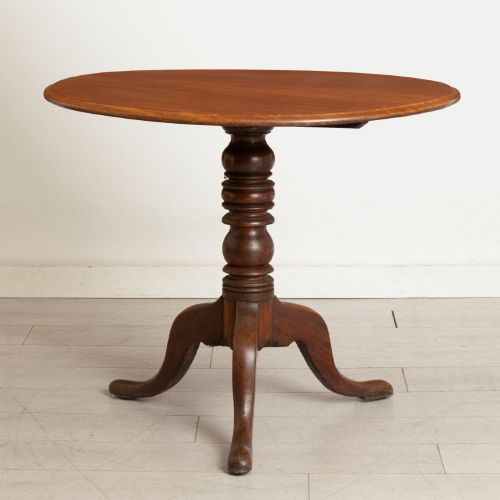
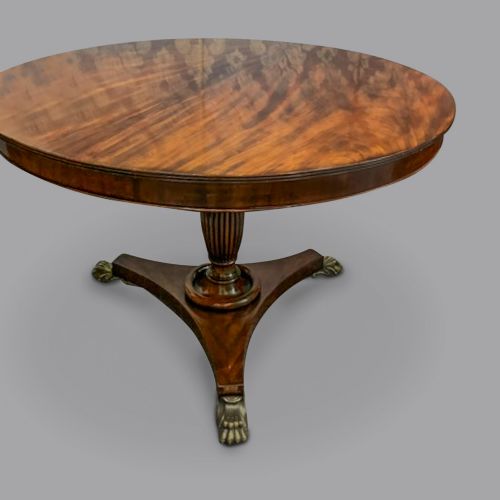
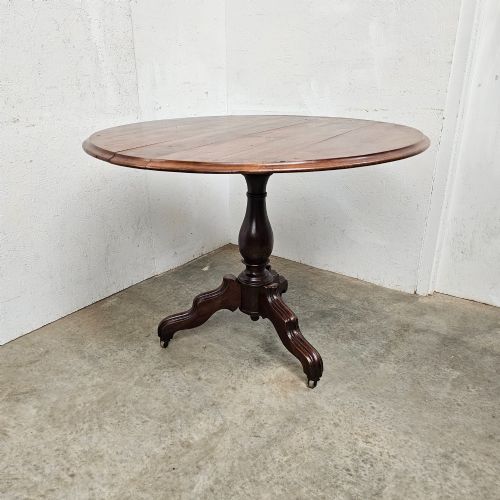
A round mahogany breakfast table is a versatile circular piece designed for morning meals, supper, or central display. You will most frequently encounter nineteenth-century examples spanning the Regency, Victorian, and William IV periods on this page.
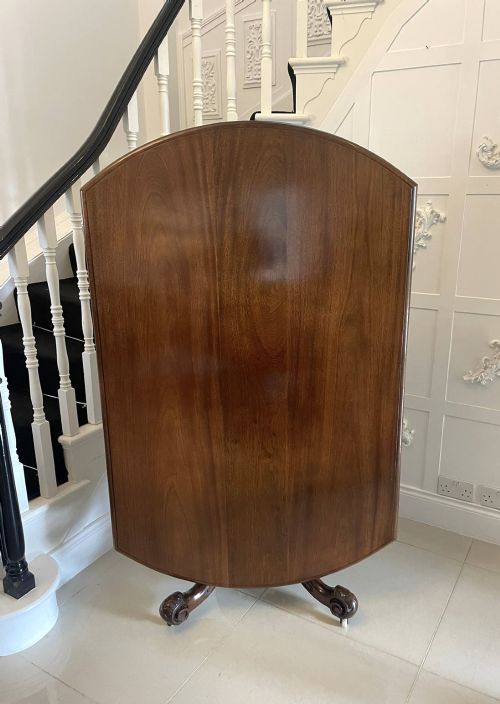
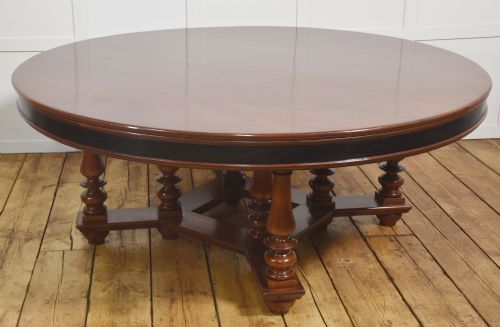
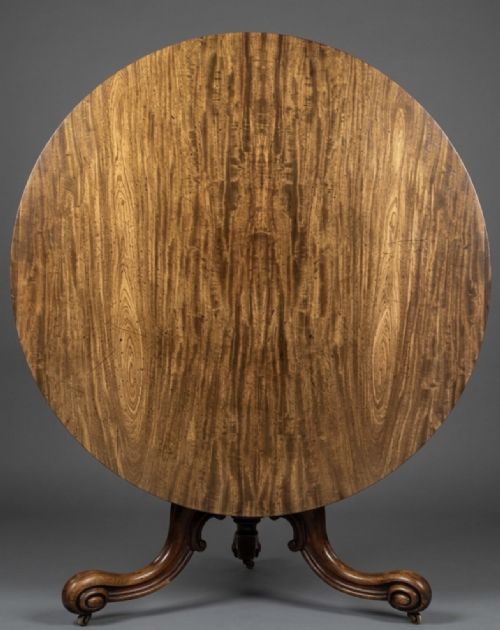
The form typically rests upon a central pedestal, pillar, or triform base rather than four corner legs, allowing chairs to tuck neatly underneath. Many pieces incorporate a tilt-top mechanism, enabling the surface to pivot upright and store against a wall when not in use.
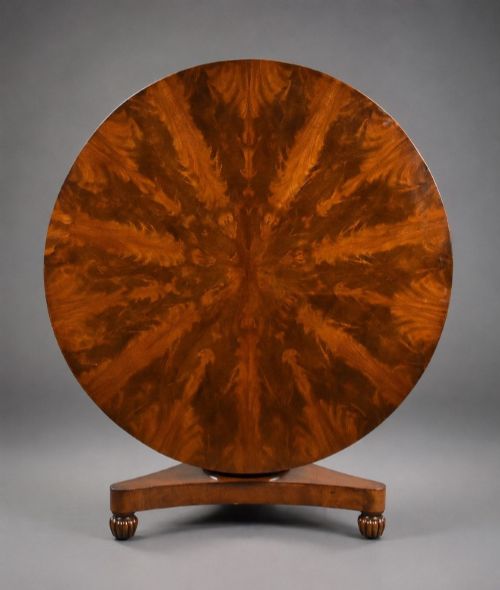
Makers fashioned these tables in various dimensions, ranging from intimate four-seater versions to large circular dining formats. Alongside standard mahogany, variations include figured grain, flame veneer, and contrasting rosewood or satinwood borders.
How They Were Made
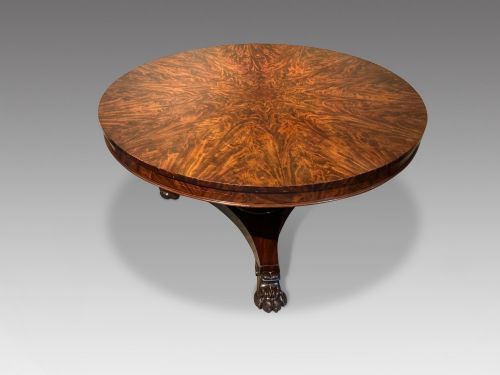
Cabinetmakers constructed these tables using solid timber frames paired with applied veneers to showcase rich grain patterns. Flame mahogany veneer and figured mahogany feature prominently, creating dynamic visual movement across the expansive circular surfaces.
Pedestals frequently terminate in brass castors, while structural stability is maintained through robust central pillars and substantial wooden bases. Crossbanded borders in contrasting woods such as satinwood add a refined linear perimeter to the primary mahogany top.
Listings feature examples from the Georgian, Regency, William IV, and Victorian periods, executed in mahogany, rosewood, walnut, and satinwood.
What Varies in Quality
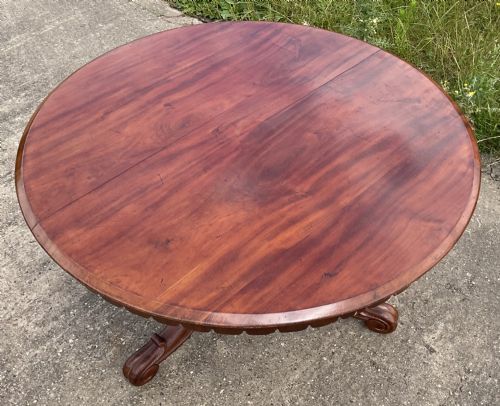
The choice of timber grain dictates much of the visual impact, with carefully matched flame or plum pudding mahogany representing the higher tiers of craftsmanship. Plain boards or simpler cuts of timber appear on more utilitarian examples.
The sophistication of the pedestal carving and the precision of the tilt-top mechanism distinguish standard production from exceptional workshop output. Heavy, stable pedestals with well-defined octagonal or triform geometry show greater consideration in design.
Walker-Lancaster·Gillows
The Round Mahogany Breakfast Table Glossary
- Tilt-top
- A hinged table mechanism allowing the circular surface to pivot into a vertical position for compact storage.
- Crossbanded
- A decorative border technique where strips of veneer are laid perpendicular to the main grain of the table top.
- Triform base
- A three-sided pedestal support providing stability beneath the central pillar of the table.
- Loo table
- A nineteenth-century round table originally used for card games as well as breakfast and informal dining.
Round Mahogany Breakfast Table: Frequently Asked Questions
Can I use a breakfast table for daily dining?
These tables were originally built for flexible family use, making them practical for everyday meals in modern spaces. Their central pedestal design offers ample legroom without corner legs obstructing chairs.
Selecting a model with a sturdy pillar and secure tilt mechanism ensures the surface remains stable during daily use. Many buyers pair them with four to six chairs depending on the table diameter.
What is the difference between a breakfast table and a centre table?
Breakfast tables generally include a tilt-top mechanism and heavy pedestal base designed to support active morning dining and supper. Centre tables often remain fixed in place and frequently serve a purely decorative function in an entrance hall or drawing room.
In practice, makers and buyers often overlap the terms because both formats share a circular mahogany top and central support structure.
How do I care for a mahogany surface?
Polishing the timber regularly with traditional beeswax maintains the natural lustre of the mahogany grain without building up synthetic residues. Avoiding direct sunlight and excessive heat protects the timber from warping or drying out.
Using coasters and placemats helps shield the French polished finish from moisture rings and warm dish marks during meals.