


Round Leg Dining Table
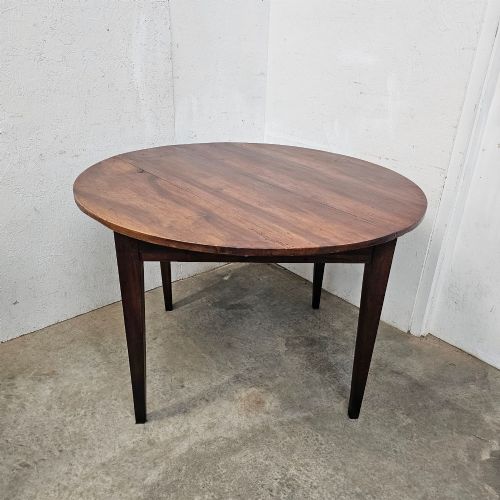
A round leg dining table brings people together around a circular surface supported by distinct legs, offering practical dining and warm social gatherings.
Round Leg Dining Table
A round leg dining table takes many forms across different centuries, ranging from formal pedestal designs to practical drop-leaf gateleg arrangements. When exploring a round leg dining table, buyers encounter circular mahogany breakfast tables, oak gateleg versions with barley twist supports, and walnut country dining pieces.
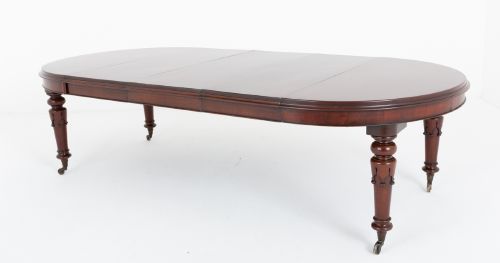
The selection on this page spans the eighteenth, nineteenth, and early twentieth centuries, drawing on Georgian, Regency, and Victorian aesthetics alongside French provincial styles. Mahogany and oak dominate these tables, often featuring tilt mechanisms, extending leaves, or substantial central pillars.
Buyers seeking a round leg dining table often select circular formats to encourage conversation and fit flexible room layouts. The pieces listed range from compact four-seat supper tables to large dining surfaces suitable for daily family use.
How they were made
Cabinet makers constructed these tables using solid timbers and decorative veneers such as mahogany, oak, walnut, rosewood, and satinwood. Artisans joined sections using traditional methods, incorporating drop leaves, gateleg actions, and tilt-top mechanisms built on brass fittings.
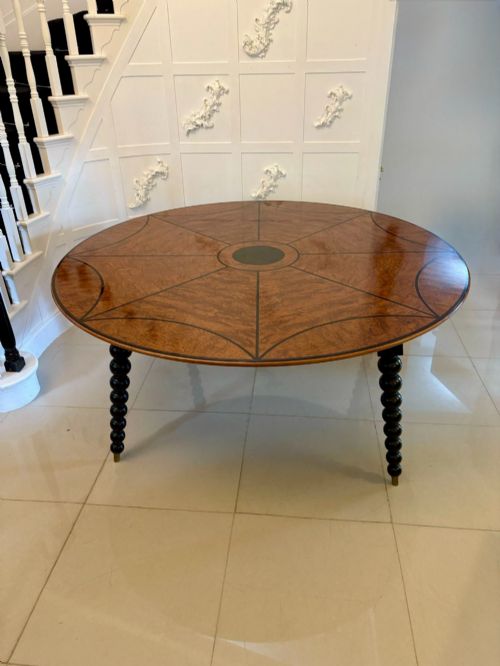
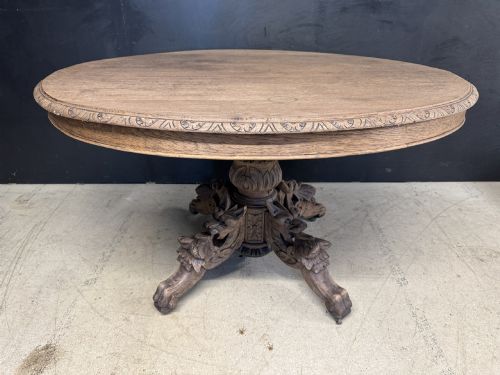
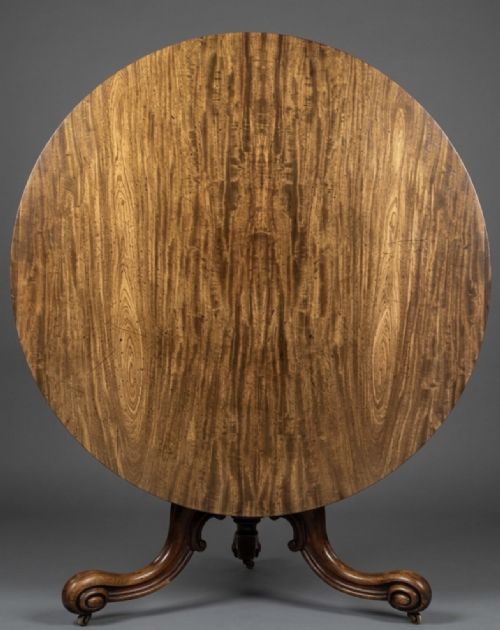
Surface decoration involved meticulous craftsmanship, including crossbanded borders, ebony inlay, marquetry, and carved bases. Woods like pollard oak and plum pudding mahogany provided distinctive grain patterns that highlighted the natural figure of the timber.
Listings feature eighteenth-century oak gateleg tables alongside nineteenth-century mahogany breakfast tables and walnut centre tables.
What varies in quality
The distinction between standard examples and exceptional pieces lies in the choice of timber and the precision of the cabinet work. Superior tables display carefully selected wood grains, such as figured mahogany or pollard oak, paired with refined edge banding and solid structural joints.
Execution of decorative details separates finer pieces from simpler utilitarian items, visible in crisp carving, well-fitted tilt mechanisms, and stable pedestal bases. Tables retaining original surfaces and high-grade secondary timbers command greater appreciation among collectors.
The Round Leg Dining Table Glossary
- Gateleg table
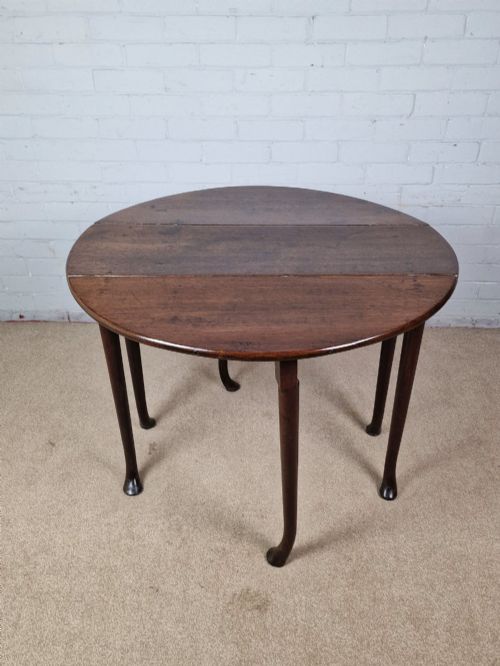
- A table with hinged leaves supported by swing-out legs that resemble the stationary frame. This design allows the surface area to expand or fold down for compact storage.
- Tilt-top table
- A table featuring a hinged tabletop that pivots into a vertical position when not in use. This mechanism allowed tables to stand flat against a wall to save space in smaller rooms.
- Crossbanding
- A decorative border of veneer laid around the edge of a tabletop so that the grain runs at right angles to the central panel. This technique frames the primary wood and adds visual depth.
- Centre table
- A freestanding table designed to be viewed from all sides and placed in the middle of a room rather than against a wall. These tables often serve decorative or occasional dining functions.
- Pad foot
- A simple rounded foot found on the bottom of a cabriole or straight leg, resting flat on the floor without a separate castor or shoe.
Round Leg Dining Table: Frequently Asked Questions
How do I choose the right size?
Consider the daily seating requirements of your household and the physical dimensions of the room where the table will stand. Circular formats require adequate clearance around the perimeter for chairs and movement.
Drop-leaf and extending mechanisms offer flexibility for households that need a compact everyday footprint combined with the capacity to host larger groups.
What is a tilt-top table used for?
A tilt-top table functions as a stable dining or breakfast surface during meals and pivots upright when cleared. This space-saving design allowed historic homeowners to push furniture against walls and clear the floor.
Today, a tilt-top table serves well as an occasional piece or a dining table where flexibility of floor space remains a priority.
Are these tables suitable for daily use?
Most antique wooden tables were built for rigorous daily service using sturdy hardwoods like oak and mahogany. Proper care with heat pads and placemats protects the polished or waxed finishes from everyday wear.
Selecting a sturdy gateleg or pedestal design ensures the table remains stable and functional for regular family meals.