
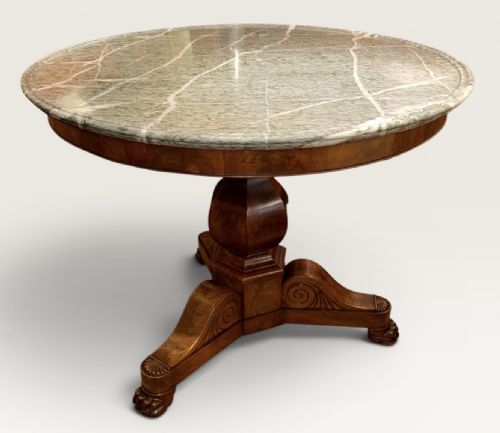


Round French Gueridon
These round french gueridon tables provide a steady, circular surface that sits easily in a room while bringing classic continental timber and stone.
Round French Gueridon
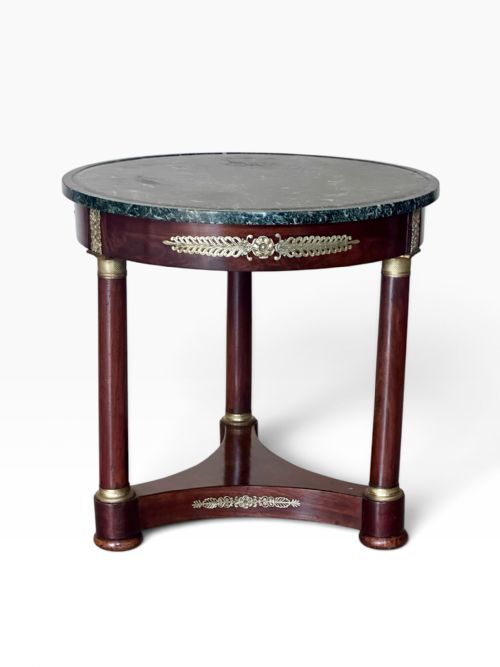
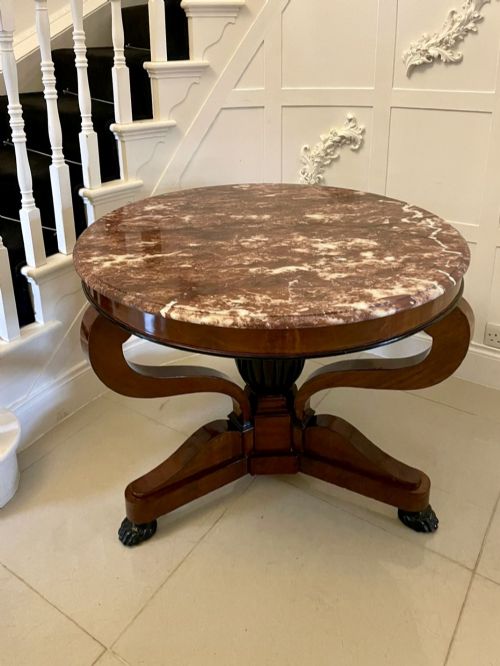
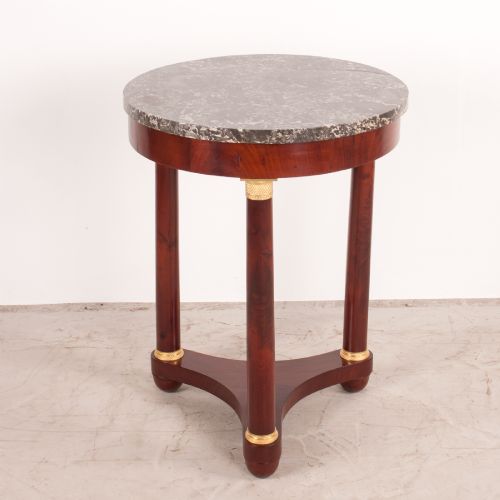
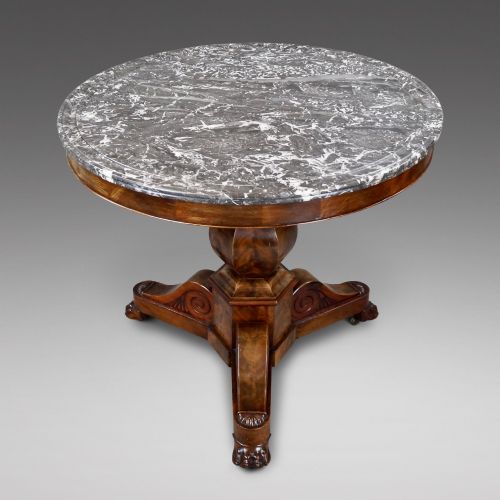
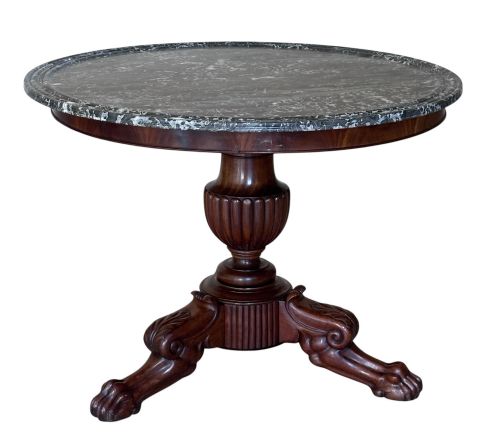
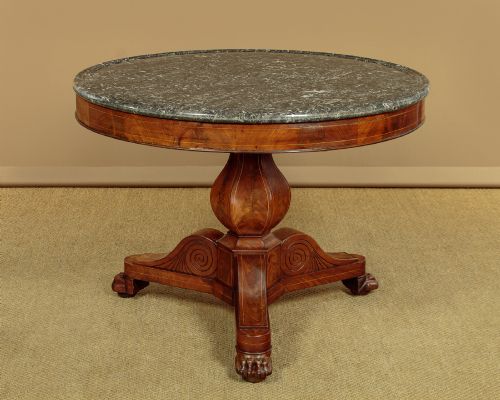
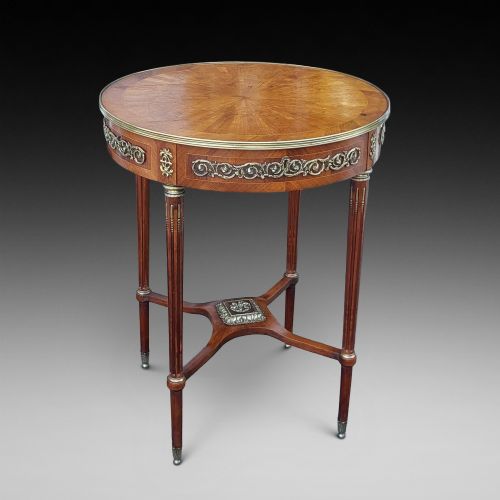
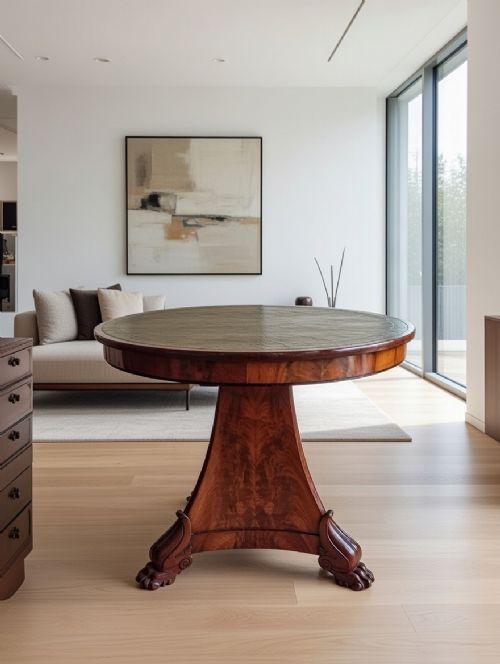
A round french gueridon functions primarily as a centre table, side table, occasional table, bistro table, or coffee table within a domestic interior. These circular pedestal tables emerge most frequently from the nineteenth century, spanning periods from the Empire and Restoration eras through to the Louis Philippe and later revival styles.
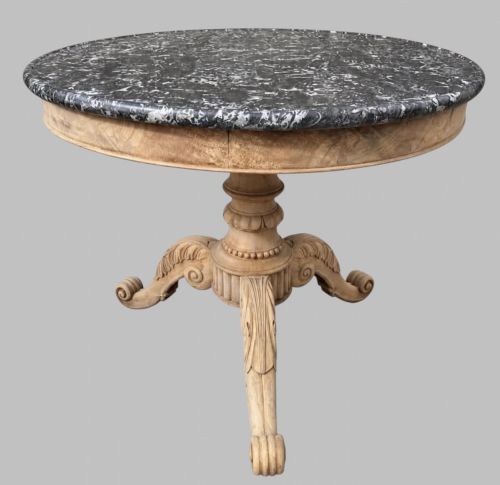
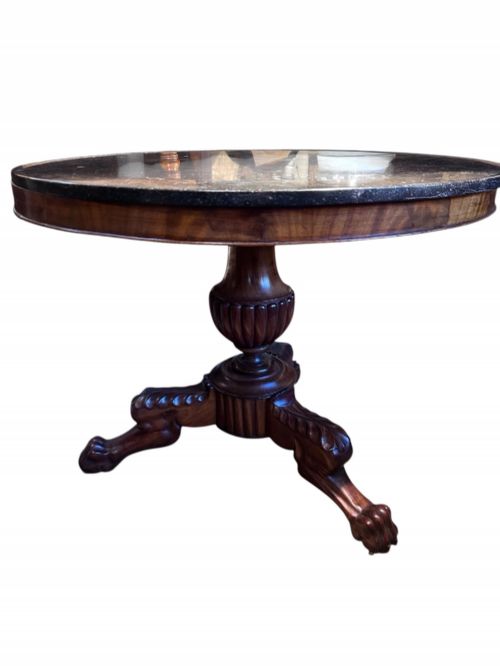
The form relies on a central column or pedestal supporting a round top rather than traditional corner legs. This construction allows the table to occupy the middle of a room or fit neatly into a corner while remaining accessible from all sides.
How they were made
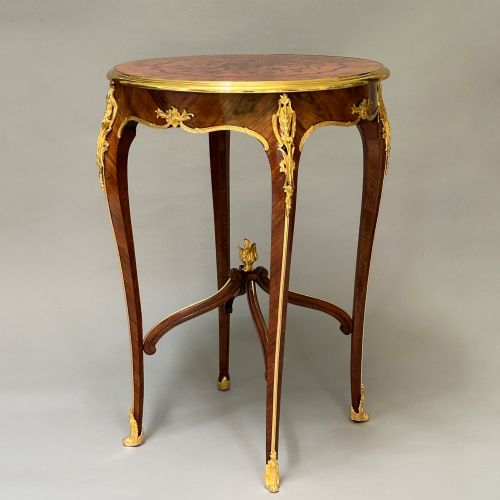
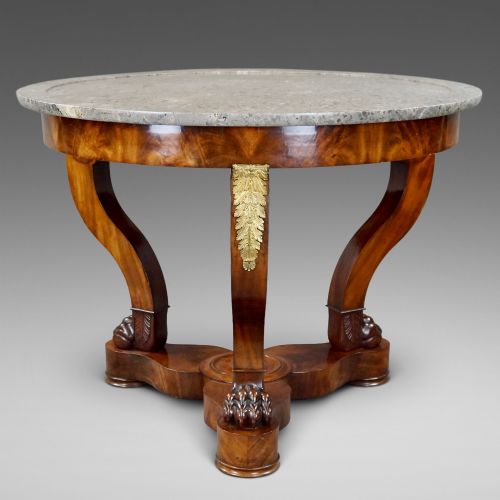
Cabinetmakers constructed these tables using a variety of native and exotic timbers, notably mahogany, flame mahogany, walnut, burr elm, and kingwood. Tops frequently feature inset slabs of white or coloured marble, leather, onyx, or solid wood supported by timber frames.
Metal enrichment plays a significant role, with brass, ormolu, and gilt bronze mounts applied to capitals, collars, and feet. Cast iron also appears on specific utility or bistro examples alongside carved wooden details such as swans and rams' heads.
Listings feature mahogany, walnut, and kingwood alongside marble and ormolu across the nineteenth century.
What varies in quality
The refinement of the timber veneers and the crispness of the carved or cast metal mounts separate standard examples from finer works. Figured grains like flame mahogany and burr elm, paired with detailed ormolu, denote greater workshop care.
The selection and fit of the stone top also indicate grade, as thick, unblemished marble slabs require precise masonry compared to simpler wooden or painted tops. Structural integrity in the central pedestal connection governs daily utility.
The Round French Gueridon Glossary
- Gueridon
- A small circular table supported by a central pillar or pedestal. The form originated in seventeenth-century France and evolved through various revival styles.
- Ormolu
- Gilt bronze mounted on furniture or decorative objects. This technique involves applying a finely ground gold-mercury amalgam to bronze.
- Kingwood
- A dense, heavily figured Brazilian timber prized by cabinetmakers. It displays rich brown tones with darker streaks.
- Empire
- A neoclassical design style spanning the late eighteenth and early nineteenth centuries. It draws inspiration from ancient Roman, Greek, and Egyptian motifs.
- Marquetry
- Inlaid patterns of contrasting veneers applied to a wood foundation. This decorative method creates geometric or pictorial designs across the tabletop.
Round French Gueridon: Frequently Asked Questions
Where should I place a gueridon?
These circular tables fit well in the middle of a room as a centre table where their pedestal base allows easy movement around them. They also serve as side or lamp tables against a wall.
Their compact round footprint makes them practical for halls and drawing rooms without blocking thoroughfares.
How do I care for a marble top?
Marble surfaces require prompt wiping of acidic liquids like wine or lemon juice to prevent etching. Use a damp cloth for regular cleaning and avoid harsh chemical cleaners.
Periodic application of a specialist stone wax helps protect the polish and maintain the natural finish of the stone.
Are these tables sturdy enough for daily use?
Most examples rely on a heavy central pillar and weighted base designed to keep the table stable during normal domestic tasks. The circular design distributes weight evenly across the central support.
Heavier marble-topped variants offer extra stability due to the natural weight of the stone insert.
How do I identify an Empire style table?
Empire pieces often incorporate classical architectural details such as columns, gilt bronze mounts, and specific animal motifs like swans or rams' heads. The timber work typically emphasises dark mahogany with strong contrasting brass or ormolu highlights.
These characteristics reflect the formal classical taste of the early nineteenth century.