

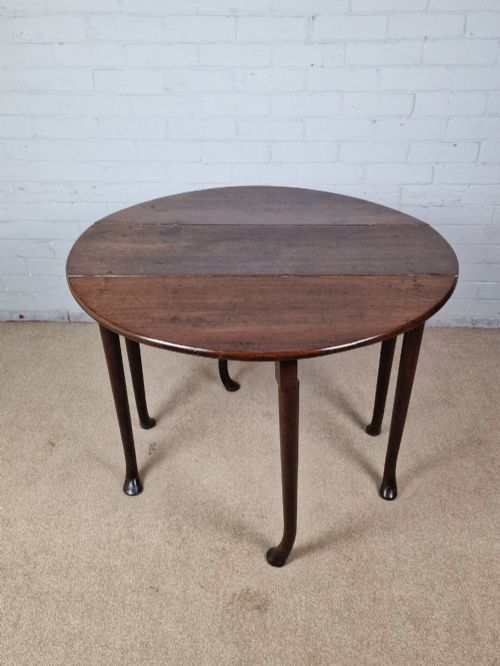


Round Drop Leaf Table
A round drop leaf table offers practical dining space that folds away neatly when you need room to breathe.
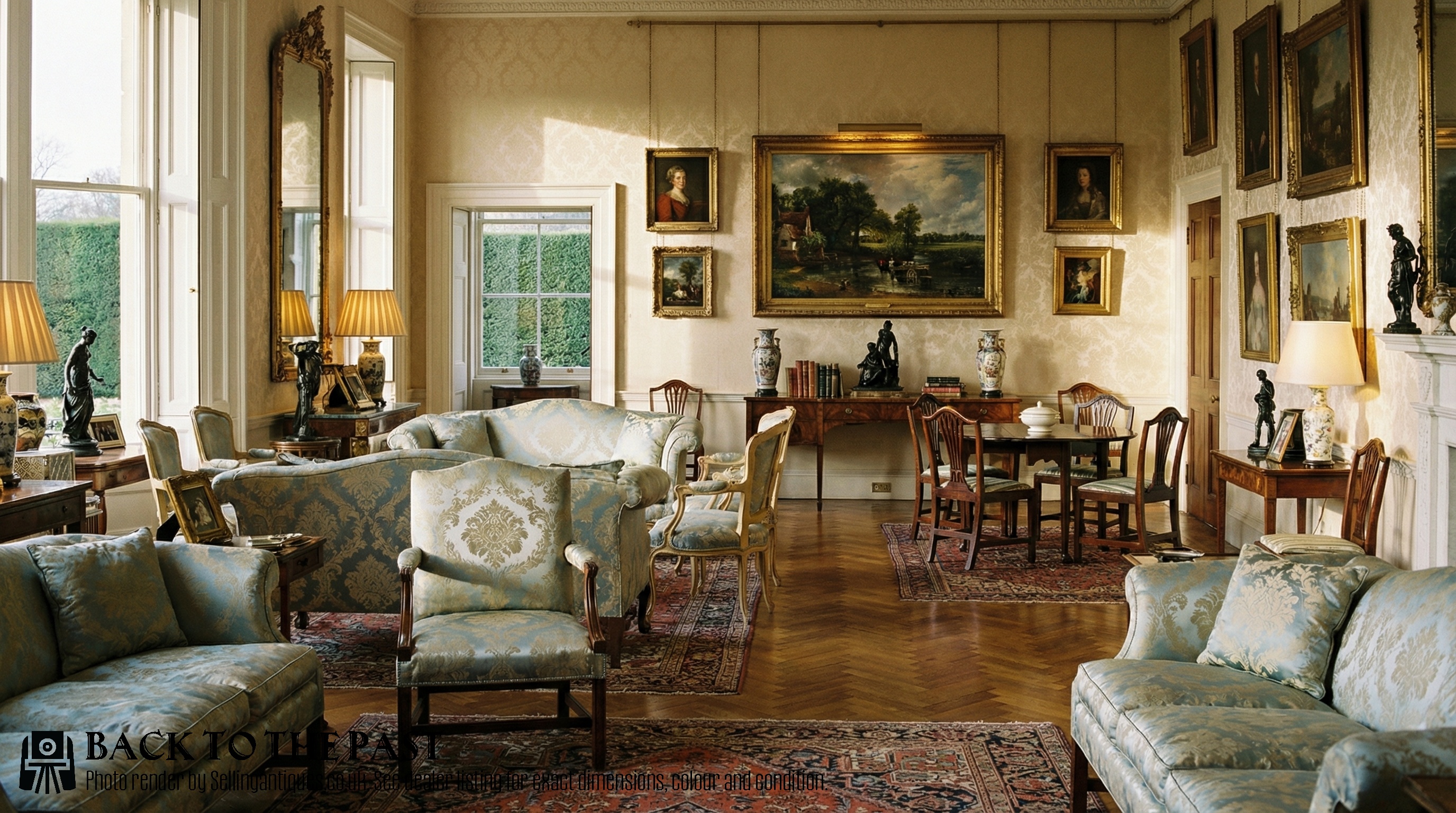
Round Drop Leaf Table
A round drop leaf table combines hinged folding flaps with a sturdy base to serve as both compact everyday furniture and larger dining surfaces. You will find these pieces appearing across the Georgian, Regency, and Victorian eras, often taking the form of gate leg tables or smaller occasional pieces.
The physical evidence on this page shows formats ranging from substantial oak farmhouse dining tables seating multiple people down to smaller occasional, coffee, and side tables in mahogany, elm, and cherrywood. Many examples utilise drop leaves supported by swinging legs or gate legs to expand the surface area on demand.
How they were made
Cabinet makers utilised dense, durable timbers like oak and mahogany alongside regional woods such as elm, cherrywood, and brass hardware to construct these folding surfaces. The structural integrity relies heavily on solid timber frames and sturdy pivot hinges that allow the leaves to drop and rise smoothly.
Joinery methods range from traditional pegged joints on older oak gate leg examples to more refined hinging systems on later mahogany dining pieces. Turning techniques produced varied support legs, including barley twists, pad feet, and straightforward columnar posts.
Round Drop Leaf Table Retail Price Guide 2026
Typical asking prices for round drop leaf table among the pieces listed under this phrase on Sellingantiques today, from the lower quarter to the upper quarter. They describe what is for sale here now, not the wider market.
Listings feature woods including oak, mahogany, elm, cherrywood, and brass hardware across Georgian, Regency, Victorian, and Edwardian periods.
What varies in quality
The calibre of a piece depends largely on the choice of timber figure, the crispness of the turning on the legs, and the robustness of the gate mechanism. Finer examples display carefully selected mahogany or well-figured oak with tight joints that keep the leaves level when fully extended.
Construction details such as the thickness of the table top, the neatness of the hinge fitment, and the overall stability of the frame when loaded separate standard utility items from finer formal dining tables.
The Round Drop Leaf Table Glossary
- Gate leg table
- A table with hinged leaves supported by one or more legs that swing out like a gate. This design provides robust support for the drop leaves when extended.
- Pad foot
- A simple, rounded foot shape often found on Georgian furniture where the leg terminates in a flattened pad resting on the floor.
- Demi-lune
- Half-moon shaped, commonly used to describe tables with semi-circular tops that can be placed against a wall or joined together.
- Drop-leaf
- A table top configuration featuring a fixed centre section with hinged flaps on either side that lower or raise as required.
- Barley twist
- A decorative turning style resembling a twisted rope, frequently seen on the legs of seventeenth-century and revival furniture.
Round Drop Leaf Table: Frequently Asked Questions
How much space do I need for a round drop leaf table?
These tables adapt well to smaller rooms because you can drop one or both leaves down against a wall when floor space is tight.
When guests arrive, simply swing the support legs out and lift the flaps to create a full dining or serving surface.
How do I tell an 18th-century table from a later revival piece?
Eighteenth-century examples typically display period construction traits, hand-cut joinery, and timber patination developed over centuries of use.
Revival pieces from later periods often utilise machine-cut elements and replicate earlier styles like Jacobean turning or Georgian proportions.
Can I use a drop leaf table every day?
Solid timber construction in oak, mahogany, and elm makes these pieces durable enough for daily family meals and general household tasks.
Ensure the gate leg mechanisms move freely and avoid placing extremely hot items directly onto the polished wood surface.
What is the difference between an occasional table and a dining table?
Occasional tables are built on a smaller scale for specific tasks like holding lamps, drinks, or books beside seating areas.
Dining versions provide the height, legroom, and surface area necessary for seating multiple people comfortably for meals.