
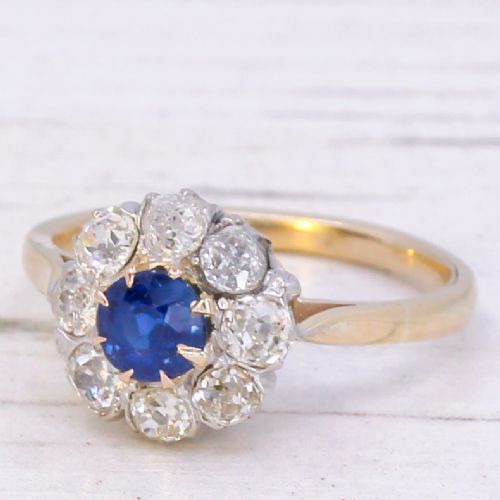
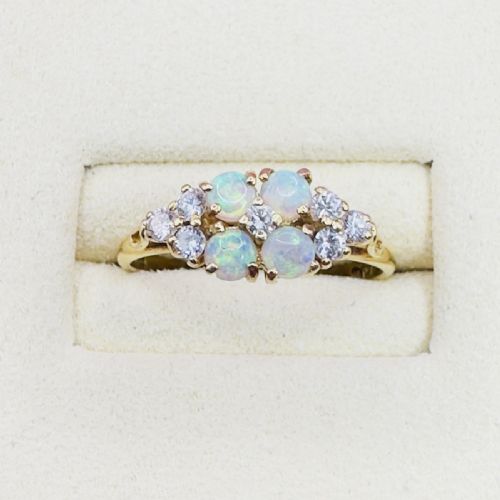


Round Diamond Cluster
A round diamond cluster gathers smaller stones around a central focal point to maximise brilliance and presence on the hand.
Round Diamond Cluster
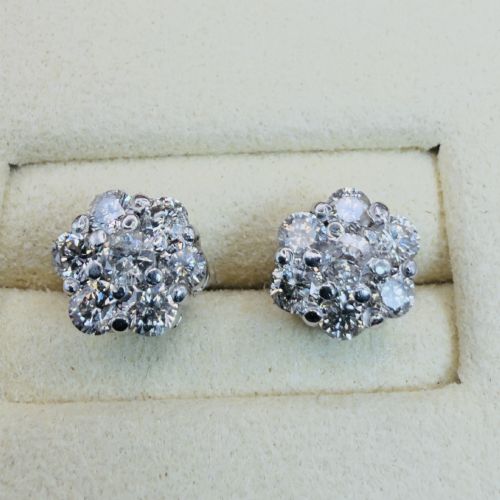
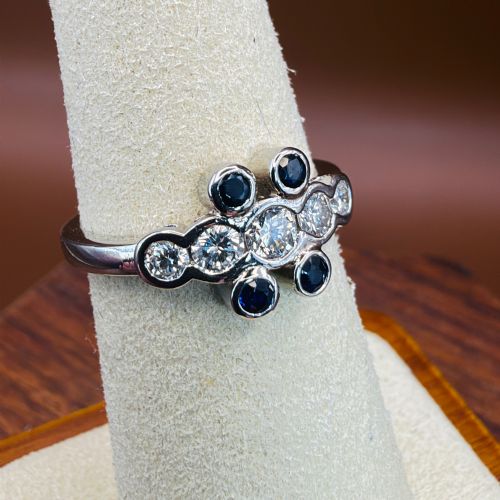
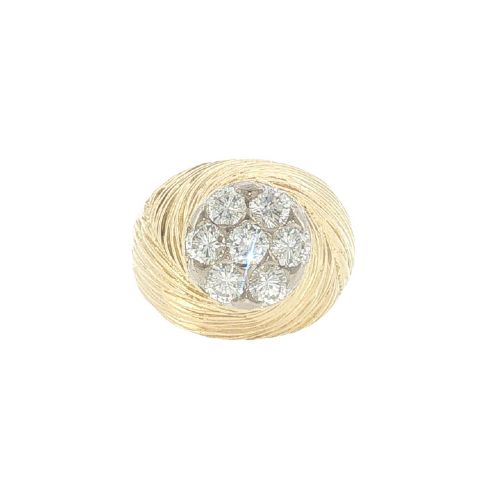
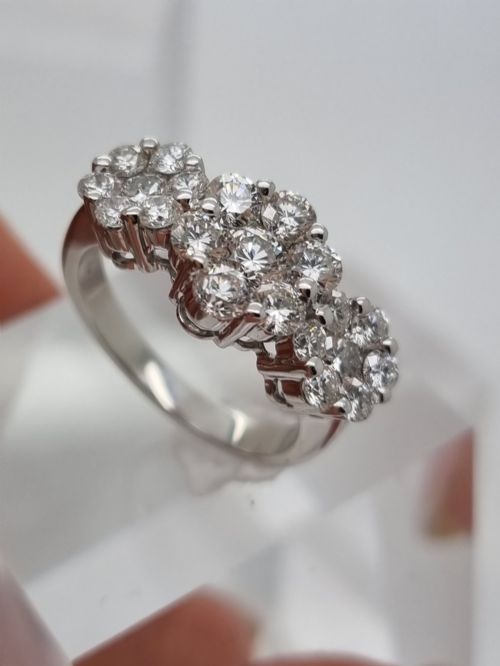
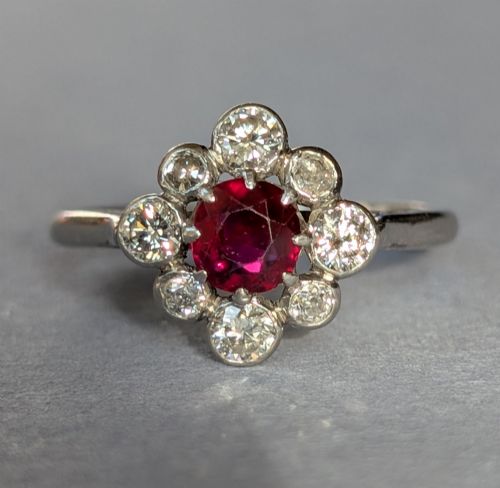
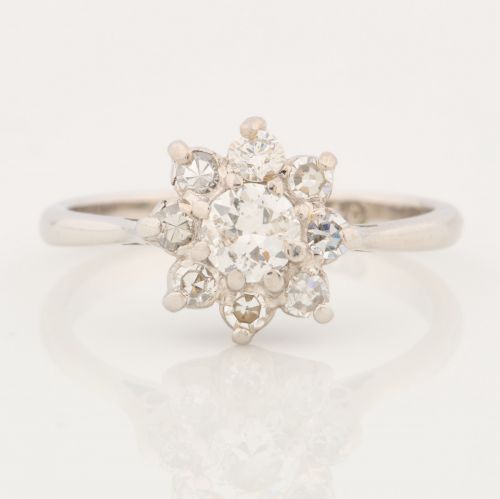
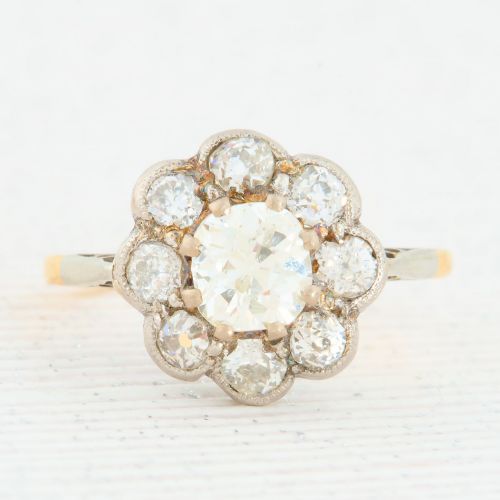
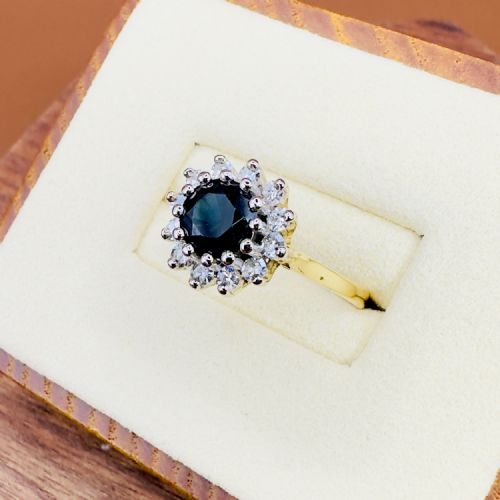
A round diamond cluster typically takes the form of a central gemstone encircled by a tight formation of smaller diamonds or contrasting coloured gems such as sapphires, rubies, or opals. These pieces appear primarily as rings, dress rings, earrings, and necklaces, spanning eras from the Edwardian period through the 1920s Art Deco movement, mid-century designs, and later twentieth-century work.
The most common configurations on this page pair a central diamond with a halo of smaller matching stones, or set a coloured centre stone such as a sapphire or ruby within a bright diamond border. Formats range from traditional daisy rings and target rings to dramatic ballerina settings and spiral clusters.
Buyers seek these configurations for their visual impact and historical variety, as each era brings distinct geometric arrangements or softer floral outlines. Whether configured as stud earrings or substantial cocktail rings, the focus remains on concentrated brilliance.
Materials and construction
Jewellers build these clusters using durable precious metals, predominantly platinum and various grades of 18ct gold, including white, yellow, and occasionally 14ct white gold. Platinum provides the structural strength needed for fine Edwardian and Art Deco settings, while yellow and white gold support mid-century and vintage iterations.
Stones are secured using a mix of traditional techniques, incorporating claw settings, millegrain borders, and precise flush or bezel placements to hold old mine cuts, brilliant cuts, and assorted supporting gems tightly together.
Materials recorded across these items include platinum, 18ct white gold, 18ct yellow gold, 14ct white gold, diamonds, sapphires, rubies, opals, amethysts, and basaltic sapphires.
Evaluating quality and execution
Quality rests on the precision of the stone arrangement and the harmony between the central gem and its surrounding border. Superior examples demonstrate uniform stone selection, matching colour grades, and careful calibration so that the metalwork recedes and allows maximum light entry.
The distinction between standard commercial pieces and finer work lies in the hand-finishing of the settings, such as delicate millegrain detailing on platinum edges or the graceful tapering of gold shanks. Structural integrity matters greatly in multi-stone clusters, where secure mounting ensures the longevity of the entire arrangement.
The Round Diamond Cluster Glossary
- Cluster
- A setting style where multiple smaller stones surround a larger central gem to create the visual impression of a much larger single stone. This arrangement amplifies overall light reflection.
- Old Mine Cut
- An early diamond cut characterised by a cushion shape, high crown, small table, and large open culet. These stones were shaped by hand before modern symmetrical standards emerged.
- Millegrain
- A decorative technique featuring a row of tiny, raised metal beads along the edges of a setting. It adds a refined, textural border common in Edwardian and Art Deco jewellery.
- Target Ring
- A specific geometric cluster design featuring concentric rings of contrasting coloured gemstones and diamonds. The resulting pattern resembles a bullseye.
- Ballerina Ring
- A mid-century cluster style featuring a central stone encircled by radiating rows of tapered baguettes or smaller brilliant cuts. The arrangement mimics the tutu of a dancer.
Round Diamond Cluster: Frequently Asked Questions
How do I wear a cluster ring safely?
Protect your ring by removing it during manual tasks, heavy lifting, or sports to prevent unexpected impacts on the multi-stone setting.
Store the piece individually in a lined box or soft pouch to avoid scratching softer gems or delicate gold and platinum metalwork.
Are these pieces suitable for daily wear?
Many cluster rings and earrings serve well for everyday use, particularly robust platinum or 18ct gold configurations from the mid-century era.
Pieces featuring softer stones like opals or intricate antique millegrain require more mindful care and occasional professional inspection of the claws.
How do I clean my cluster jewellery?
Soak the piece briefly in warm water mixed with a mild washing-up liquid to loosen accumulated oils and everyday debris.
Use a very soft brush to clean gently around the tiny gaps beneath the stones, then rinse thoroughly and dry with a lint-free cloth.
How can I tell an antique cluster from a vintage one?
Examine the cut of the diamonds and the overall structural geometry, as Edwardian and 1920s pieces often feature old mine cuts and platinum millegrain work.
Mid-century and later 1950s or 1960s designs typically showcase round brilliant cuts alongside heavier 18ct yellow or white gold construction.