
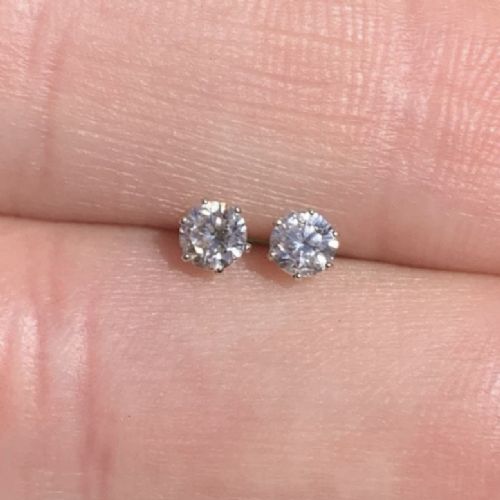


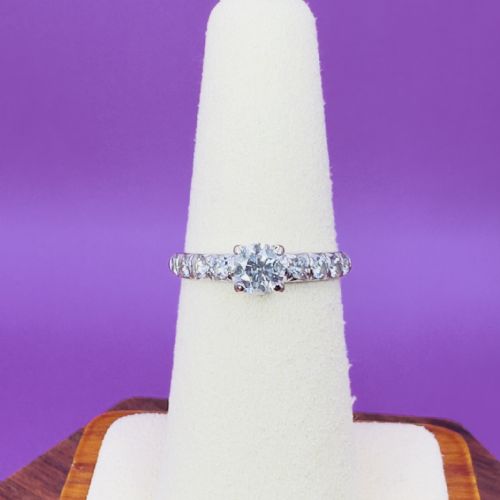


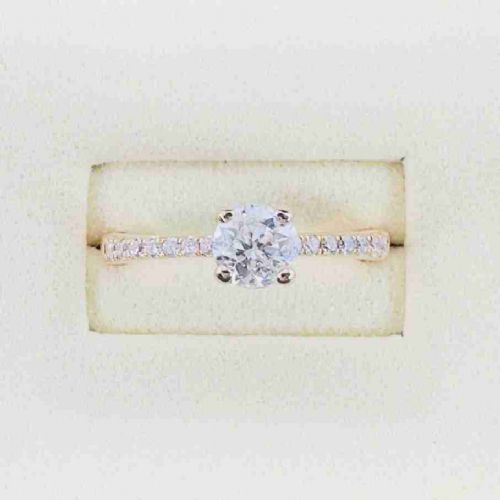


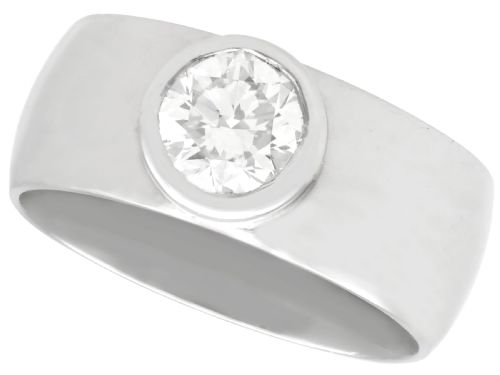


Round Brilliant Solitaire
A round brilliant solitaire is a single-stone piece that puts all its emphasis on the cut and weight of the diamond.
Round Brilliant Solitaire
A round brilliant solitaire concentrates attention entirely on a single central diamond, set by itself without competing stones to distract the eye. When searching for a round brilliant solitaire, buyers encounter engagement rings, stud earrings, pendants, and pendant necklaces spanning the 1920s through the 1960s and later. Rings form the majority of the selection, ranging from simple bands to designs featuring shoulder diamonds.
The pieces appearing here originate from the Art Deco period, the 1950s, the 1960s, and later decades. Platinum settings sit alongside 18ct white gold, 18ct gold, 9ct white gold, 14ct white gold, 18ct yellow gold, and 14ct yellow gold. Styles stretch from classic fine jewellery and modern classic to vintage and art deco iterations.
How they were made
Makers set single stones into precious metals using durable mountings designed to secure the diamond while maximising light entry. Platinum provides a strong, bright framework that holds stones firmly with minimal metal visible from above.
White and yellow gold varieties, spanning 9ct, 14ct, and 18ct purities, offer warm or neutral tones that complement the central diamond. Metals are shaped into solid bands, bezel mounts, twist settings, and pendant loops using traditional bench techniques.
Some vintage rings incorporate subtle twists into the metal shoulders, giving the classic single stone a playful nod to mid-century movement.
What varies in quality
The quality of a round brilliant solitaire rests primarily on the optical performance of the diamond itself, including its carat weight, colour grade such as F, and clarity designations like VVS2. Stones with superior cut proportions return more light and brilliance to the eye.
The craftsmanship of the metal setting also distinguishes finer examples, seen in the precision of the platinum claws, the symmetry of bezel wraps, and the neat integration of any shoulder diamonds or twisted bands.
The Round Brilliant Solitaire Glossary
- Solitaire
- A piece of jewellery featuring a single gemstone, most commonly a diamond. This setting style focuses visual weight entirely on one stone.
- Brilliant cut
- A diamond cut with precise facets designed to maximise light return and sparkle. Round versions represent the standard shape for this facet arrangement.
- Platinum
- A dense, durable, and naturally white precious metal used extensively for secure diamond settings. It develops a soft patina over decades of wear.
- Bezel
- A setting style where a thin metal collar wraps around the rim of the diamond to hold it in place. This technique offers a smooth, protective edge around the stone.
- VVS2
- A clarity grade indicating very, very slightly included diamond characteristics that remain extremely difficult to spot under magnification. It denotes high optical purity.
Round Brilliant Solitaire: Frequently Asked Questions
What is a round brilliant solitaire?
A round brilliant solitaire is a jewellery piece featuring one central round diamond. The design isolates the single stone to highlight its cut and carat weight.
Items in this category include engagement rings, pendant necklaces, and stud earrings made from platinum and various gold purities.
How do I clean a platinum diamond ring?
Clean platinum and diamond pieces using warm water, mild washing liquid, and a soft brush to remove everyday oils. Rinse thoroughly in clean water and dry with a lint-free cloth.
Avoid harsh chemicals that might affect any surrounding metal alloys or accumulate beneath the stone setting.
Can I wear my solitaire every day?
Solitaires set in robust metals like platinum or 18ct gold suit daily wear when constructed with solid bands and secure claws. Regular checks by a jeweller ensure the stone remains tight in its mount.
Remove rings during heavy manual work or strenuous exercise to protect the setting from knocks and scratches.
How do I know the period of a ring?
Dating relies on stylistic clues, setting techniques, and hallmarks stamped inside the metal band. Art Deco pieces show geometric lines, while 1950s and 1960s examples often feature cleaner, classic profiles.
Comparing the mount style against known manufacturing eras helps narrow down the decade of production.