

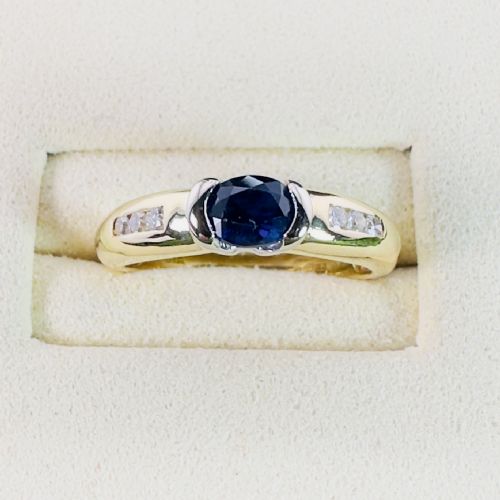

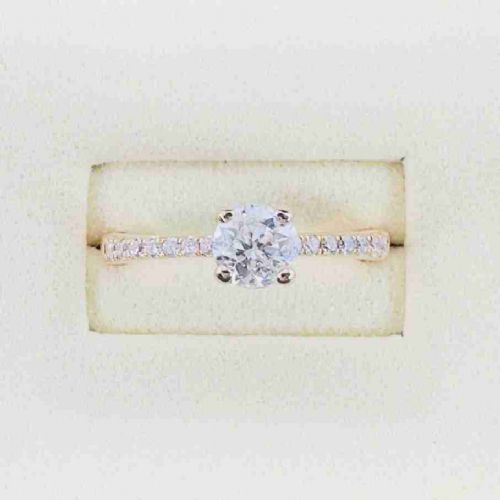


18ct Solitaire Diamond Band
An 18ct solitaire diamond band combines a single central stone with precious metal, offering a classic choice for engagement and daily wear.
18ct Solitaire Diamond Band
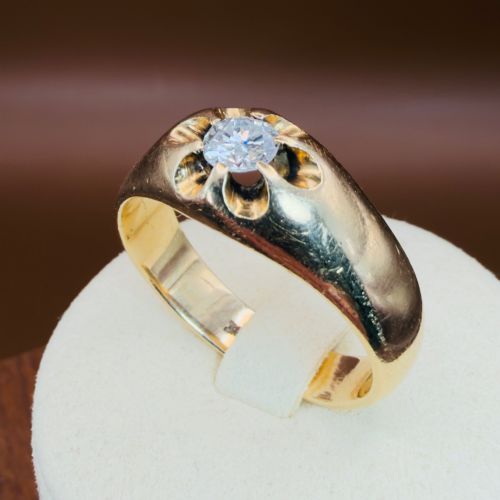
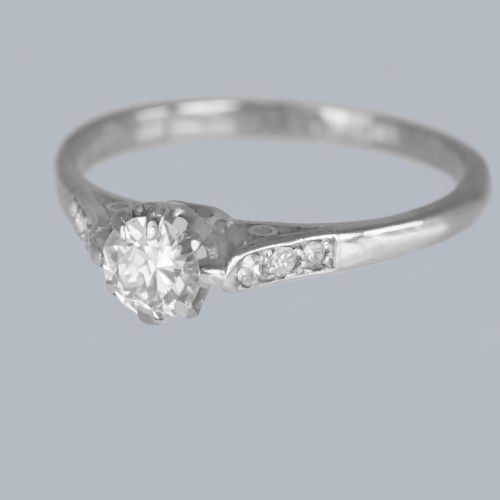
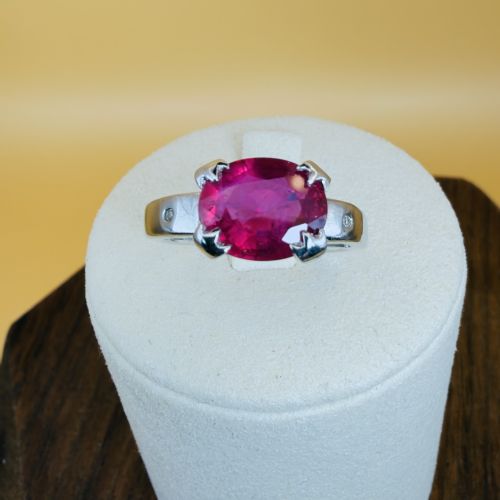
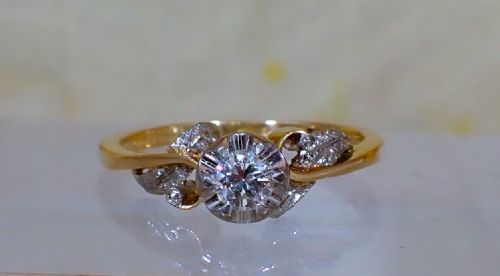
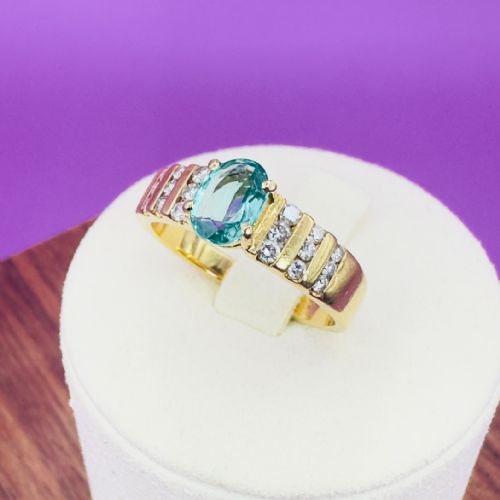
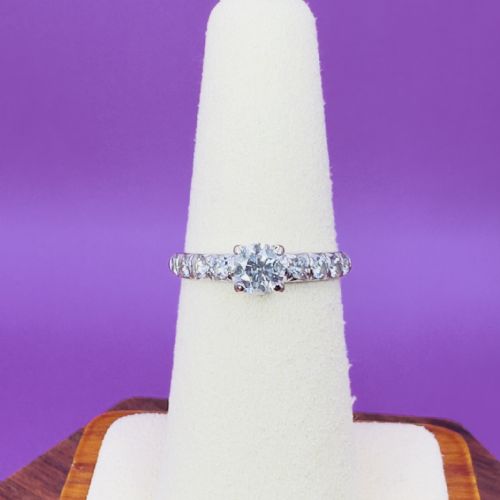
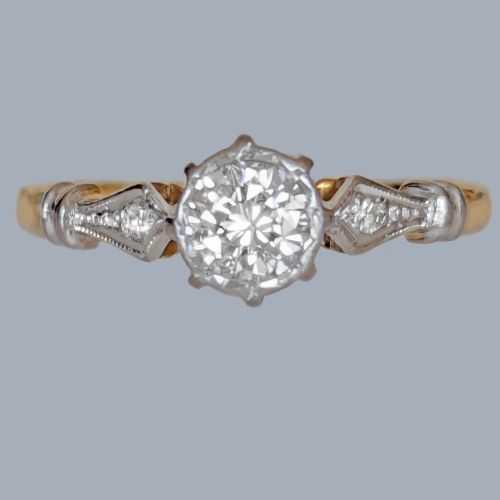
The selections on this page range from heavy men's gypsy and belcher rings in yellow gold to delicate white gold and platinum settings from the 1920s and 1930s. Engagement rings and single-stone dress rings dominate the forms, reflecting both traditional ring mountings and distinct period designs.
How they were made
Maker workshops combined 18ct gold in yellow, white, and rose hues with platinum settings to secure the central diamonds safely while enhancing light reflection. Old European cuts, brilliant cuts, and cushion cuts appear across the pieces, set into bands shaped through traditional casting and hand-working techniques.
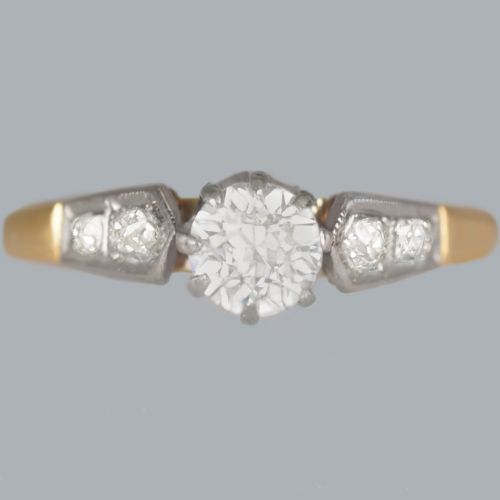
Gypsy settings integrate the stone flush into the heavy gold band, whereas Art Deco and later mountings utilise claw and bezel settings alongside shoulder diamonds to create geometric or tapered silhouettes.
Pieces on this page originate from distinct eras including the Victorian period, Edwardian era, 1920s, Art Deco period, 1950s, and 1960s.
What varies in quality
The distinction between tiers rests upon the diamond cut, carat weight, and the precision of the metalwork surrounding the stone. Heavier gram weights in the shank and substantial stone sizes, such as multi-carat cushion or old European cuts, distinguish heavier statement rings from lighter everyday bands.
Execution of shoulder stones, gallery work, and the integrity of hallmarks or metal combinations like 18ct gold paired with platinum define the finer examples in the range.
Piaget
The 18ct Solitaire Diamond Band Glossary
- Solitaire
- A ring featuring a single mounted gemstone, typically a diamond. This setting style directs visual attention entirely to the central stone.
- Gypsy Ring
- A ring style where the stone is flush-set into a thick band that tapers smoothly towards the back. This form was favoured for both men's and women's jewellery.
- Belcher Setting
- A style of ring mount where the stone is held by rounded prongs that rise organically from the shoulders of the band. It places the gem high to catch maximum light.
- Platinum
- A dense, durable white metal often utilised alongside 18ct gold in antique and Art Deco mountings to securely hold diamonds.
18ct Solitaire Diamond Band: Frequently Asked Questions
What is an 18ct solitaire diamond band?
An 18ct solitaire diamond band is a ring featuring one single diamond set into an 18-carat gold band. These pieces range from antique Victorian designs to mid-century modern examples.
The single stone design focuses attention entirely on the cut and quality of the central diamond, supported by durable precious metal.
How do I date an antique diamond ring?
Dating involves examining the cut of the diamond, the metal combinations, and the overall style of the setting. Old European cuts and platinum-topped gold settings often point to the Edwardian or Art Deco eras.
Hallmarks and specific mounting styles, such as gypsy settings or geometric shoulder work, also provide clear chronological markers.
Are these rings suitable for everyday wear?
Most 18ct gold and platinum rings are built to withstand daily use, especially heavier styles like gypsy or belcher bands. The hardness of gold and diamonds makes them practical for regular wear as engagement or wedding rings.
Lighter antique settings may require slightly more mindful wear to protect delicate claws and smaller shoulder stones.
What is the difference between white gold and platinum?
White gold is an alloy of yellow gold mixed with white metals to achieve a silvery tone. Platinum is a naturally white, denser, and extremely durable metal.
Many antique rings combine both, using 18ct gold for the band and platinum for the settings to hold the diamond securely.