






18 Carat Solitaire Ring
An 18 carat solitaire ring centres a single stone on a precious band, offering timeless elegance for everyday wear.
18 Carat Solitaire Ring
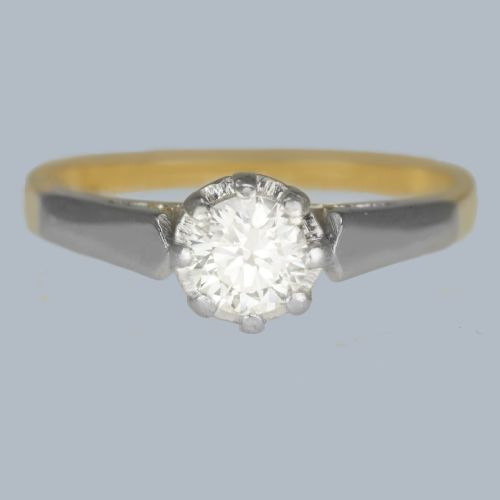
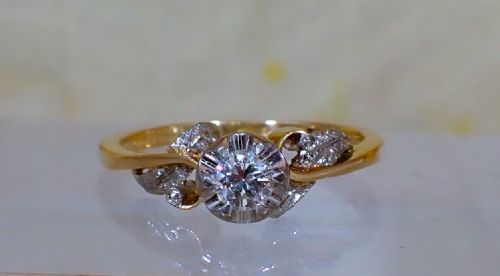
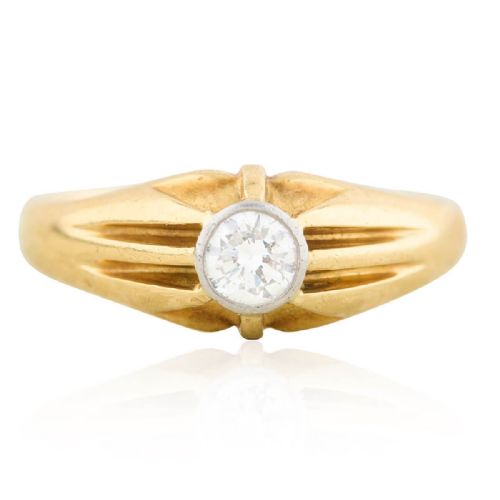
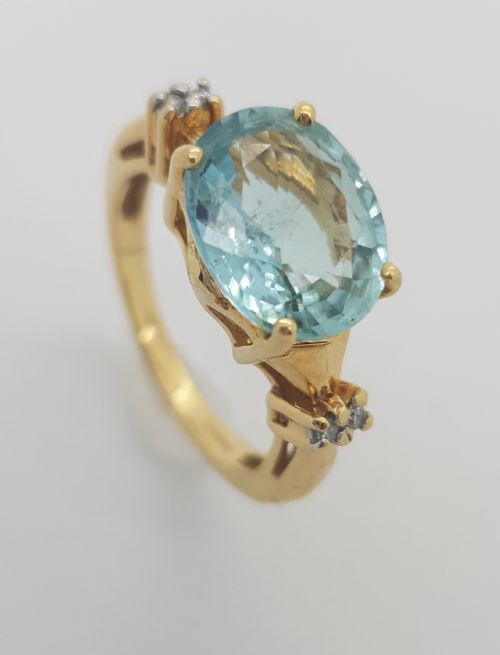
An 18 carat solitaire ring focuses attention upon a single principal gemstone mounted securely on a precious metal band. The phrase encompasses historic examples from the Victorian era alongside twentieth-century vintage and mid-century designs.
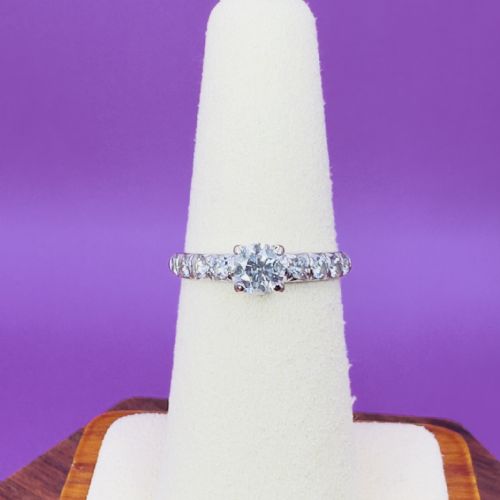
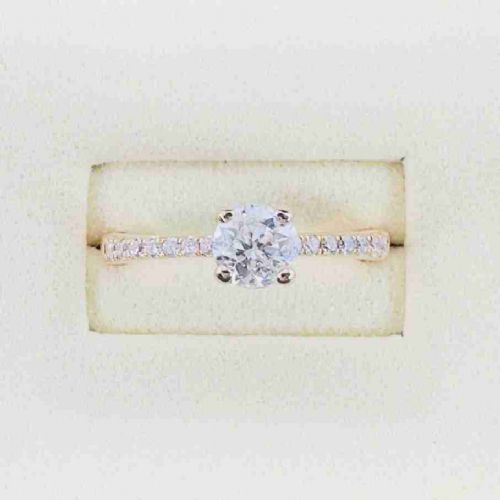
The evidence shows these rings appear in distinct forms, from traditional diamond brilliants to alternative central stones such as sapphires, turquoise, and amethyst. Yellow gold, white gold, and platinum dominate the mountings, often accompanied by subtle shoulder stones or illusion settings.
Victorian pieces frequently display hand-cut stones like old European or rose cuts set in yellow gold, whereas later vintage pieces from the mid-century introduce cleaner white gold and platinum lines. Buyers encounter everything from delicate early nineteenth-century bands to bolder twentieth-century geometric settings.
How They Were Made
Goldsmiths shape 18 carat gold and platinum into robust bands designed to support a prominent central gem. Yellow, white, and rose gold alloys provide the foundational structure for both historic and vintage specimens.
Stones are secured using varied techniques, including traditional claw settings that maximise light entry, illusion settings that enhance visual presence, and flush star settings common in nineteenth-century examples.
Listings feature 18 carat yellow gold, white gold, and platinum mounted alongside diamonds, sapphires, turquoise, and amethyst.
What Varies in Quality
The calibre of the central gemstone dictates the character of the piece, particularly regarding its cut, natural colour distribution, and internal clarity. Older hand-cut diamonds exhibit distinct facets that interact differently with light compared to uniform modern cuts.
The integrity of the metalwork and the original setting stability reflect the skill of the bench worker. Substantial 18 carat shanks that retain their original gauge and secure claw work represent superior craftsmanship.
The 18 Carat Solitaire Ring Glossary
- Solitaire
- A ring featuring a single set gemstone without accompanying principal stones. This setting style concentrates visual impact entirely upon the main gem.
- Old European Cut
- An early form of brilliant cut diamond common in late nineteenth and early twentieth-century jewellery. It typically displays a smaller table, higher crown, and open culet.
- Illusion Setting
- A metal mounting technique designed to make a central stone appear larger by surrounding it with a faceted plate. This method was widely utilised in Victorian and mid-century designs.
- Rose Cut
- An antique gemstone cut featuring a flat base and a domed crown composed of triangular facets. These stones produce a soft, subtle gleam rather than the intense fire of modern brilliants.
- Belcher Setting
- A style of mounting where the claws holding the gemstone are pulled directly up from the shoulders of the shank. This technique integrates the stone smoothly into the band.
18 Carat Solitaire Ring: Frequently Asked Questions
What is an 18 carat solitaire ring?
An 18 carat solitaire ring is a piece of jewellery featuring a single prominent gemstone mounted on a band composed of 18 carat gold. The design places total emphasis on the central stone.
These pieces span various periods, incorporating diamonds, sapphires, and other precious gems set within yellow, white, or rose gold structures.
How do I date an antique solitaire ring?
Dating relies upon examining the cut of the central stone, the alloy colour, and the overall construction style of the mount. Victorian pieces often utilise hand-cut old European or rose stones in yellow gold.
Later vintage examples from the mid-twentieth century frequently feature brighter white gold or platinum settings alongside more uniform brilliant cut stones.
Are these rings suitable for daily wear?
Eighteen carat gold provides a durable balance of pure gold content and strengthening alloy metals, making it suitable for regular wear. Proper care ensures the security of the central setting over time.
Historic rings benefit from periodic checks of the claws and band thickness by a qualified jeweller to maintain structural integrity.
What is the difference between old cut and modern cut diamonds?
Old cut diamonds are shaped by hand, resulting in charming irregularities, smaller tables, and distinctive open culets that catch candlelight warmly. Modern cuts are machine-calculated for precise symmetry and maximum light return.
This historical cutting variation gives antique solitaire rings a distinct visual personality compared to later mid-century or modern examples.