


Rotating Book Stand Table
A rotating book stand table brings immediate utility and classic joinery to a corner or desk, turning a heavy stack of volumes into an accessible library.
Rotating Book Stand Table
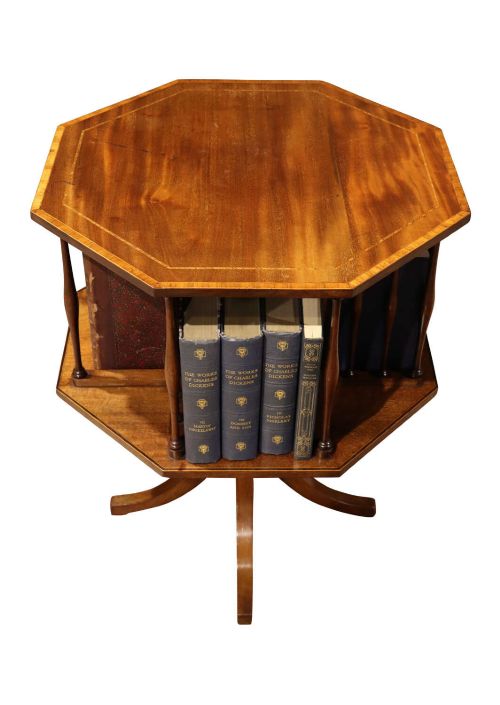
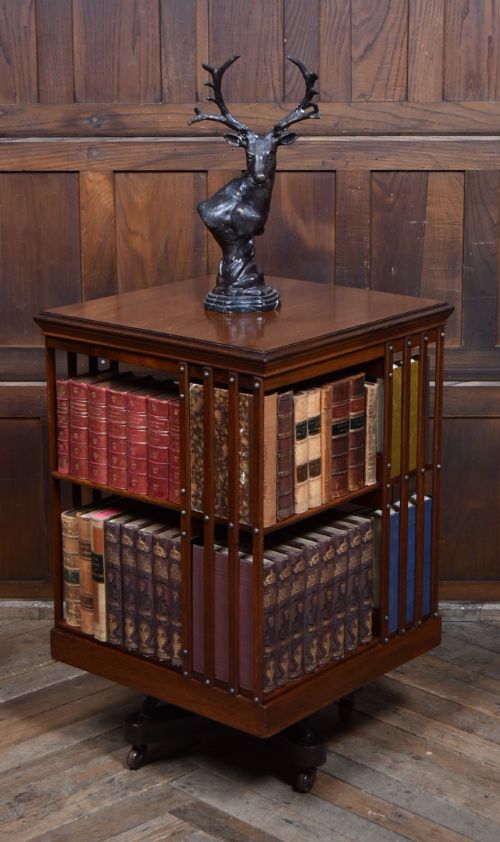
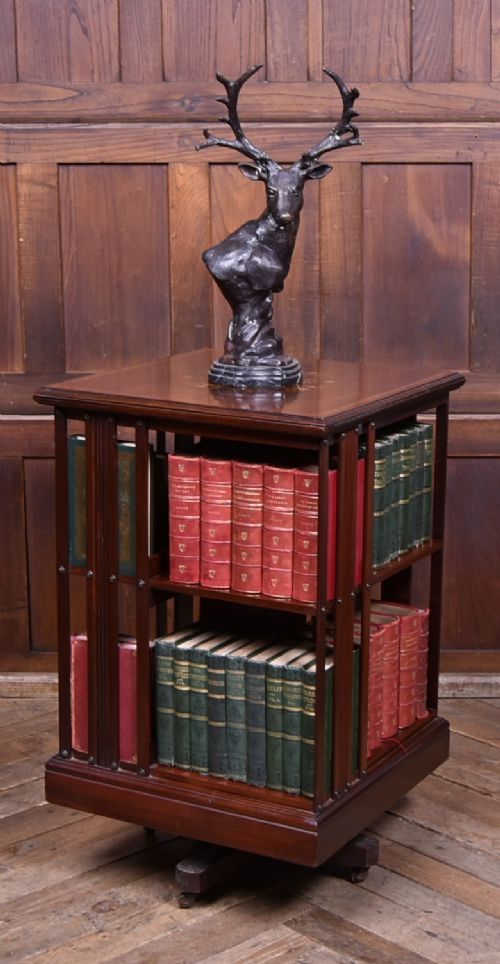
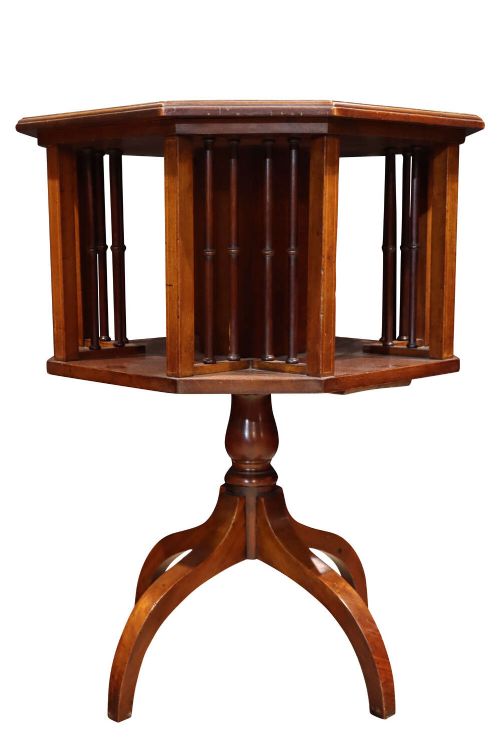
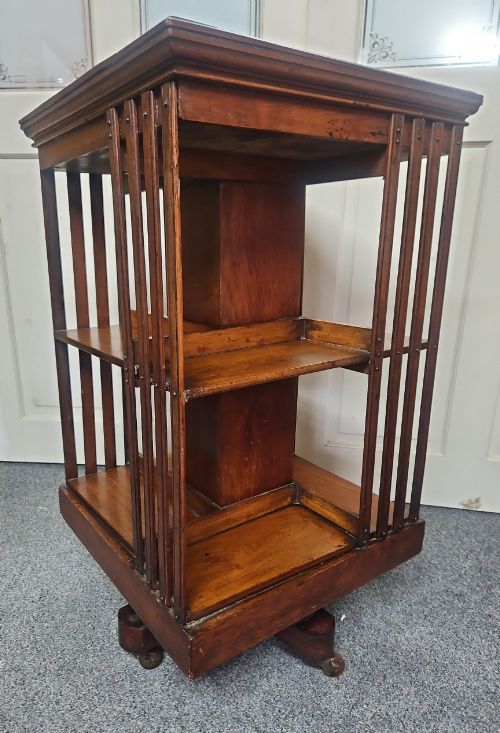
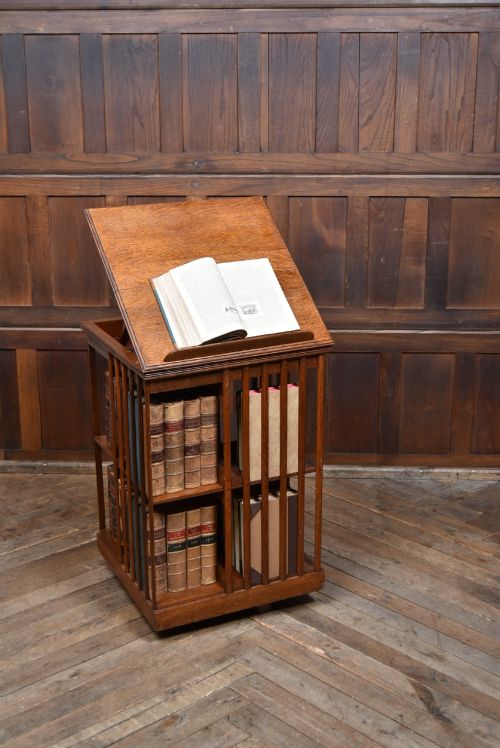
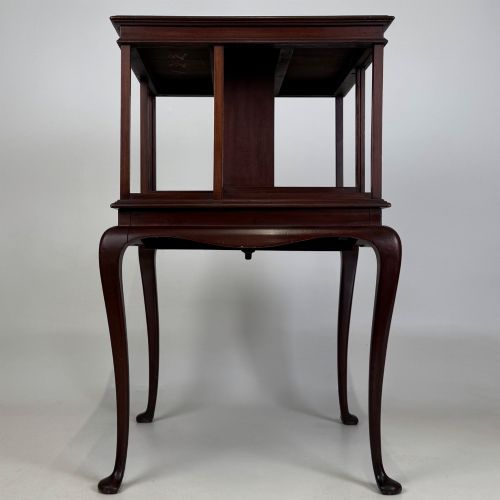
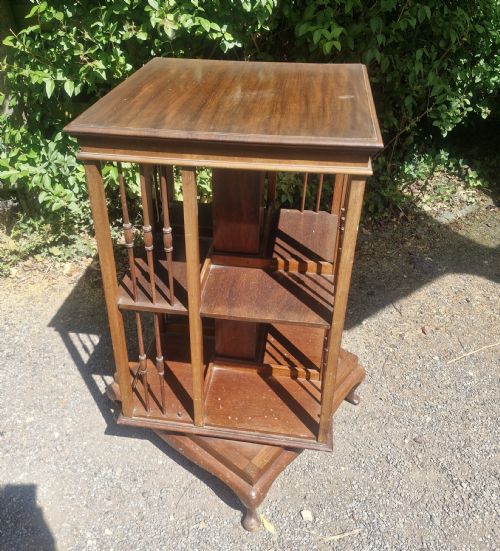
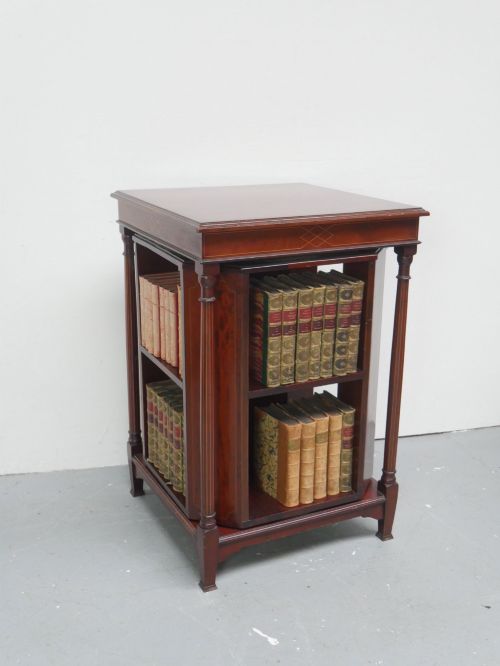
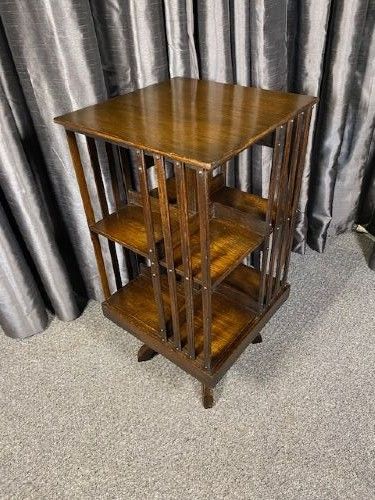
A rotating book stand table serves as a compact storage unit designed to hold frequently consulted volumes within arm's reach while allowing the entire tiered section to spin smoothly on a central spindle. Buyers seeking a rotating book stand table encounter pieces ranging from substantial floor-standing library units to smaller versions intended for placement directly on a desk or side table.
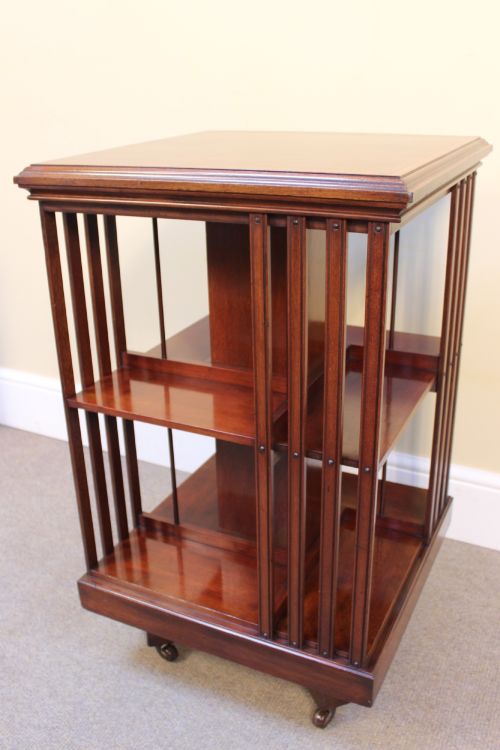
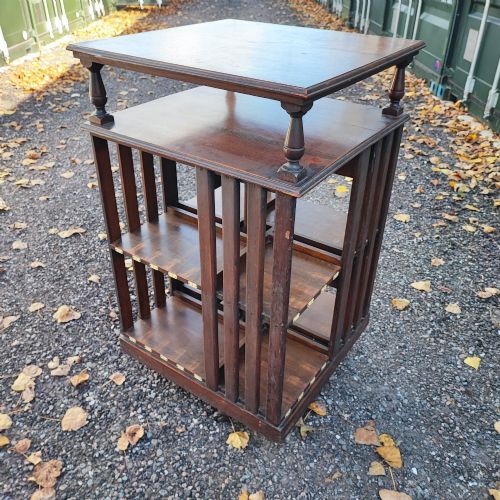
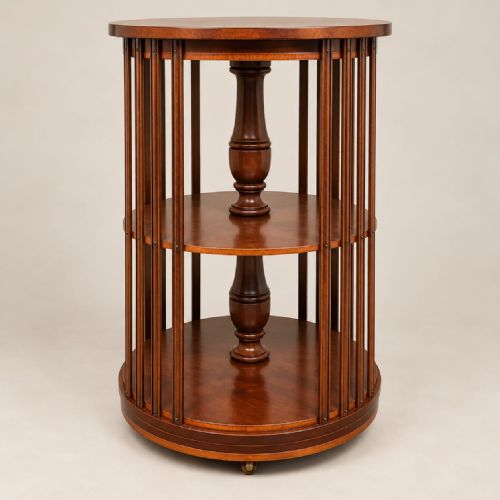
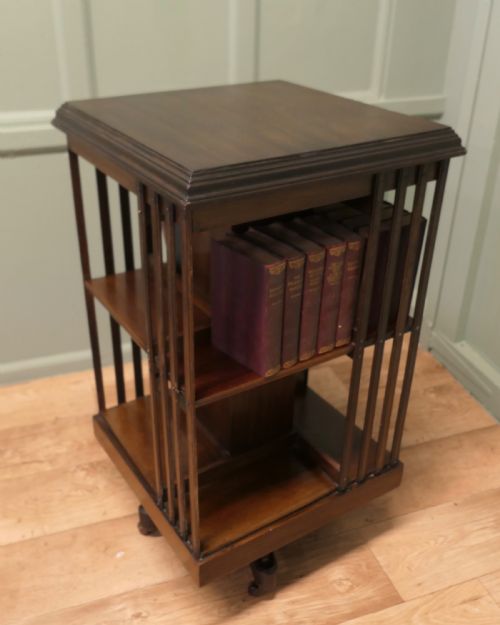
The prevailing form on this page dates predominantly from the Edwardian era and the Victorian period, constructed primarily as freestanding circular or square towers with multiple slatted or solid shelves. These pieces reflect the domestic habits of late nineteenth and early twentieth-century libraries, studies, and drawing rooms where quick access to reference books or novels was essential.
Originating largely in British workshops of the nineteenth and early twentieth centuries, these stands utilise traditional cabinetry to balance the weight of heavy books against the mechanics of a rotating pivot. Their enduring appeal lies in this combination of functional mobility and formal cabinetmaking, making them as practical for modern study spaces as they were for period parlours.
Materials and Construction
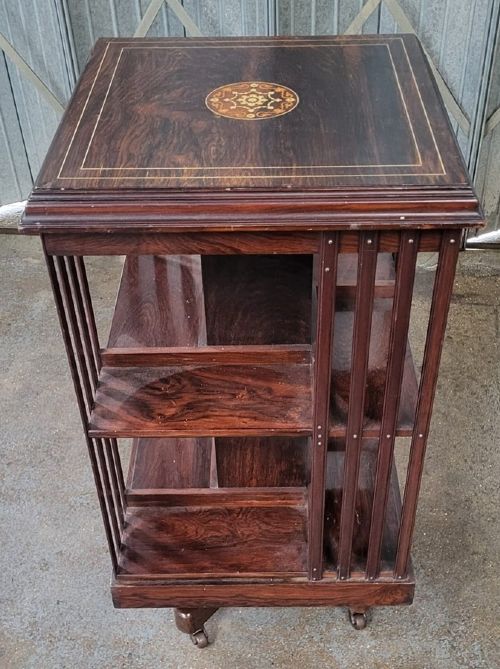
Makers relied heavily on dense hardwoods such as mahogany and oak, often selecting them for their structural stability and capacity to support heavy loads of books without warping. Selected examples incorporate satinwood inlay, brass accents, or marquetry detailing to provide decorative contrast along the shelf rims and top panels.
The underlying mechanism depends upon a concealed internal pivot, frequently involving iron or brass components that permit smooth, silent rotation of the tiers above. Joinery techniques such as dovetailed shelf joints and sturdy slatted dividers ensure the upright framework remains rigid despite the constant torque of spinning.
Rotating Book Stand Table Retail Price Guide 2026
Typical asking prices for rotating book stand table among the pieces listed under this phrase on Sellingantiques today, from the lower quarter to the upper quarter. They describe what is for sale here now, not the wider market.
Current listings feature materials including mahogany, oak, walnut, brass, iron, and satinwood across periods spanning the Victorian era, the Edwardian years, and the 1920s.
Distinctions in Quality
Superior examples reveal themselves in the smoothness of the turning action and the precision with which the internal pivot mechanism is housed, ensuring the tiers spin without listing or catching. The choice of timber also defines the grade, with finely figured mahogany or clean quarter-sawn oak indicating a more careful selection of materials by the cabinetmaker.
Attention to secondary details separates standard production from finer pieces, such as inlaid satinwood banding, carved detailing along the edges, or the inclusion of a marble top supported by brass inlays. The integrity of the structural joinery on the shelf dividers determines how well the stand withstands decades of heavy volumes leaning against the partitions.
Maple and Co
The Rotating Book Stand Table Glossary
- Revolving bookcase
- A freestanding or table-top tier of shelves mounted on a concealed pivot that turns freely in a circle. This mechanism allows a reader to browse multiple volumes from a single seated position.
- Marquetry
- The art of applying fitted pieces of wood veneer to a structure to form decorative patterns or pictorial scenes. Dutch floral marquetry frequently appears on panels associated with continental library furniture.
- Satinwood
- A durable, light-coloured tropical hardwood prized for its luminous sheen and smooth grain. Makers utilised it primarily for contrasting stringing and geometric inlays on dark mahogany surfaces.
- Cabriole leg
- A furniture leg that curves outward in a convex arc before tapering inward in a concave sweep down to the foot. This style draws inspiration from classical furniture forms adapted during later revival periods.
- Quarter-sawn oak
- Timber cut radially across the growth rings, producing a distinctive flecked grain pattern known as medullary rays. This cutting method yields boards that resist warping and shrinkage.
Rotating Book Stand Table: Frequently Asked Questions
How do I check the rotating mechanism?
Gently spin the upper tiers to test whether the movement remains level, smooth, and silent without dragging against the base. A well-adjusted pivot distributes the weight evenly across the concealed internal bearing.
Listen for any grinding noises or metal friction, which suggest the central spindle requires professional adjustment or lubrication. The shelves should glide freely with a light push from the hand.
Where should I place a revolving bookcase?
Position the stand beside an armchair, desk, or reading nook where you need immediate access to reference materials or current reading. Because the shelves rotate on all sides, the piece does not need to sit flat against a wall.
Ensure there is sufficient clearance around the perimeter of the tiers so the books do not brush against nearby furniture when turned. Floor-standing models anchor a room corner effectively while keeping volumes visible from any angle.
How do I tell Edwardian from Victorian pieces?
Victorian examples tend to feature heavier timbers, deep carved details, and sometimes marble tops with brass inlays, reflecting a preference for substantial, imposing furniture. They often date from the late nineteenth century.
Edwardian stands typically present a lighter appearance, frequently utilising inlaid mahogany, rosewood, or delicate satinwood stringing. The overall proportions are often sleeker, aligning with early twentieth-century tastes for refined domestic interiors.
Can these stands hold heavy hardback books?
Most revolving bookcases are constructed from sturdy hardwoods like oak and mahogany designed to bear the considerable weight of standard library volumes. The vertical dividers and slatted partitions provide essential structural support for the shelves.
Distributed weight is key to keeping the rotation balanced, so place heavier folio volumes on the lower tiers. Avoid overloading a single compartment beyond its capacity to prevent strain on the internal pivot.