
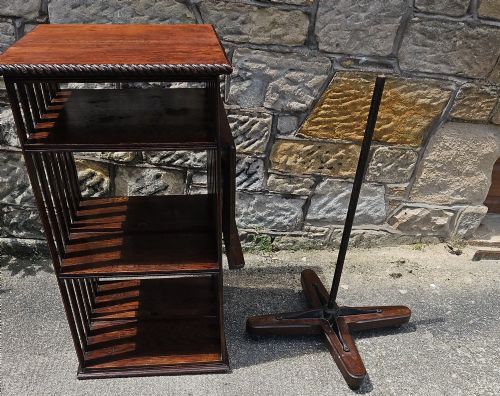
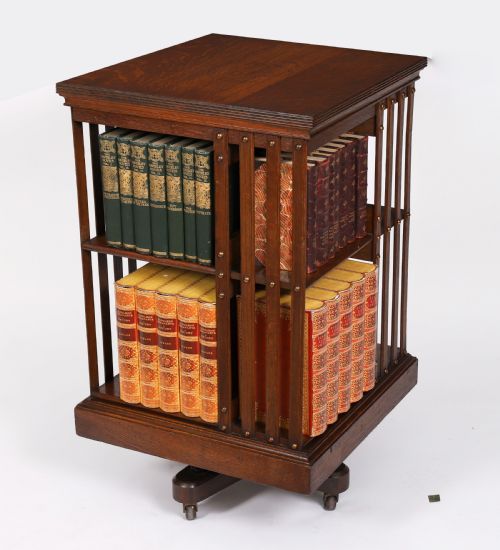


Dark Oak Revolving Bookcase
A dark oak revolving bookcase brings functional Victorian and Edwardian design directly to your study floor with smooth, rotating access.
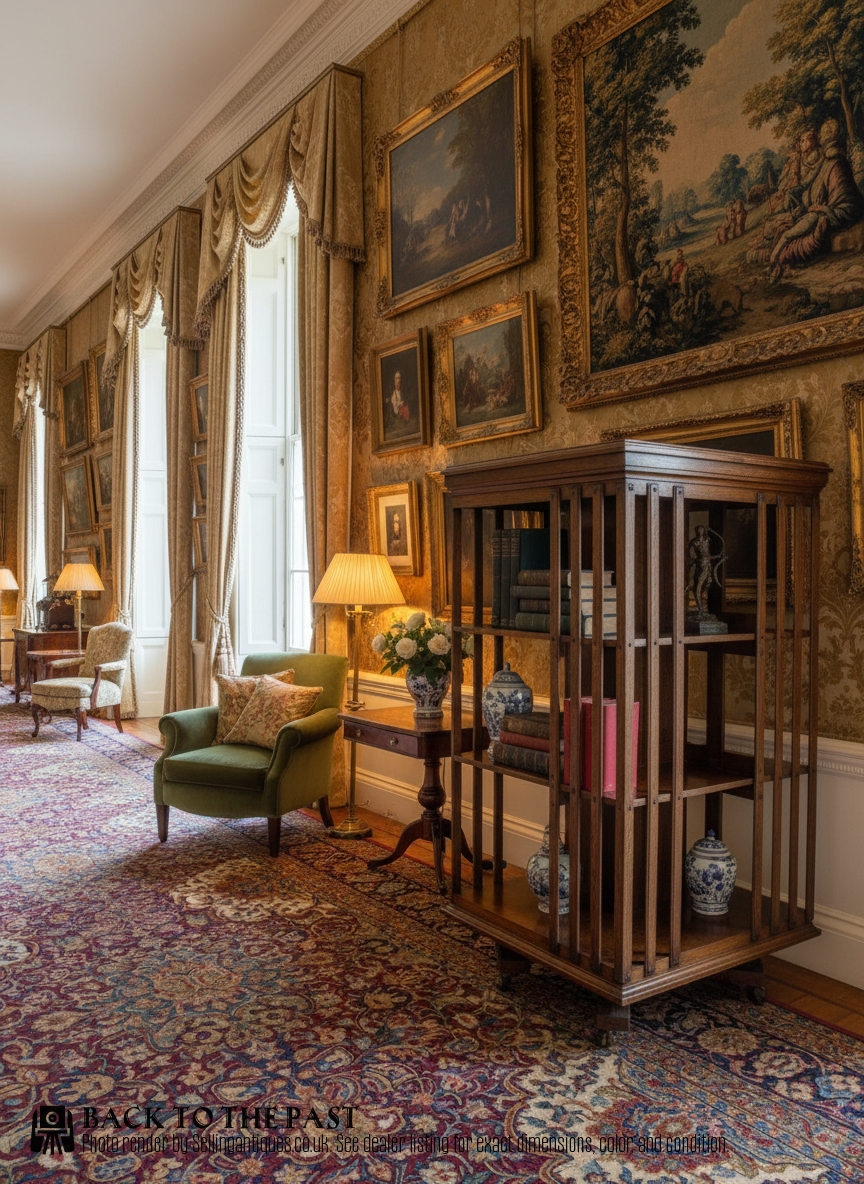
Dark Oak Revolving Bookcase
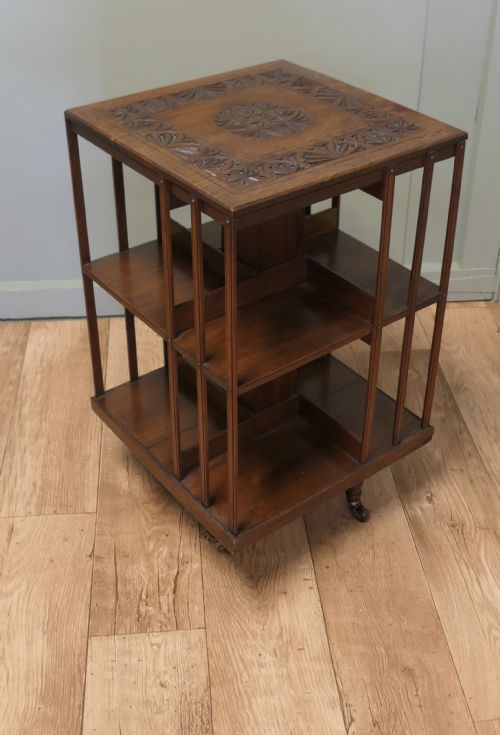
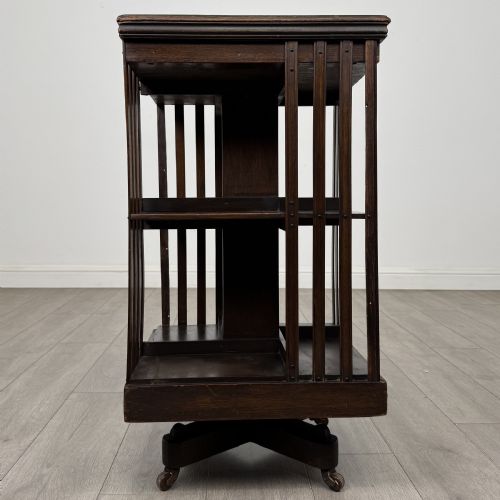
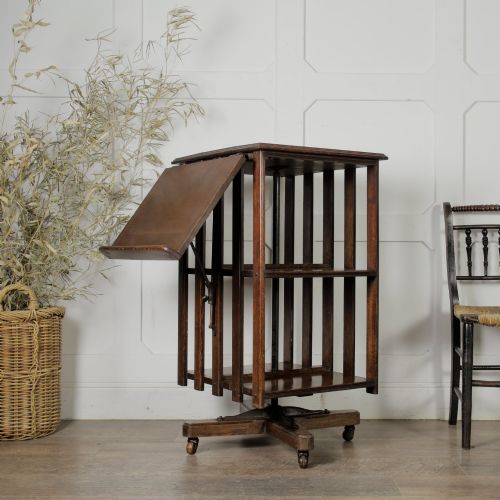
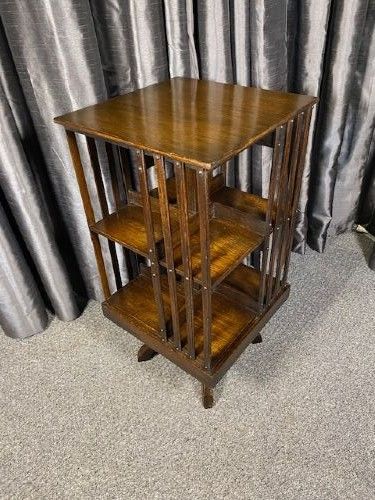
When you search for a dark oak revolving bookcase, you encounter sturdy timber furniture designed to hold reference volumes within arm's reach. The examples gathered here span the Victorian and Edwardian eras, taking the form of table top models as well as large, tall, and very large freestanding units.
You are most likely to meet Edwardian pieces in solid oak, alongside Victorian interpretations dating from eighteen eighty to nineteen ten. These functional items rotate on a central mechanism, allowing users to select texts easily from any seated position in a library or study.
How they were made
These bookcases utilise solid oak timbers, chosen for strength and finished with a dark tone that highlights the natural grain of the wood. Cabinetmakers constructed the slatted or panelled sides to bear the considerable weight of heavy volumes without sagging.
Internal mechanisms frequently incorporate cast iron and brass components to ensure the rotating action remains smooth and reliable over decades of daily use.
Spinning a fully loaded revolving bookcase too quickly can launch your dictionary across the study.
What varies in quality
Quality rests in the timber selection and the precision of the rotating mechanism concealed beneath the base. Superior examples exhibit tightly fitted slats, clean joinery, and heavy-gauge iron or brass hardware that turns without catching.
Proportion and scale also define the hierarchy, ranging from compact table top Arts and Crafts versions to imposing tall bookcases that demand substantial floor space.
The Dark Oak Revolving Bookcase Glossary
- Edwardian
- Dating from the reign of Edward VII, typically spanning from nineteen hundred to nineteen ten. Pieces from this period often display lighter construction and simpler lines than their Victorian predecessors.
- Victorian
- Spanning the reign of Queen Victoria, generally covering the nineteenth century. Furniture from this era tends to be heavier, employing dark oak and robust proportions.
- Arts and Crafts
- A design movement prioritising traditional craftsmanship and simple forms. Table top revolving bookcases from this style emphasise utility and honest materials.
- Revolving mechanism
- The internal pivot system hidden beneath the bookcase. It allows the entire upper section to spin freely on cast iron or brass bearings.
Dark Oak Revolving Bookcase: Frequently Asked Questions
How do I care for dark oak?
Dust regularly with a soft, dry cloth to prevent accumulation in the carved slats and recessed panels.
Apply a traditional beeswax polish occasionally to nourish the timber and maintain the dark finish without creating build-up.
Where should I place a revolving bookcase?
Position the piece beside a desk or armchair where you need frequent access to reference books and novels.
Ensure adequate clearance on all sides so the unit rotates freely without striking walls or adjacent furniture.
Are table top models stable?
Table top versions utilise a weighted base and a compact footprint designed to sit securely upon a desk or sideboard.
Distribute heavier volumes toward the lower tiers of the revolving section to maintain balance during rotation.
How do I distinguish Victorian from Edwardian?
Victorian revolving bookcases generally date from eighteen eighty to eighteen ninety, featuring heavier proportions and darker, denser timber.
Edwardian examples, emerging around nineteen hundred to nineteen ten, often present slightly brighter oak tones and more restrained decorative detailing.